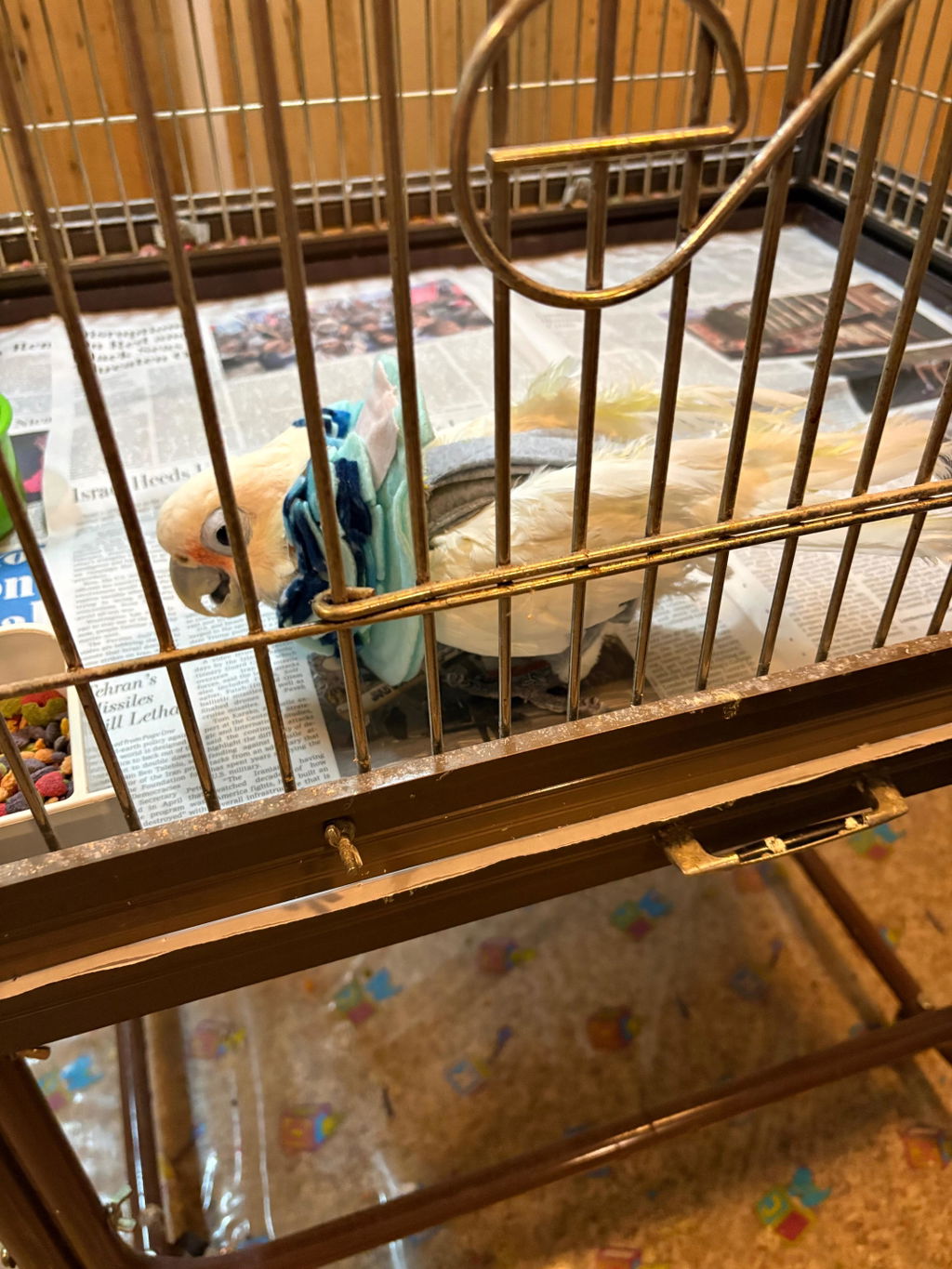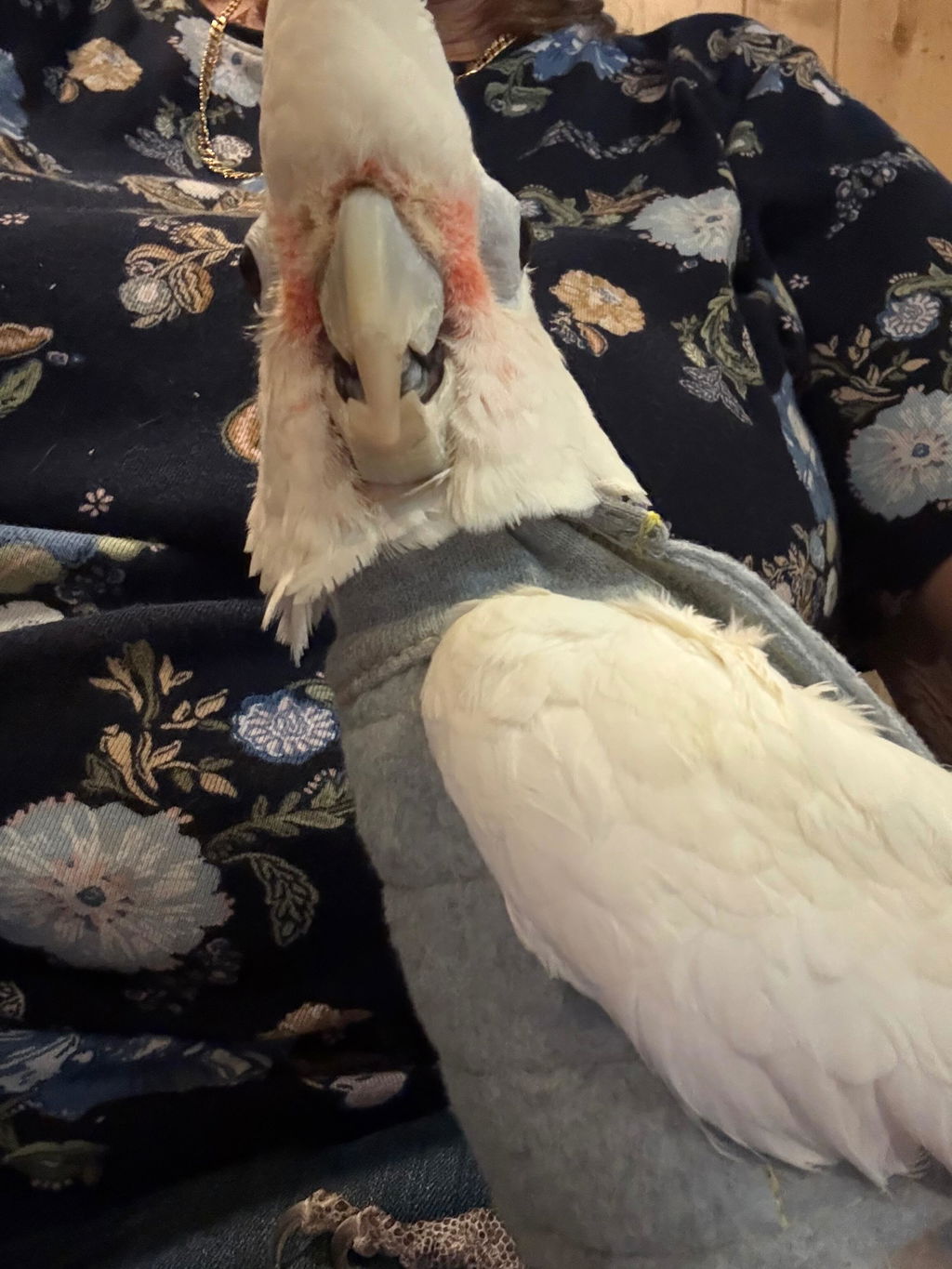

Short answer: Yes — birds can wear collars safely, but only when they’re introduced thoughtfully and used for the right reasons.
This comes up a lot. Most people aren’t looking for a collar because they want one — they’re here because plucking is escalating, skin is at risk, or something feels like it’s getting out of hand.
This post won’t oversell collars or promise a quick fix. It will help you decide whether a collar makes sense for your bird, what to expect emotionally and physically, and how to introduce one in a way that supports — not overwhelms — your bird.
Do I actually need to worry about this?
Short answer: Sometimes — not always.
Not every plucking bird needs a collar, and not every plucking situation is urgent. The concern isn’t the collar itself — it’s whether feather or skin damage is escalating faster than you can safely manage.
Why this question keeps coming up
Most owners start asking about collars after trying everything else first — diet changes, enrichment, routine tweaks, supplements, sprays, waiting it out, and even trying to "reason" with their bird. When those steps don’t slow the damage, people start worrying about what comes next.
Who this tends to matter most for
This matters most for birds who are actively plucking out feathers, barbering down to skin, reopening wounds, or stuck in a repetitive plucking loop that’s reinforcing itself. These birds are spending more time nursing their "habit" than enjoying life.
When does this really matter?
A collar becomes most helpful when physical protection is needed — not as a punishment or shortcut, but as a way to interrupt damage while you address underlying causes.
Times when extra support makes sense
Collars are commonly used during active feather destruction, post-surgical recovery, wound healing, or periods of heightened anxiety where access to skin or feathers is creating real risk.
What tends to improve when this is addressed properly
When introduced correctly, bird collars reduce physical injury, slow habit rehearsal, and give owners breathing room to work on diet, environment, medical care, and behavioral support.
When is it probably unnecessary?
Not every bird benefits from adding another intervention.
Signs things are already on track
If plucking is mild, seasonal, or improving with enrichment and routine changes — and skin isn’t being damaged — a collar may be unnecessary.
Why “more” isn’t always better
Adding tools without clear need can increase stress for your bird. Sometimes the most helpful step is refining what’s already working instead of layering on something new.
Common mistakes people make
These are normal, well-intentioned mistakes — not failures.
Trying to fix everything at once
Rapid changes can overwhelm birds. Collars work best when paired with slow, predictable adjustments — not an overhaul.
Following advice without context
Online forums can be helpful, but birds aren’t interchangeable. What worked for one bird may be unnecessary — or counterproductive — for another.
A quick “time check” can help you spot possible triggers.
- Does plucking pick up when the house gets busy or noisy?
- Does it spike when routines change (new schedule, visitors, travel, bedtime shifts)?
- Does it happen more when your bird is alone, bored, overstimulated, or wound up?
That kind of context usually matters more than copying someone else’s solution.
How to Safely Train a Bird to Wear a Collar
Training matters more than the collar itself. The goal isn’t to rush acceptance — it’s to help your bird stay regulated while learning something new.
Go slow. Use favorite treats. Keep sessions short. End before stress builds.
Watch first: The short video below shows the full setup and first fitting.
Step 1: Let the collar exist (no pressure)
For 1–3 days, let your bird see the collar from a safe distance.
- Talk to it, touch it, and handle it casually while your bird watches
- Reward calm interest with favorite treats
At this stage, you’re teaching your bird that the collar isn’t a threat.
Step 2: Make the collar part of normal routines
Lay the collar on your shoulder during regular care routines for 1–2 days.
- Handle your bird as usual
- Reward relaxed behavior generously
This builds familiarity without forcing interaction.

Step 3: Invite exploration
Allow your bird to investigate the collar on their own terms.
- Place favorite treats on the collar
- Reward any calm contact or curiosity
Curiosity beats coercion every time.
Step 4: Build tolerance to touch
While training, gently work on handling the wings, shoulders, and torso.
- Pair brief touches with treats and praise
- Back off if your bird shows discomfort
Small progress counts. Always end on a win.
Step 5: Prepare the cage
Before the first fitting, adjust the environment for safety.
- Lower perches and food bowls
- Line the cage bottom with a towel
Step 6: First fitting (supervised)
When both you and your bird are ready, put the collar on for 1–3 hours while you can closely supervise.
- Reward calm behavior often
- Ignore minor protests unless safety is an issue
Awkward movement and investigation are normal.
Step 7: Build strength and confidence
Increase wear time gradually in 30–60 minute increments.
This helps your bird build the physical strength needed to carry the collar comfortably.

Step 8: Return the cage to normal
As tolerance improves, slowly move perches and bowls back to their usual positions.
Some birds may need help learning how to perch, climb, eat, or drink at first — especially nervous birds.
Patience here pays off.
Putting this into real life
Knowing what to do and doing it calmly are two different things.
It’s normal to feel nervous, second-guess yourself, or worry about making things worse. Most birds need an adjustment period — and most owners do too.
If you want a way to protect feathers and skin while you work on the bigger picture, collars can be a supportive bridge — not a setback.
Quick recap
- Collars are management tools, not behavior cures.
- Proper training upfront is more important than how fast you train the bird
- Protecting your bird while addressing root causes is responsible — not extreme.
Diane Burroughs has worked with birds and bird owners for over 30 years, specializing in anxiety-driven behaviors and feather destructive disorders. Her approach blends behavior science with practical, real-world care.
TAGS: #BirdCollars #FeatherPlucking #BirdBehavior
SHARING IS CARING 📣
If this helped, pass it along to another bird owner.
Related Posts:
How to Choose a Bird Collar
Neck Collar Size Guide
Parrot Weight Chart