
Who this is for:
Indoor bird owners noticing itchiness, extra feather dust, frequent scratching, or discomfort during winter or molt—and trying to figure out what actually helps.
Who this is not for:
Birds with open wounds, bleeding feathers, bald patches, sudden behavior changes, or signs of illness that require immediate veterinary care.
Quick check before you read further
- Dusty feathers + mild itch + normal behavior → likely dry indoor air
- Baths help briefly, then itching returns → humidity issue, not bathing
- Bald spots, bleeding, or big behavior changes → stop and call a vet
What this article will help you figure out
Is this normal, or should I be worried?
Dry indoor air is often what brings these symptoms to the surface. Nutrition matters too—but if diet hasn’t changed and symptoms appear with winter heating, air moisture is usually the first place to look.
Usually normal signs
- Dusty feathers or flaky-looking skin
- Scratching that comes and goes
- Normal appetite, energy, and mood
Signs that are not normal
These signs are not caused by dry air alone and should not be managed at home:
- Bald patches or areas where feathers are not growing back
- Broken or bleeding feathers
- Open skin, scabs, or sores
- Sudden changes in behavior, appetite, or energy
If you’re seeing any of these, call an avian or exotics veterinarian.
Is this a bathing problem… or a dry air problem?
Dry Air Problem
Baths help briefly, but the itchiness comes back fast — sometimes later the same day. Birds may look dusty, flaky, or uncomfortable even though you’re bathing regularly.
When the bathing method is the problem
If your bird backs off, fluffs up, or squawks the second bath time starts, it’s usually not because they hate being clean. It’s more often about how the bath is happening.
A lot of birds are picky about bathing. Some hate spray bottles but love a shallow dish. Others ignore water completely until you offer wet leafy greens or let them hang out in shower steam.
Most avian vets don’t say “you must bathe your bird daily.” They recommend offering the opportunity daily — especially in dry indoor air — and letting the bird decide.
That can look like:
- Light misting (from a distance, not forced)
- A shallow bowl they can step into
- Wet leafy greens to rub or roll on
- Shower perch time or bathroom steam
Key point: daily access to bathing is fine. Forcing a bath is not. When birds get to choose, bathing usually stops being a fight.
When this isn’t about bathing or air
If there’s damaged skin, feather loss that doesn’t look like a normal molt, or signs your bird is uncomfortable or in pain, this likely isn’t something bathing or humidity alone will fix.
What should I do right now?
Start with safe winter bathing basics
In winter, the goal is comfort — not getting your bird soaked. Birds should never be left chilled after bathing, even briefly.
- Keep your bird away from drafts and cold air while bathing and drying.
- Avoid heavy soaking on cold days; light misting or bathing bowl is often enough.
- Make sure your bird can dry fully in a warm room before returning to their normal space.
- Skip shampoos or soaps — they strip natural oils and can worsen dry skin.
If feathers look dusty and skin seems dry
- Increase indoor humidity to 40-60% so skin stays comfortable between baths.
- Offer a chance to bathe each day, but let your bird show you it's preferred method.
- Watch for less scratching and more play over the next several days.
If environment fixes aren’t enough
If you’ve improved humidity and offered gentle bathing for several days and your bird still seems uncomfortable, nutrition is often the next piece to look at — especially for birds on seed-heavy diets.
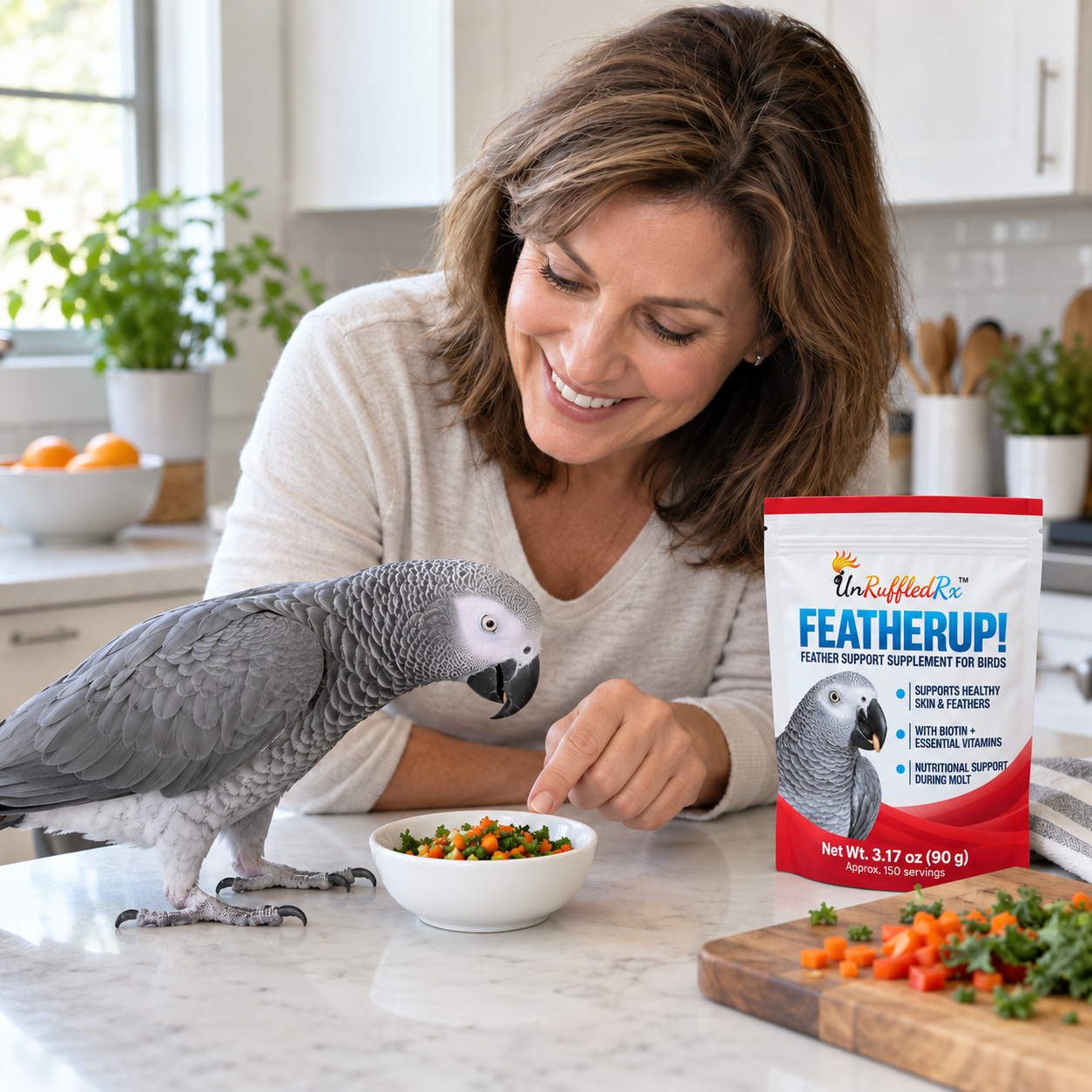
Low Vitamin A, Vitamin E, and omega intake is common indoors, and small, careful additions can support skin comfort and feather quality over time. The key is using them sparingly and consistently, rather than adding multiple products at once.
For owners who want a simple, conservative approach, our Healthy Start Feather & Skin Kit was designed to provide light, balanced support without overdoing any single nutrient. It’s meant to support the body while feathers grow — not replace good husbandry or veterinary care.
If you choose to use support tools, always follow the package instructions, watch your bird’s response over a few weeks, and adjust gradually.
What actually helps—and what doesn’t?
When a bird avoids bathing, the instinct is often to try harder. In reality, that usually makes things worse. What helps most is reducing irritation and giving the bird control over how they stay comfortable.
What tends to help when a bird avoids baths
- Keeping indoor humidity in a comfortable range so skin doesn’t feel tight or itchy between baths.
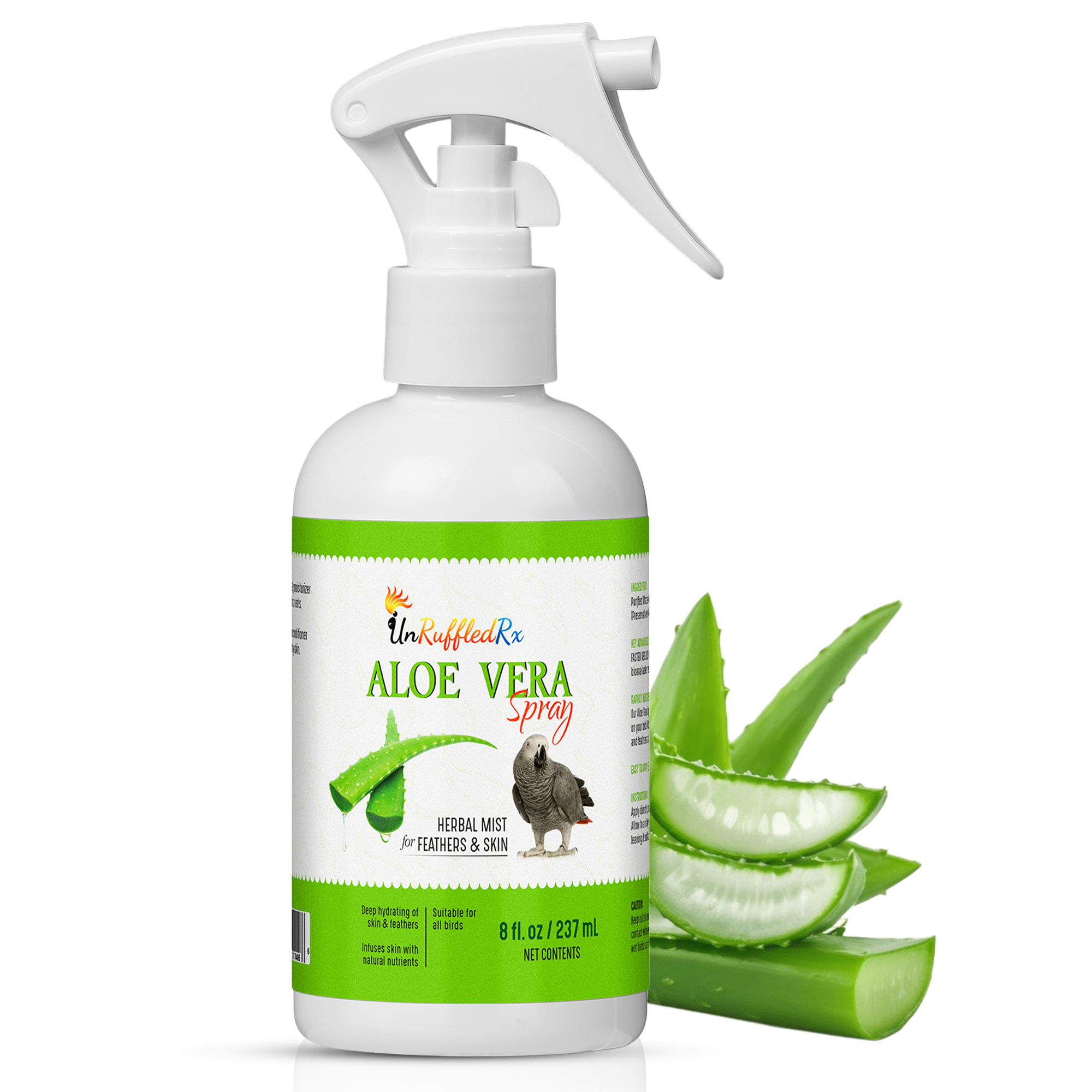
- Offering bathing as an option, not an event—light misting from a distance, a shallow dish, wet leafy greens, or warm shower steam.
- Let your bird set the pace. Stop if they get stressed.
- Start slow. One light spray followed by a treat is plenty at first. Over time, you can work up to a few sprays before rewarding, or offer quiet praise while your bird checks out a water dish. Small, positive experiences add up and help bathing stop feeling like a big deal.
What often backfires
- Increasing bath frequency when the bird is already uncomfortable or resistant.
- Forcing water contact, which can turn bathing into a stress trigger instead of a relief.
- Relying on sprays alone in very dry air without addressing humidity.
A quick note on safety
Any humidity or bathing setup should be clean, unscented, and well maintained. Dirty humidifiers, added fragrances, or cold drafts can create new problems that look like skin or feather issues but are actually environmental.
| WHAT OFTEN HAPPENS | TRY THIS INSTEAD |
|---|---|
| Spraying suddenly, or using water to interrupt behavior that feels “wrong” in the moment | Offering water calmly and separately, so bathing doesn’t feel like correction |
| Bathing only when it fits our schedule | Offering water regularly and letting your bird choose when they’re interested |
| Sticking with one bathing style even though your bird clearly avoids it | Trying a few different options and watching which ones your bird feels comfortable with |
| Strong spray, cold water, or water aimed directly at the body | Gentle mist, comfortably warm water, or indirect contact from above — more like light rain |
| Assuming resistance means “my bird hates baths” | Assuming this particular method just doesn’t feel safe or comfortable yet |
How does this tie into molting and plucking?
Why molt can make everything feel worse
During a molt, new feathers are pushing through the skin, sometimes all at once. If the skin is dry or irritated, that process can feel uncomfortable or even painful. Dry indoor air makes skin feel tighter, which is why birds often scratch and preen more during a rough molt. They’re not misbehaving — they’re trying to get relief.
Why early support matters
When you support skin comfort early, you reduce the urge to scratch and over-preen in the first place. Comfortable skin makes feather growth easier, and that lowers the chance that normal grooming turns into a habit or fixation. Small changes made early tend to work better than big interventions later.
What this is — and isn’t
Dry air by itself doesn’t cause severe feather destruction. When damage escalates or feathers are being actively broken or pulled, there’s usually more going on than humidity or bathing alone.
Early signs worth paying attention to
- Preening that becomes constant, intense, or hard to interrupt.
- Feathers breaking or looking chewed instead of shedding naturally.
- Skin starting to look red, irritated, or sore.
These are signs to adjust support early — not reasons to panic.
When should I stop and call a vet?
Environmental fixes can help a lot early on when the skin and feathers are still intact.
Call a vet if you see
- Bald patches or missing feathers
- Bleeding, scabs, or open skin
- Broken pin feathers that look painful
- Sudden changes in appetite or behavior
Do not wait if
- Symptoms are getting worse
- Your bird seems painful or distressed
- Home changes make no difference
- You’re unsure and uneasy
Why timing matters
- Early care prevents escalation
- Skin damage heals better when addressed quickly
- Plucking patterns are easier to stop early
What should happen next?
If this is mild and seasonal
You should see less scratching and calmer preening within a week or two of improving comfort.
If this is related to molt
Feather comfort improves gradually over weeks as new feathers grow in.
If nothing improves
If you don't notice improvements after a week or two, it is time to loop in your veterinarian.
The goal
Support comfort, reduce irritation, and know when to stop adjusting things at home.
Related posts bird owners often find helpful
Why Is My Bird Molting and Itching? Complete Feather & Skin Care Guide
How to Help a Molting Bird Without Making Things Worse
Why Seed Diets Fail Birds During Molt (and What to Do Instead)
Pin Feathers Explained: When Molting Gets Itchy
Is My Bird Plucking or Just Having a Rough Molt?
References
Chen et al., Frontiers in Physiology (2020)
Cooper & Harrison, Avian Medicine: Principles and Application
Lightfoot, Merck Veterinary Manual (2024)
Meet Diane Burroughs, LCSW — licensed psychotherapist, ABA-trained behavior specialist, and avian wellness educator. With 30+ years of hands-on experience, Diane focuses on nutrition and behavior-first, science-backed care for pet birds.
SHARING IS CARING! PLEASE SHARE ON YOUR FAVORITE SOCIAL MEDIA NOW!