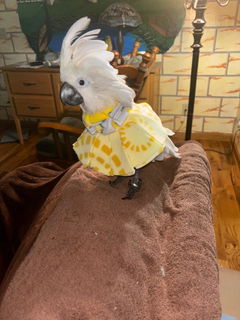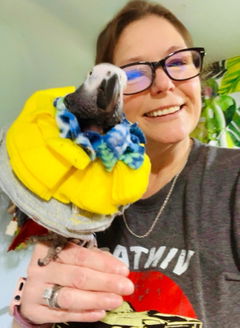
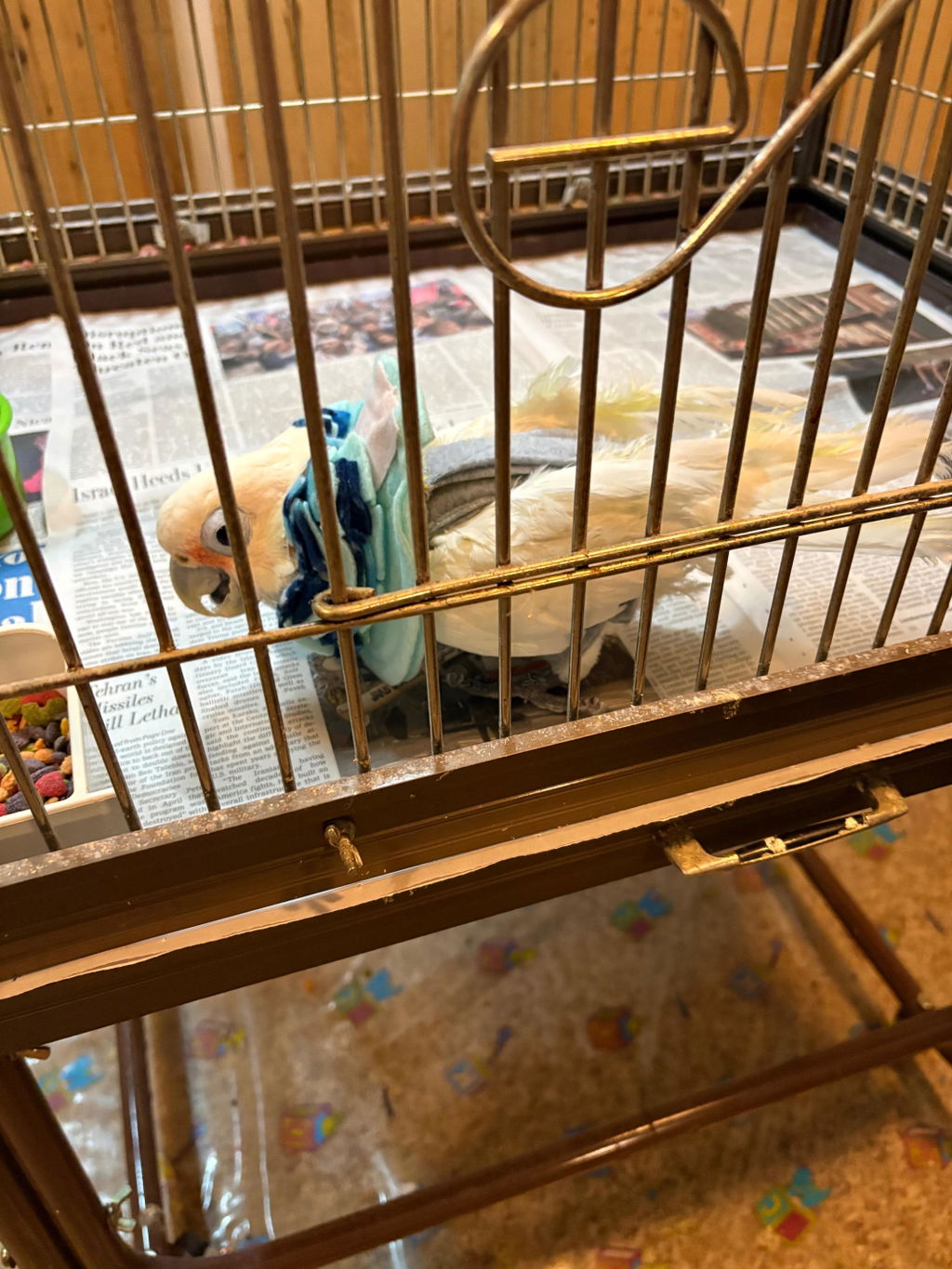
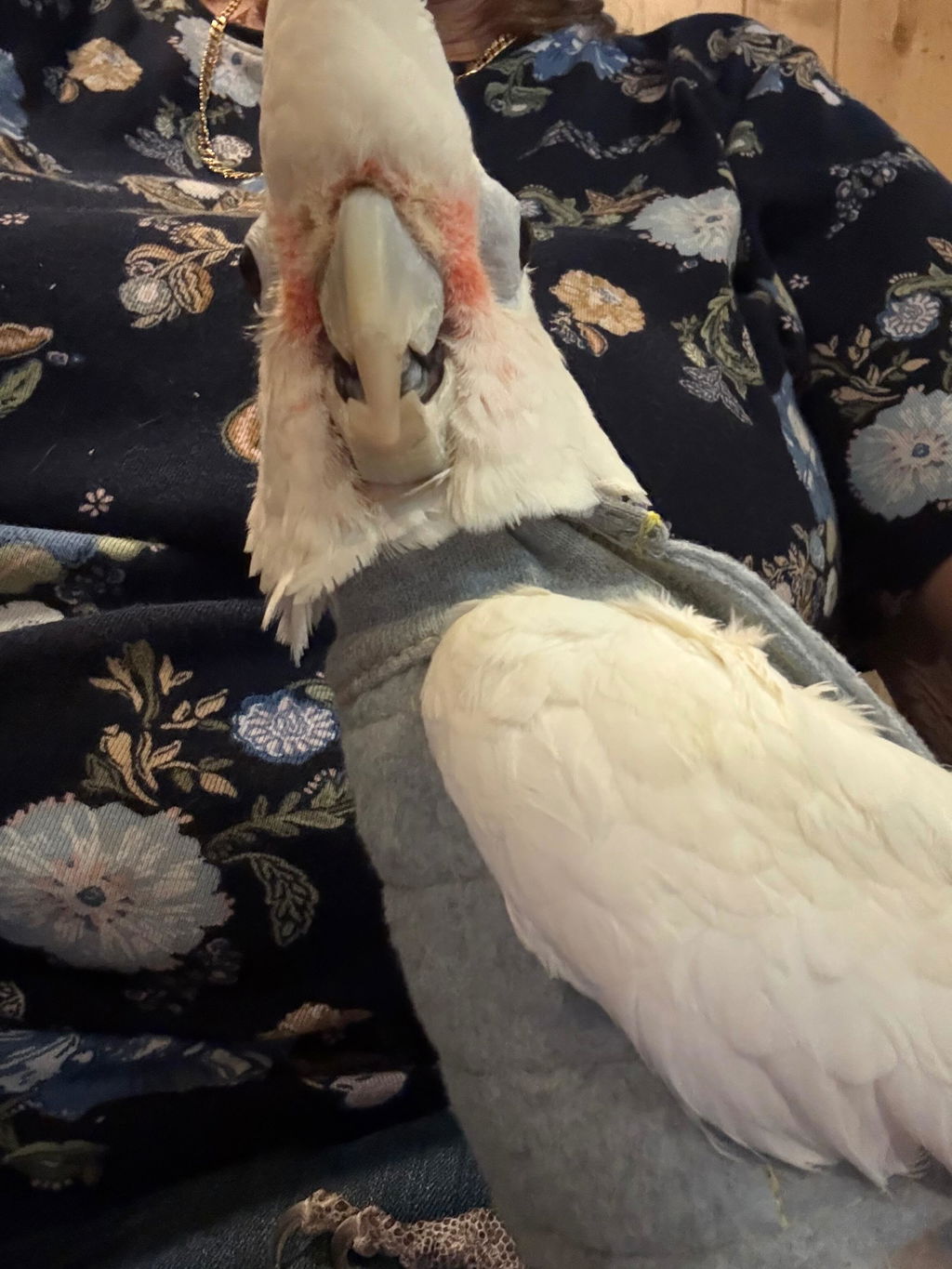
cockatoo parrot wearing a protective Beakguard Bird Vest to help prevent chest chewing
Beakguard bird vest on a cockatoo that self-mutilates
Beakguard bird vest closeup of quilted front panel
Beakguard bird vest back that shows how it attaches under the wings and along the back using hook and loop
Beakguard Bird Vest for Self-mutilation -opened up an laying flat showing velcro closure
woman cuddling her self-mutilating bird showing the problem that self-mutilators face
There is hope for self-mutilating cockatoos - the beakguard bird vest
BeakGuard vest stays close to the body so most birds can still climb, perch, eat, and get around normally.
Worried about your bird removing the vest? use moleskin to secure the velcro
Image showing collar acceptance training in 5 steps
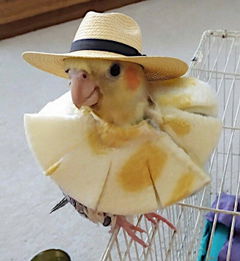
Beakguard bird vest may be paired with the Fringy Cone
BeakGuard Protective Bird Vest for Chest Chewers

UnRuffledRx

BeakGuard Protective Bird Vest for Chest Chewers

Sale price$ 64.99

Benefits

  • Reinforced inner layer protects the chest
  • Resists ongoing chewing and picking
  • Allows normal movement and perching when properly fitted.

Best Use

For birds that chew or damage feathers and skin on the chest or abdomen. Reinforced coverage helps protect those areas while you work on the underlying cause.

Size:Small
Quantity:

UnRuffledRx Bird Vest Size Guide

What Size BeakGuard Bird Vest Does My Bird Need?

Start with your bird's weight in grams. The BeakGuard Vest comes in four sizes to help protect vulnerable chest and abdominal skin. Use the chart below to find your starting size. Species examples are helpful, but always cross-reference your bird's actual weight.

Small

250–349 g
Example:
Goffin / Sm Timneh

Medium

350–499 g
Example:
African Grey

Large

500–800 g
Example:
Umbrella Cockatoo

XL

800–1,100 g
Example:
Moluccan Cockatoo

Made for a secure, comfortable fit: The BeakGuard Vest wraps around the chest and abdomen, with a reinforced protective panel over vulnerable skin. A properly fitted vest allows your bird to eat, perch, climb, and move comfortably.

Not sure how much your bird weighs? Your avian veterinarian may already have a recent weight on file. You can also weigh your bird at home using a digital kitchen scale that measures in grams. A reliable scale often costs around $25 and is useful for monitoring your bird's health, too.

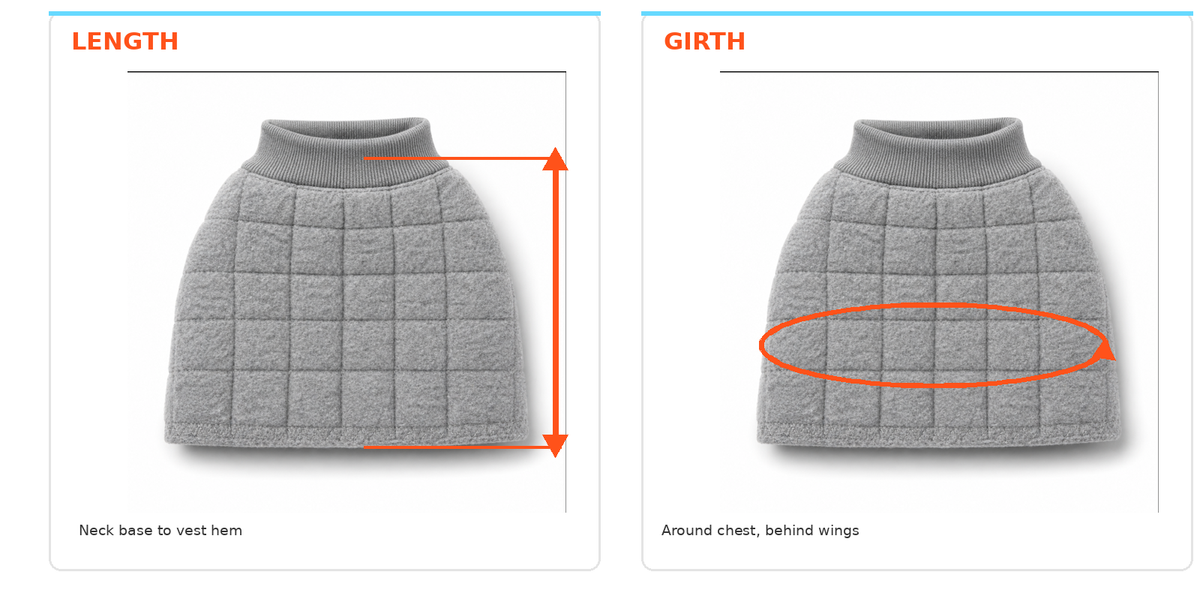
How to Check Vest Length and Girth

Length is measured from the base of the neck to where the vest ends on your bird's body. Girth is measured around the chest, just behind the wings.

These measurements help confirm that the vest will cover the area needing protection without being too loose or restrictive.

Beakguard Bird Vest Sizing

What should a good fit look like? The vest should cover the vulnerable chest and abdominal skin without restricting breathing, normal crop expansion, or wing movement. It should stay securely in place while your bird goes about normal activities.

Not Sure Which Size to Order? Ask Us!

We know how important it is to get the right protection when your bird keeps chewing or picking at its skin. We're happy to help you choose.

Call or text us at 719-650-0812. Tell us your bird's species and weight in grams. Pictures are especially helpful! A photo showing your bird's body and the area you're trying to protect helps us recommend the most appropriate BeakGuard Vest size.

Reinforced Chest Protection Without a Bulky Cone

The UnRuffledRx BeakGuard Bird Vest protects vulnerable chest and abdominal skin from persistent chewing and picking. Unlike a traditional bird collar, the vest covers the injured area directly without restricting neck movement.

A tough 1680-denier ballistic nylon insert creates a protective barrier, while the soft inner lining rests comfortably against your bird's body. The close-fitting design allows normal climbing, perching, and wing movement when properly fitted.

The snug fit also provides a gentle, swaddling-like feeling that some parrots may find comforting.

BeakGuard or Fringy Cone? Choose BeakGuard for targeted chest and abdominal protection. The Fringy Cone provides broader protection by limiting how far your bird can bend to reach its shoulders, underwings, and body. Both may be used together when additional protection is needed under veterinary guidance.

Designed for ongoing protection while injured skin recovers. The reinforced material resists chewing but is not indestructible. Active skin injuries also require avian veterinary care.

Self-mutilating cockatoo wearing a Beakguard bird vest

Built for Birds That Chew

The BeakGuard pairs a reinforced 1680-denier ballistic nylon insert with quilted stitching to help resist chewing and limit the spread of fabric damage. A soft inner lining rests against your bird’s body.

Together, these layers create a protective barrier over vulnerable chest and abdominal skin while allowing normal movement when properly fitted.

No fabric vest is chew-proof. Inspect regularly and remove the vest if it becomes damaged or your bird can reach underneath it.

Vest Training

For the first few days, focus on making the vest a positive experience. Keep a few favorite treats in your pocket and reward your bird whenever you see them calmly wearing the vest, playing with toys, eating, preening, or engaging in other normal activities. Over time, many birds learn that wearing the vest predicts good things rather than something to fear.

Lightweight, flexible, and designed for daily wear.

Designed for Comfort. Built for Protection.

Beakguard bird vest back that shows how it attaches under the wings and along the back using hook and loop

No Unsafe metal

Bird-Safe Closure System

Closeupof Beakguard Vest neckline

No pressure on crop

Stretchy Ribbed Knit Neck Opening

Gray parrot perched on a wooden stick with a blurred person in the background

comfortable design

Because Healing Takes Time

Got Questions?

Product Questions

Wear time depends on when your bird chews and how comfortably the vest fits. Start with short, supervised sessions and reward calm behavior to help your bird get used to it.

Once your bird is comfortable eating, drinking, perching, and moving in the vest, ask your avian veterinarian about a wear schedule suited to your bird, including whether overnight use is appropriate.

Check the fit, skin underneath, and fabric regularly. The goal is consistent protection during chewing-prone times, balanced with comfort and routine checks.

This collar comes in heather gray. Sorry. Custom colors are not available.

A determined bird can damage any fabric vest, and the BeakGuard is chew-resistant, not chew-proof.

Its reinforced 1680-denier ballistic nylon insert helps resist chewing, while quilted stitching helps contain localized fabric damage. This makes it an option for birds that need reinforced chest and abdominal coverage, but it still requires regular inspection.

Check for loose threads, worn areas, and damage around the edges and closures. Remove the vest if it becomes damaged or your bird can reach underneath it. Choosing the right size is an important first step, so check the sizing guide before ordering.

To help it hold up:

  • Add moleskin to areas your bird targets
  • Use a light deterrent spray on the outside if needed
  • Reward calm behavior and ignore chewing attempts

Most owners find it holds up far better than softer or single-layer vests, especially when used consistently.

It can take a little practice for your bird to get comfortable with something new. Begin with short, supervised introductions and offer favorite treats to teach your bird that the vest is safe and comfortable. 

Check the sizing guide for a secure, comfortable fit, and reward calm moments rather than distracting your bird only when it tugs. If your bird keeps trying to remove the vest, pause and reassess the fit and comfort before extending wear time.

Not necessarily. But chest chewing can become a stubborn habit, even after the original problem has been addressed.

The vest protects your bird from further injury while you work on what's driving the chewing. Start with a healthy diet, plenty of enrichment, and positive reinforcement to encourage activities that keep your bird's beak busy and away from its chest.

Some birds eventually do well without a vest, but it's smart to keep one handy. Stress, hormonal changes, or disruptions in routine can bring the chewing back. If you notice your bird starting to focus on its chest again, don't wait for an open wound. Reintroduce protection early.

The goal isn't necessarily to keep your bird in a vest forever. It's to break the cycle of injury, build healthier habits, and know when to step in before a setback becomes serious.

Shipping

Enjoy complimentary shipping on US retail orders over $69. Otherwise, it's just a pocket-friendly $4.99 to any US address.

Orders placed by 10:30 AM - MST ship the same day, except Sunday. Standard shipment usually takes 4-7 days. Create an account to get tracking information.

Yes—we ship internationally. Most customers use a U.S.-based shipping broker to handle customs, duties, and delivery. Bird collars typically clear without issue, but supplements may be subject to your country’s regulations.

👉 See our full international shipping details here:https://birdsupplies.com/pages/shipping-policies

You can opt for speedy delivery through USPS (2-day) or UPS overnight for an additional fee.