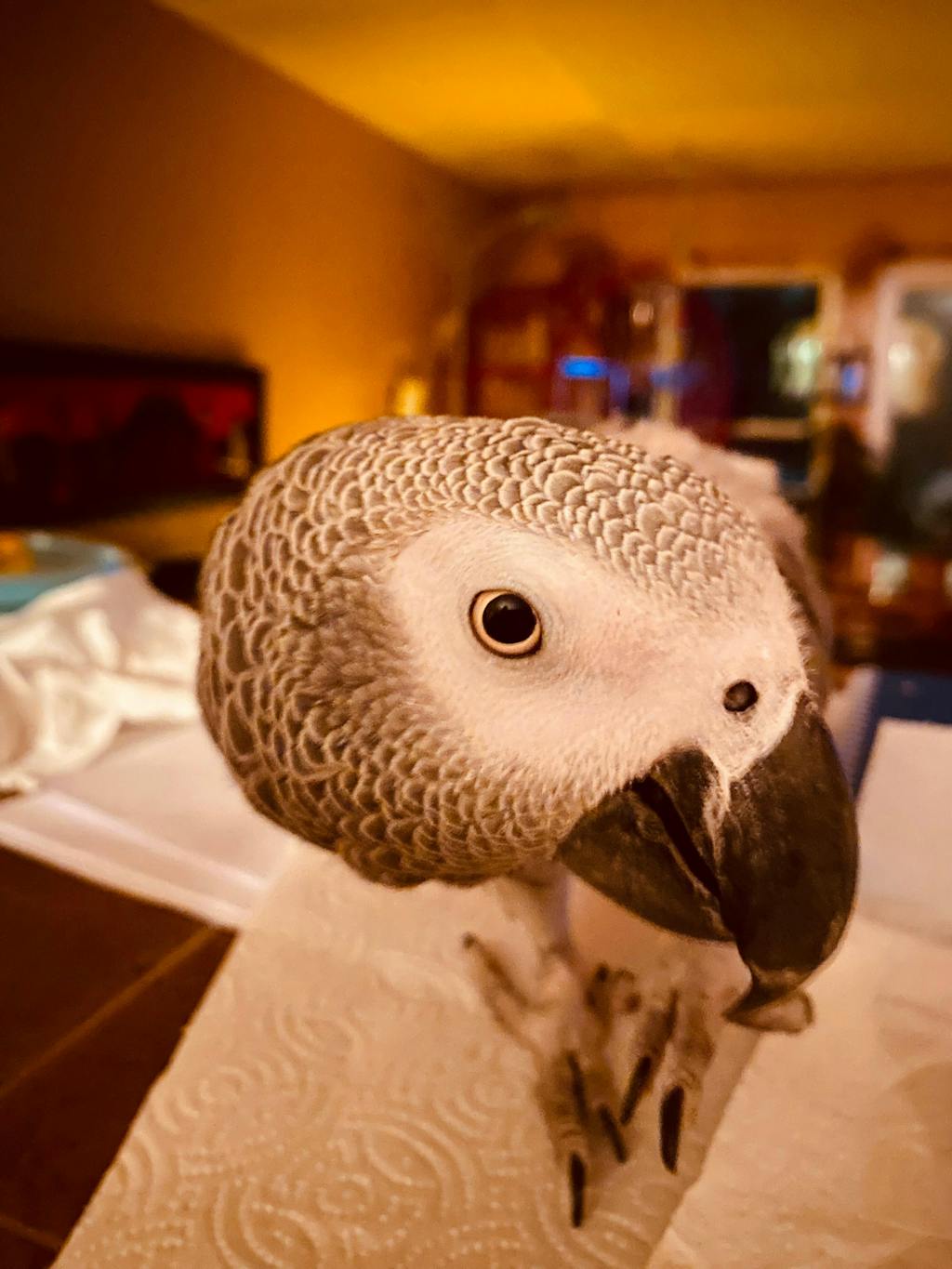

"I woke up to a floor full of feathers and my heart dropped."
If you've said those words today, take a deep breath. You aren't alone. Every bird owner eventually hits that morning where the cage looks like a pillow exploded. The panic is real—your brain immediately goes to "is he plucking?" or "is he sick?"
But before you panic-call the vet, we need to do a little "feather forensics." Most of the time, your bird isn't broken; he’s just growing a new suit. He’s going to be a total cranky-pants for a few weeks, but once you know what to look for, you can tell the difference between a healthy molt and a behavioral problem in about ten seconds.
💡 Note: This post is a deep-dive supplement to our Is Your Bird Molting? The 2026 Expert Guide to New Feathers.
The 10-Second "Shaft Test" Identifying Molting vs. Plucking
Before you worry about a vet bill, pick up one of those fallen feathers. The feather itself tells the story of how it left the body.
✔️ If it's a Molt
The "quill" (the part that was in the skin) will be smooth, clear, and slightly pointed. It looks like it just slid out naturally. You’ll also see white flakes (bird dander), which is just the old waxy coating falling off new feathers.
⚠️ If it's Plucking
The feather will look "chewed," jagged, or snapped off. If the quill is still in the skin but the feather is gone, or if the tip of the quill is bloody and ragged, your bird is likely over-preening or picking.
Biology vs. Behavior: Why Your Bird Is Losing Feathers
It’s important to understand that these two issues come from very different places:
- Molting is a "Biological Tax": Growing feathers is a massive energy drain. Your bird is redirecting all its protein and calcium to grow a new suit. Without the right "building blocks," the molt stalls, leaving them itchy for months.
- Plucking is a "Stress Signal": This is often a behavioral release. Whether it’s boredom, high hormones, or environmental stress, the bird is using its beak to cope with an internal feeling.
🚨 The Safety Check: Blood Feathers
While you’re doing your "feather forensics," look for Blood Feathers. A new "pin" feather has a live vein running through the shaft.
- The Look: A dark blue, purple, or red tint inside the waxy shaft.
- The Action: If a blood feather snaps, it’s an emergency. Always keep styptic powder or cornstarch ready to stop the bleeding immediately.
The 2-Step "Peace of Mind" Check
1. The "Mist & Part" Test
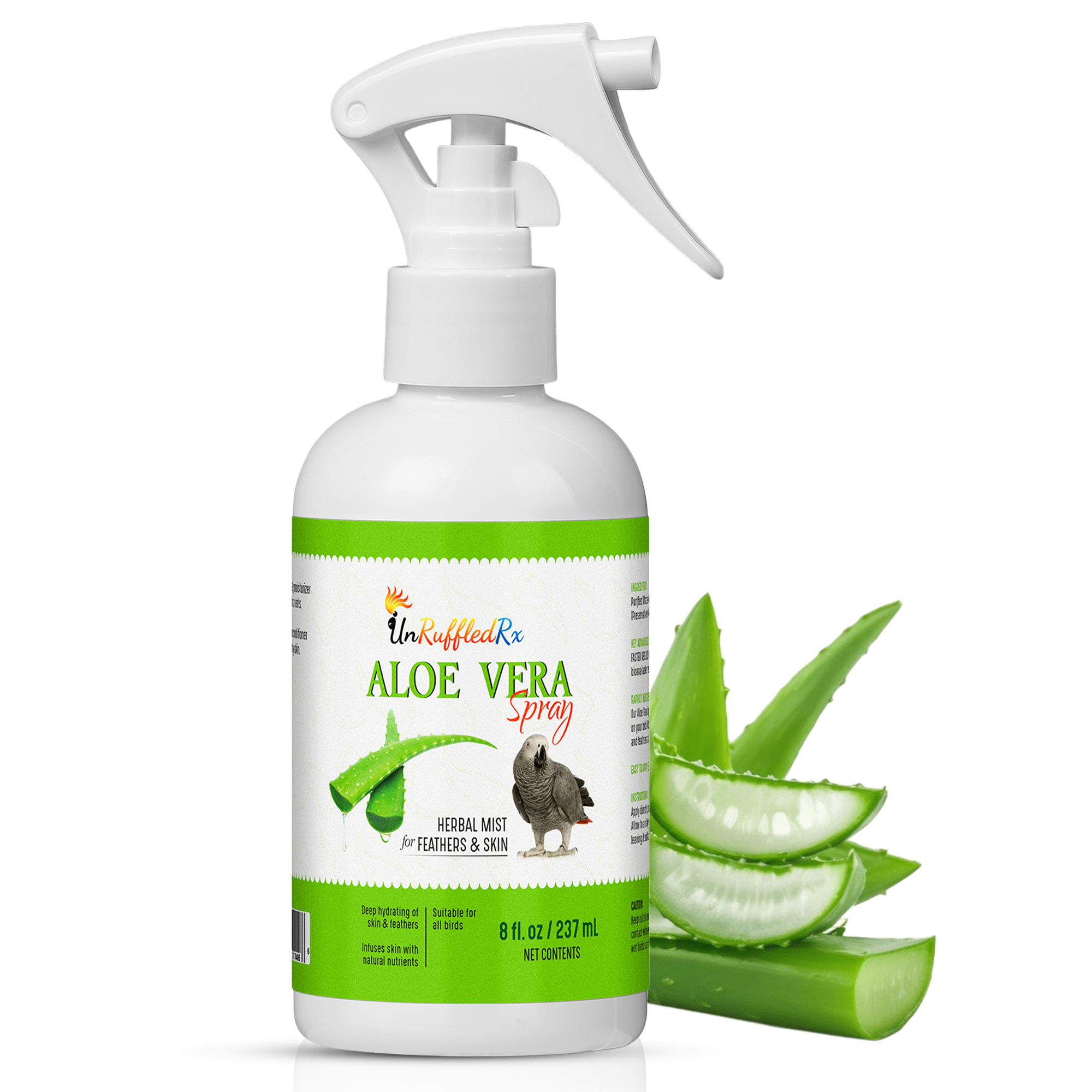
Dry feathers hide the truth. Lightly mist your bird with water or Aloe Vera Spray. Once the feathers are damp, part them gently to see the skin. Look for new "spikes" (pin feathers) pushing through. Spikes = Molting. Bare, red skin = Plucking.
2. The "Hot Spot" Species Check
Behavioral plucking often follows a predictable "map" depending on the species. While a bird can technically start plucking or over-preening anywhere on their body, these are the most common starting points I see in my practice:
| Species | Common Plucking "Hot Spots" |
|---|---|
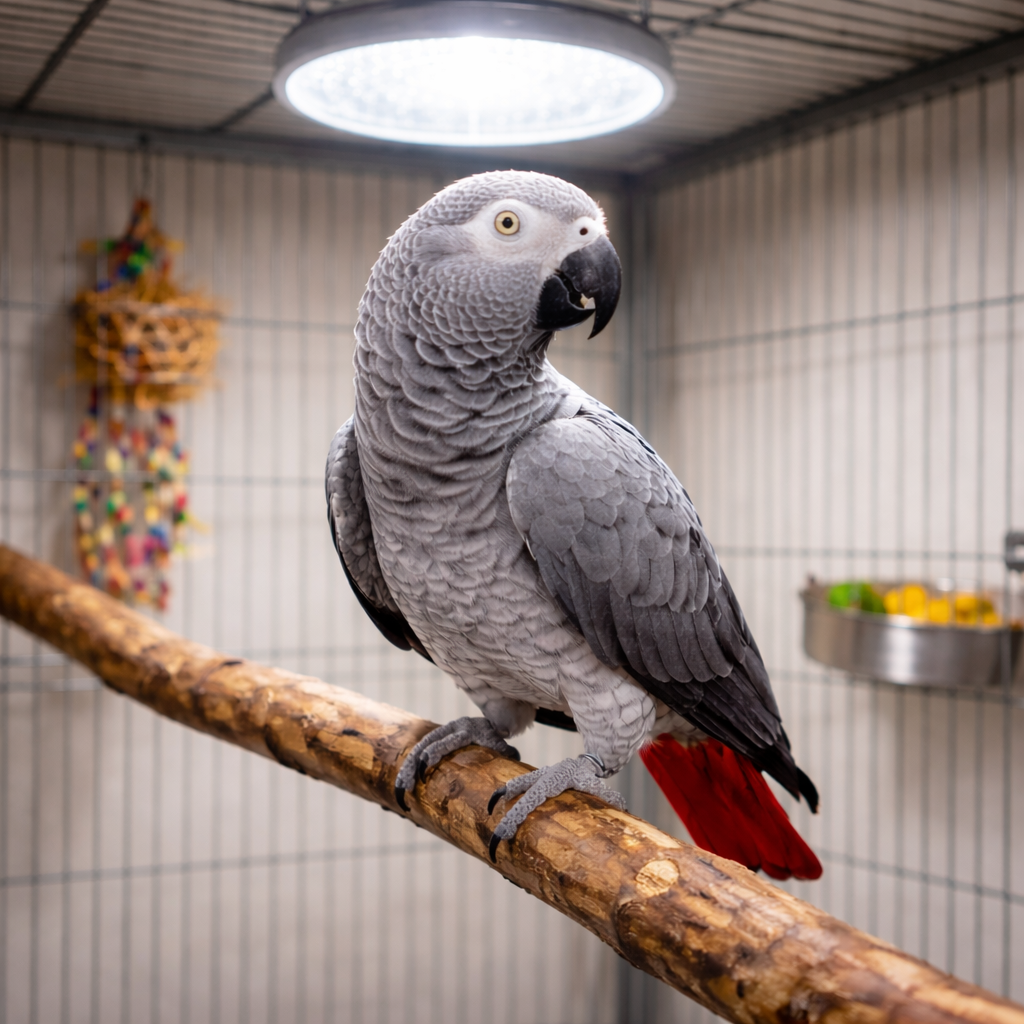
| African Greys | Under the wings or the inner thighs. |
| Cockatiels | The shoulders or the center of the chest. |
| Cockatoos | The chest, belly, and even the head. Cockatoos are masters at using their feet to pluck where their beak can't reach. |
The Rule of Thumb: In a normal molt, head feathers usually look like "spikes" (pin feathers) rather than totally bare, raw, or scratched skin.
The Best Bird Molting & Skin Relief Recovery System
Whether your bird is struggling through a massive molt or dealing with the skin irritation of plucking, their system is under fire. One treats the itch, the other treats the deficiency.
- ✔️ Aloe Vera Spray: Instant cooling for itchy, angry skin.
- ✔️ FeatherUp!: The amino acid "building blocks" for new growth.
- ✔️ OmegaGlow & Red Palm Oil: Restores skin elasticity and "shine."
Stop the itching and start the regrowth today:
Shop the Ultimate Feather Health Kit →Related Posts Bird Owners Often Find Helpful
🥗
The "Feather Fuel" Guide: Why Seeds Aren't Enough
Learn why seeds lack the amino acids required to grow strong, glossy feathers.
🚿
Spa Day: Humidity & Bathing for Itchy Birds
Simple tricks to soften pin feather sheaths and stop the "molt itch" naturally.
🧠
Managing the "Cranky-Pants" Molting Phase
How to handle hormonal shifts and irritability without breaking your bond.
About the Author: Diane Burroughs, LCSW, is the founder of UnRuffledRx® and a specialist in avian feather plucking. As a licensed psychotherapist and ABA-trained behavior specialist, Diane has spent over 30 years developing "behavior-first" protocols and nutritional supplements to help parrots thrive.
References:
- Chen, C., et al. (2020). Macroenvironmental and nutritional regulation of the avian molt cycle. Frontiers in Physiology, 11, 567-582.
- Cooper, J. E., & Harrison, G. J. (1994). Avian medicine: Principles and application. Wingers Publishing.
- Lightfoot, T. L. (2024). Molting in birds. Merck Veterinary Manual.
SHARING IS CARING! PLEASE SHARE ON YOUR FAVORITE SOCIAL MEDIA NOW!