
Is this guide for you? If your bird has been indoors most of the winter without direct sunlight or a proper UVB light, and you’re seeing weaker perch grip, more shredding than usual, dull feathers, lower activity, or a shorter fuse — this applies to you. If your bird has consistent full-spectrum lighting, a verified balanced diet, and no changes in strength, behavior, or feather quality, you likely need seasonal maintenance, not correction.
Quick Diagnostic: Is Winter Creating a Calcium Problem?
| If the bird is... | Expert Verdict |
|---|---|
| Sliding on perches or gripping less firmly | Possible early calcium depletion affecting neuromuscular strength. Evaluate UVB exposure and dietary D3. |
| More irritable, reactive, or shredding excessively | Magnesium and calcium imbalances can heighten nervous system excitability. Assess mineral support. |
| Feathers look dull, stress-barred, or slow to molt | Low vitamin D3 reduces calcium utilization, impacting feather follicle integrity. |
Is this behavior normal?
Winter Light Loss Changes Physiology
No — it is not normal or safe for your bird to get weaker in winter. If your bird has been indoors for months without direct sunlight or a proper UVB light, and you’re seeing any of the signs below, treat it as a real problem—not a seasonal quirk.
- Weaker perch grip or slipping on perches
- Falling off the perch or choosing the cage floor more often
- Shorter flights, clumsier landings, or reluctance to fly
- More shredding than usual (restless, “can’t settle” energy)
- Dull feathers, stress bars, or worsening feather breakage
- Irritability or a shorter fuse
- Lower activity level (less movement, less engagement)
A healthy indoor bird should maintain strength, coordination, feather quality, and normal behavior year-round. When those change in winter, it often points to a light–vitamin D3–calcium absorption issue that needs to be corrected.
Pellets Alone May Not Be Enough
Observation: Your bird eats pellets and vegetables, but you’re still seeing weaker grip, shorter flights, dull feathers, or lower energy.
What’s really happening: Calcium only works if your bird can absorb it. Without UVB light (sunlight or a proper bird light), your bird can’t make vitamin D3. Without vitamin D3, the calcium in food simply passes through the body instead of strengthening bones and supporting nerves and muscles.
What this means for you: More pellets, a cuttlebone, or a basic calcium product will not fix the problem if vitamin D3 is missing. Your bird needs usable calcium — not just more calcium sitting in a dish.
What to do now:
- Install a safe, full-spectrum bird light that provides UVB exposure.
- Or use a complete calcium supplement that includes vitamin D3 (and magnesium for proper activation).
- Stop relying on cuttlebone, mineral blocks, or incomplete calcium-only products during low-light months.
Winter is a light problem first. Fix the light or fix the D3 support — that’s what protects your bird’s bones and stability.
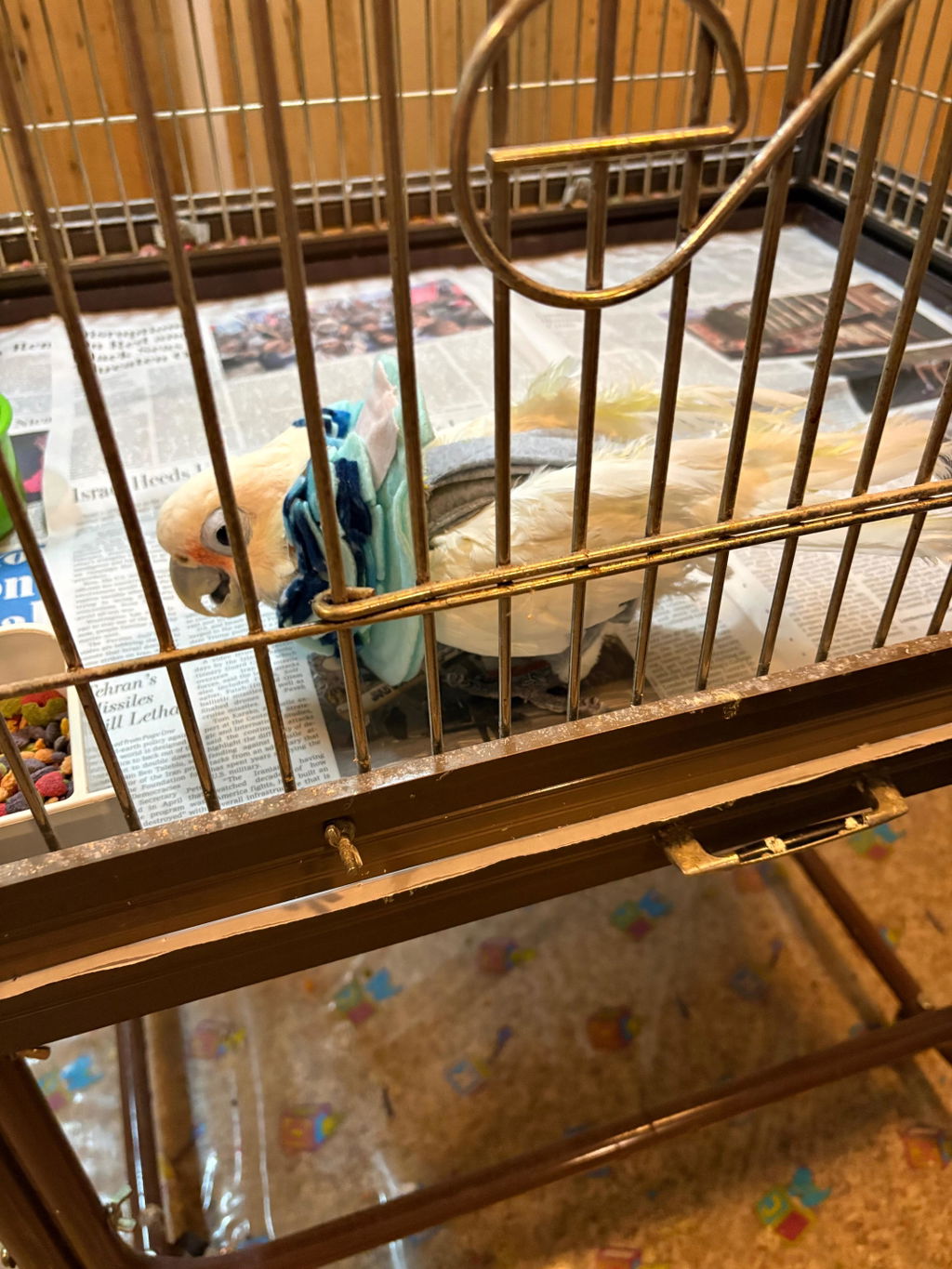
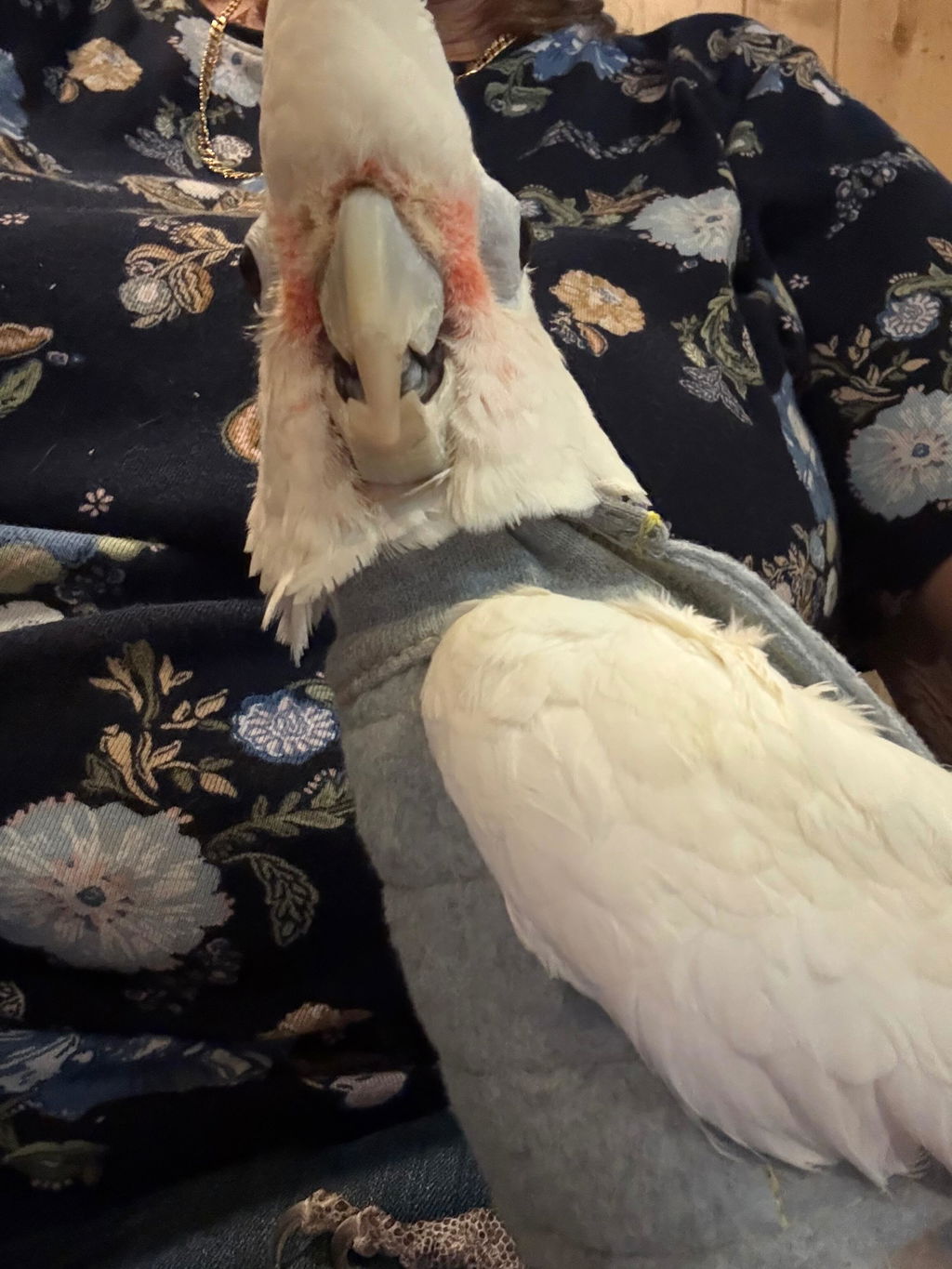
Visual Check: Winter Stable vs. Winter Depleted
 |
 |
|
Healthy / Winter Stable — what to look for
|
Calcium Depleted — what to look for
|
Note: A single photo can’t diagnose calcium deficiency. Use this as a visual cue to prompt a light + nutrition check (and a vet visit if weakness is progressing).What do I do next?
The 3-Step Winter Bone Reset
-
1. Environmental (Fix the light): Use a bird-safe UVB light and put it on a timer. Most birds do best with a short, consistent daily “UV window” (often around 1–3 hours/day). More is not better—overexposure to UV can irritate eyes and skin and is not a safe all-day setting. Follow the manufacturer’s distance and time guidelines.
-
2. Support (Use a complete formula): Add UnRuffledRx Calcium + Magnesium + D3 so calcium can actually be absorbed and used for bones, nerves, and muscle function during low-light months. (Cuttlebone and mineral blocks are not reliable winter support.)
- 3. Monitor (Watch for real improvement): Once a week, check perch grip (slipping vs steady), coordination (short flights/clumsy landings), energy level, feather condition, and body weight. You should see stronger posture and a more stable grip as things correct.
When to call the vet?
⚠️ Expert Note: Birds will pull calcium out of their own bones to keep the heart and muscles functioning. This compensation can continue silently for weeks or months. By the time you see falling, tremors, or seizure-like episodes, bone strength may already be dangerously depleted.
Quick Decision Guide:
- 🟢 Eating, active, minor grip weakness?
Begin environmental + nutritional correction immediately. - 🟡 Tremors, falling, slow molt, or persistent lethargy?
Schedule an avian wellness exam and discuss calcium levels. - 🔴 Seizures, inability to perch, sitting fluffed on cage floor?
Emergency. Seek avian veterinary care immediately.
Specific Red Flags to watch for:
- Muscle tremors or twitching
- Egg-binding signs (straining, wide stance, tail pumping)
- Sudden inability to grip or repeated falling
Key Takeaways:
- Winter reduces UVB exposure, which directly reduces vitamin D3 production.
- No D3 → poor calcium absorption → weakened bones, nerves, and feathers.
- Magnesium is required to activate vitamin D metabolism.
- Winter is not neutral — it is metabolically demanding.
Ready for the next step?
Support Strong Bones Before Hormone Season HitsContinue Learning About Bird Nutrition
Many bird nutrition problems are connected. Explore these evidence-based guides to help you build a healthier diet for your bird.
- What Should My Bird Actually Eat Every Day?
- My Bird Won't Eat Pellets. Will They Starve?
- How Do I Teach My Bird to Eat Vegetables and Chop?
- Vitamin A Deficiency in Birds: Signs, Causes & Best Foods
- Should You Put Bird Supplements in Water or on Food?
- Do Indoor Parrots Need Bird Lights?
- Why Winter Is Hard on Bird Bones
References
- Filipović, S., Maksimović, A., Lutvikadić, I., Šunje-Rizvan, A., & Obhodžaš, M. (2020). Hypocalcemic syndrome in African grey parrot (Psittacus erithacus erithacus). Veterinaria, 65(1), 32–34. https://veterinaria.unsa.ba/journal/index.php/vfs/article/view/225
- Kirchgessner, M. S., Tully, T. N., Jr., Nevarez, J., Sanchez-Migallon Guzman, D., & Acierno, M. J. (2012). Magnesium therapy in a hypocalcemic African grey parrot (Psittacus erithacus). Journal of Avian Medicine and Surgery, 26(1), 17–21. https://doi.org/10.1647/2009-021.1
- Stanford, M. (2007). Clinical pathology of hypocalcaemia in adult grey parrots (Psittacus e erithacus). Veterinary Record, 161(13), 456–457. https://doi.org/10.1136/vr.161.13.456 | PubMed
Meet Diane Burroughs, LCSW – licensed psychotherapist and avian wellness educator. With decades of behavior and nutrition experience, she helps bird owners understand what their birds’ bodies are actually doing — and what to do next.