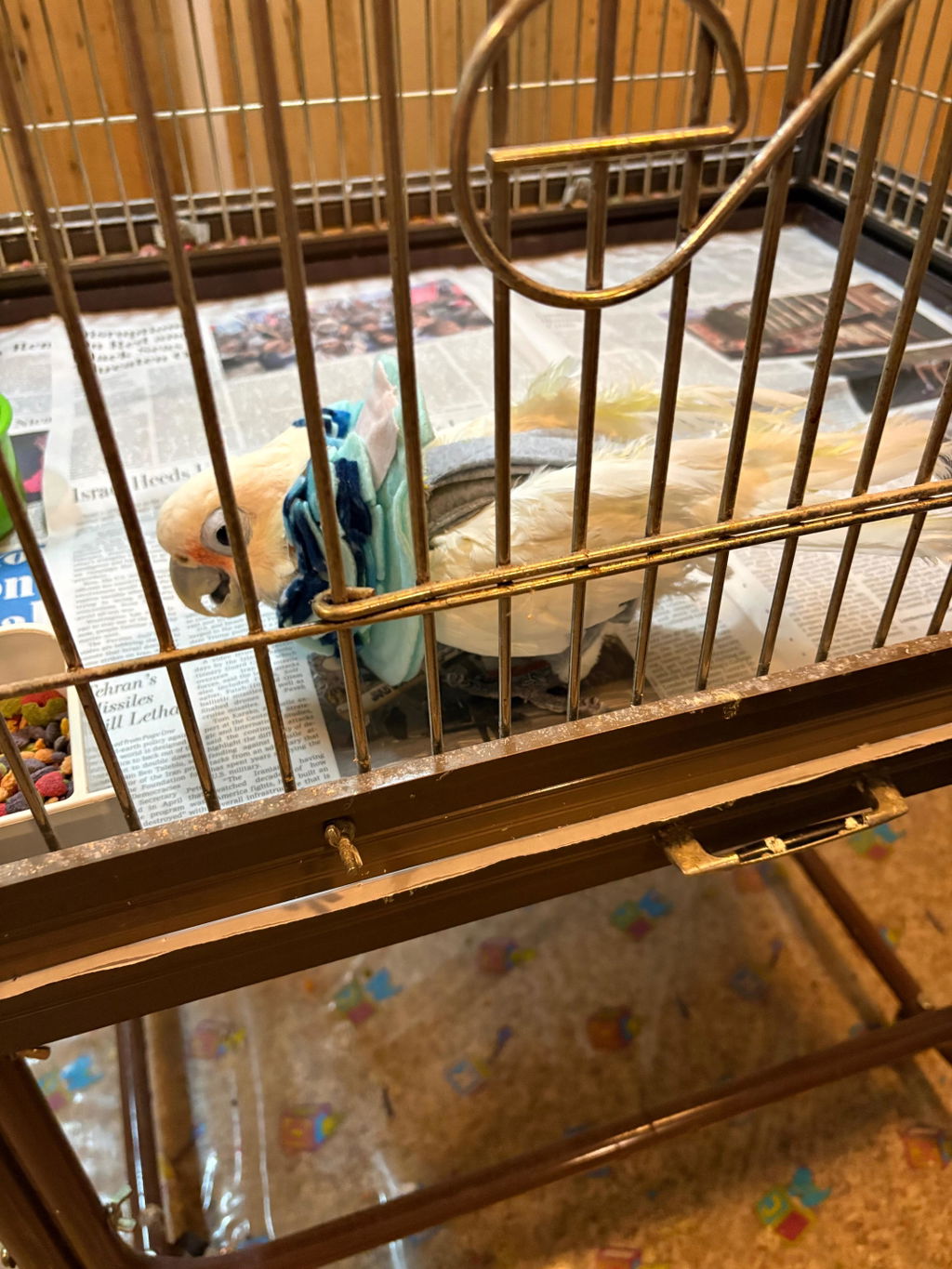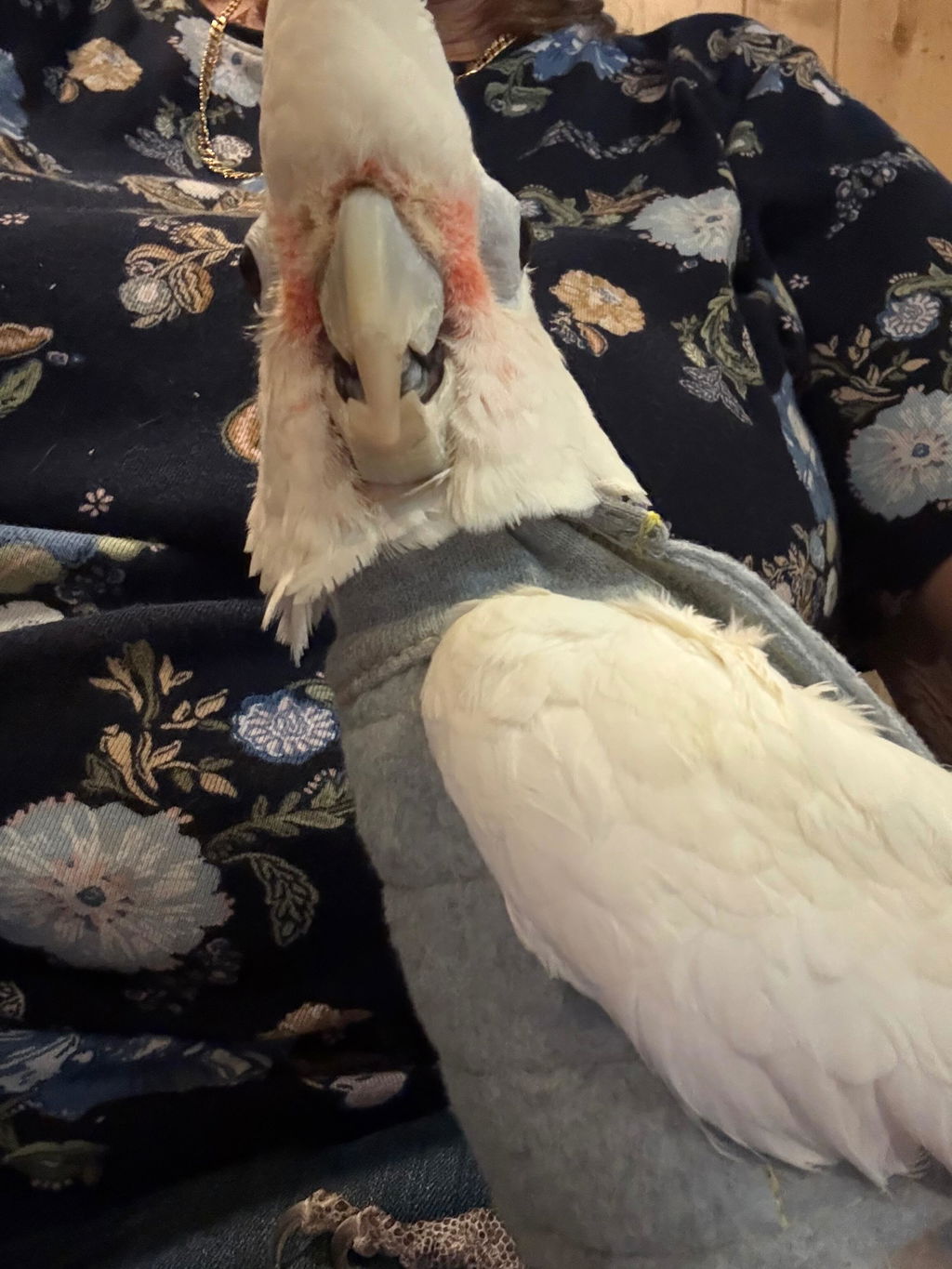

Who this post is for: If your bird keeps sitting with both eyes half closed and looks sleepier than usual, this guide is for you. We'll help you tell the difference between normal resting and the subtle changes that can mean a bird isn't feeling well.
Who this post is not for: If your bird is struggling to breathe, unable to perch normally, sitting weakly on the cage floor, poorly responsive, or suddenly appears seriously ill, don't use this guide to wait and watch. Contact an avian veterinarian or emergency veterinary service right away.
Quick answer: Birds normally nap and may briefly close or partially close both eyes when relaxed. But if your bird is repeatedly sitting with both eyes half closed during their normally active time — especially with fluffing, reduced activity, appetite changes, weakness, or breathing changes — take it seriously and contact your avian veterinarian that day.
This blog post is meant to help you evaluate a bird that seems unusually sleepy or less alert. If your bird is struggling to breathe, unable to perch normally, sitting weakly on the cage floor, poorly responsive, or suddenly appears seriously ill, don't use this guide to wait it out — contact an avian veterinarian or emergency veterinary service right away.
In This Guide
Is My Bird Just Sleepy — or Is Something Wrong?
Birds do nap during the day, so seeing your bird relax with both eyes partly or fully closed isn't automatically a sign of illness. The important distinction is whether you're seeing a normal rest period or a new pattern of sleepiness when your bird would usually be awake and active.
Normal naps happen
A healthy bird may take short daytime naps, especially after eating, bathing, playing, or during a naturally quiet part of the day. A resting bird should still become alert again and return to normal behaviors such as eating, climbing, vocalizing, preening, and interacting.
What matters most is knowing what's normal for your individual bird. A familiar afternoon nap is very different from a bird that suddenly starts spending much more of the day sitting quietly with its eyes half closed.
Half-closed eyes during active time are more concerning
If your bird keeps both eyes half closed when they would normally be awake, watching you, playing, or moving around the cage, pay attention. Sleeping more than usual with closed eyes and becoming less active are recognized signs that a bird may be ill.
A new or persistent change in alertness shouldn't simply be written off as being tired. If your bird continues looking unusually sleepy during their normal active time, contact your avian veterinarian that day for guidance.
Look at the whole bird, not just the eyes
Half-closed eyes are a sign, not a diagnosis. Look at your bird's posture, activity level, appetite, breathing, droppings, balance, vocalizing, and responsiveness to help judge whether something has changed.
A bird that briefly naps and then returns to normal is much more reassuring than one that stays fluffed, quiet, less responsive, or less interested in normal activities. Often, the most important clue is simply that your bird is behaving differently than usual.
Pro tip: Knowing what’s normal for your bird means paying attention to the little signs of everyday activity. Check in at least once a day — ideally morning and evening — for evidence that your bird has been eating, moving, chewing toys, interacting with the cage environment, and producing normal droppings.
An untouched food dish, unusually clean cage area, fewer droppings, toys that haven’t been disturbed, or a bird sitting in the same spot for long periods can be early clues that activity has changed. These small details are often easier to recognize when you make a habit of noticing them before something seems obviously wrong.
What Other Signs Should I Look For Right Now?
Half-closed eyes mean more when you look at what the rest of your bird is doing. Compare what you're seeing right now with your bird's normal daily routine.
More reassuring signs
- Takes a brief nap, then becomes alert again
- Eyes open normally when you approach or interact
- Eating and drinking normally
- Climbing, playing, chewing toys, and moving around the cage
- Vocalizing and interacting as usual
- Perching normally with good balance and grip
- Droppings look typical for your bird
More concerning changes
- Keeps both eyes half closed during normally active times
- Stays fluffed up and unusually quiet
- Seems less responsive to you or the environment
- Eating, drinking, playing, or vocalizing less than usual
- Sitting in one place for unusually long periods
- Sitting low on the perch, gripping differently, or losing balance
- Fewer or noticeably different droppings
- Sneezing, nasal discharge, tail bobbing, or increased effort to breathe
Several small changes together matter
One brief nap may mean very little. But half-closed eyes combined with persistent fluffing, reduced activity, fewer droppings, less interest in food or toys, or changes in breathing create a much more concerning picture.
Don't wait for one dramatic symptom before taking the change seriously. When several parts of your bird's normal routine shift at the same time, call your avian veterinarian that day for guidance.
Could My Bird Still Be Sick If They're Eating?
Yes. A bird that is still eating may still be sick, which is one reason appetite shouldn't be used as the only test of whether your bird is okay. Look at eating alongside alertness, activity, posture, breathing, droppings, and normal social behavior.
Eating is reassuring — but it doesn't rule out illness
Seeing your bird go to the food dish is encouraging, but it doesn't cancel out other changes. A bird that eats and then returns to sitting fluffed up with both eyes half closed, stops playing, or seems unusually quiet may still need veterinary attention.
Also pay attention to how much your bird is actually eating. Visiting the food bowl, cracking a few seeds, or picking through food isn't necessarily the same as consuming a normal day's amount.
Reality check: “My bird is still eating” is useful information — but it isn't an all-clear. If eating is the only thing that seems normal while your bird's eyes, posture, activity, or behavior have changed, pay attention to the changes.
Birds can hide illness surprisingly well
Birds instinctively tend to conceal weakness, and pet birds can continue some familiar behaviors even when they aren't feeling well. That's why early illness may show up as subtle changes — sleeping more, vocalizing less, sitting quietly, moving less, or simply not responding with their usual enthusiasm.
By the time a bird looks obviously sick, the problem may already be significant. Noticing those smaller changes early gives you a better opportunity to get veterinary help before your bird becomes much weaker.
Look beyond the food dish
Ask yourself these four quick questions:
- Activity: Is my bird climbing, playing, chewing, and moving around normally?
- Interaction: Is my bird responding to me, vocalizing, and showing normal interest in what's happening?
- Posture: Is my bird perching normally, or sitting fluffed, low, sleepy, or unusually still?
- Output: Are the droppings present in their usual amount and looking typical for my bird?
Trust a meaningful change from your bird's normal
You know what your bird normally does throughout the day. If a usually busy, curious bird suddenly spends much more time sitting quietly with both eyes half closed, that change matters even if they're still eating, drinking, or occasionally vocalizing.
Don't wait for every normal behavior to disappear before calling your avian veterinarian. A clear change in alertness or activity — especially when several subtle signs occur together — is enough reason to call that day and describe what you're seeing.
When Are Half-Closed Eyes an Emergency?
Half-closed eyes alone don't tell you how sick a bird is. The situation becomes much more urgent when unusual sleepiness appears with breathing difficulty, weakness, poor balance, inability to perch normally, or a bird that is becoming less responsive.
Emergency warning: If your bird is struggling to breathe, unable to stay on a perch, weak or unresponsive, or sitting collapsed on the cage floor, contact an avian veterinarian or emergency veterinary service immediately.
Breathing problems need urgent attention
Watch your bird from a short distance before handling them. Open-mouth breathing, obvious effort with each breath, wheezing or wet-sounding breathing, or the tail moving noticeably up and down with each breath can indicate respiratory distress.
A bird having difficulty breathing should be kept as calm as possible while you arrange emergency veterinary care. Unnecessary handling can add stress to a bird that is already struggling.
Weakness changes the situation quickly
A sick bird may begin sitting lower on the perch, gripping less securely, losing balance, or avoiding climbing and movement. A bird that can no longer perch normally or begins spending time weakly on the cage floor needs prompt veterinary attention.
Be especially concerned if your bird becomes difficult to rouse, stops responding normally to you, or seems too weak to move comfortably around the cage.
Don't wait when several warning signs occur together
A bird that simply takes an afternoon nap is very different from a bird sitting for long periods with both eyes half closed, feathers fluffed, activity reduced, and little interest in what's happening around them.
Several of these signs together raise concern:
- Both eyes remain half closed during normal active time
- Persistent fluffing or unusual quietness
- Reduced eating, playing, climbing, or vocalizing
- Weakness, poor balance, or difficulty perching
- Breathing changes or pronounced tail bobbing
- Less responsiveness to you or the environment
Don't wait for your bird to stop eating or become dramatically ill before seeking help. If several of these changes are happening together, contact your avian veterinarian promptly; breathing difficulty, severe weakness, inability to perch, or poor responsiveness should be treated as an emergency.
_________Could This Actually Be an Eye Problem?
Sometimes a bird looks sleepy because they don't feel well overall. Other times, partly closed eyes are telling you that the eye itself is uncomfortable. Take a moment to look closely at both eyes and compare them with each other.
Check for redness, swelling, or discharge
A healthy bird's eyes should normally look clear, bright, and open. Redness, swelling around the eye, excessive tearing, cloudiness, crusting, or discharge suggests that something more than ordinary sleepiness may be going on.
Do a quick eye check:
- Do both eyes look equally clear and open?
- Is there redness or swelling around either eye?
- Do you see watery, sticky, crusty, or colored discharge?
- Is your bird rubbing the face or eye against a perch or cage?
If one eye looks noticeably different from the other, that can be an especially useful clue to share with your avian veterinarian.
Repeated blinking or keeping an eye closed matters
Watch what happens when your bird becomes alert. A sleepy bird should normally open both eyes again. Repeated blinking, squinting, rubbing, or continuing to keep one or both eyes partly or completely closed can indicate eye discomfort and deserves veterinary attention.
In fact, swelling, redness, discharge, excessive blinking, and prolonged closure of an eye are considered serious eye symptoms in pet birds. Don't assume persistent eye closure is simply your bird being tired.
Sometimes the eyes are only part of the picture
An eye problem isn't always limited to the eye. In birds, eye inflammation and discharge can occur along with respiratory or sinus problems, and some eye changes may be associated with illness elsewhere in the body.
That's why you should keep looking at the whole bird. Sneezing, nasal discharge, breathing changes, persistent fluffing, reduced activity, appetite changes, or unusual sleepiness alongside an abnormal-looking eye make veterinary evaluation even more important.
If the eye itself seems to be the main problem, these guides may help you narrow down what you're seeing: Why Does My Bird Have Eye Discharge? and Why Is My Bird Rubbing Its Eye?
What Should I Do Right Now?
If your bird is repeatedly sitting with both eyes half closed during a time when they would normally be awake and active, don't spend several days waiting to see whether it passes. A new change in alertness is worth discussing with your avian veterinarian.
Call your avian veterinarian that day
Call your avian veterinarian that day and describe exactly what has changed. The veterinary team can help you decide whether your bird needs to be examined immediately, later that day, or monitored closely based on the other signs you're seeing.
If your bird is struggling to breathe, unable to perch, very weak, poorly responsive, or rapidly getting worse, treat the situation as an emergency rather than waiting for a routine appointment.
Describe the whole picture
“My bird's eyes are half closed” is a good starting point, but the veterinary team will want to know what else is happening. Before you call, take a minute to look at your bird and gather a few details.
Before you call, check:
- When it started: Is this new today, or has it been happening for several days?
- Activity: Is your bird climbing, playing, vocalizing, and interacting normally?
- Eating and drinking: Are they actually consuming their usual amount?
- Droppings: Are there fewer droppings or changes in color, consistency, or volume?
- Breathing: Any tail bobbing, wheezing, open-mouth breathing, or increased effort?
- Eyes and nose: Any redness, swelling, tearing, discharge, sneezing, or nasal discharge?
- Posture and balance: Are they perching normally or sitting lower, wobbling, or spending time on the cage floor?
If possible, a short video of the behavior or breathing pattern can also help your veterinarian understand what you're seeing — especially if the behavior changes once your bird is at the clinic.
Keep a sick-looking bird quiet and minimize stress
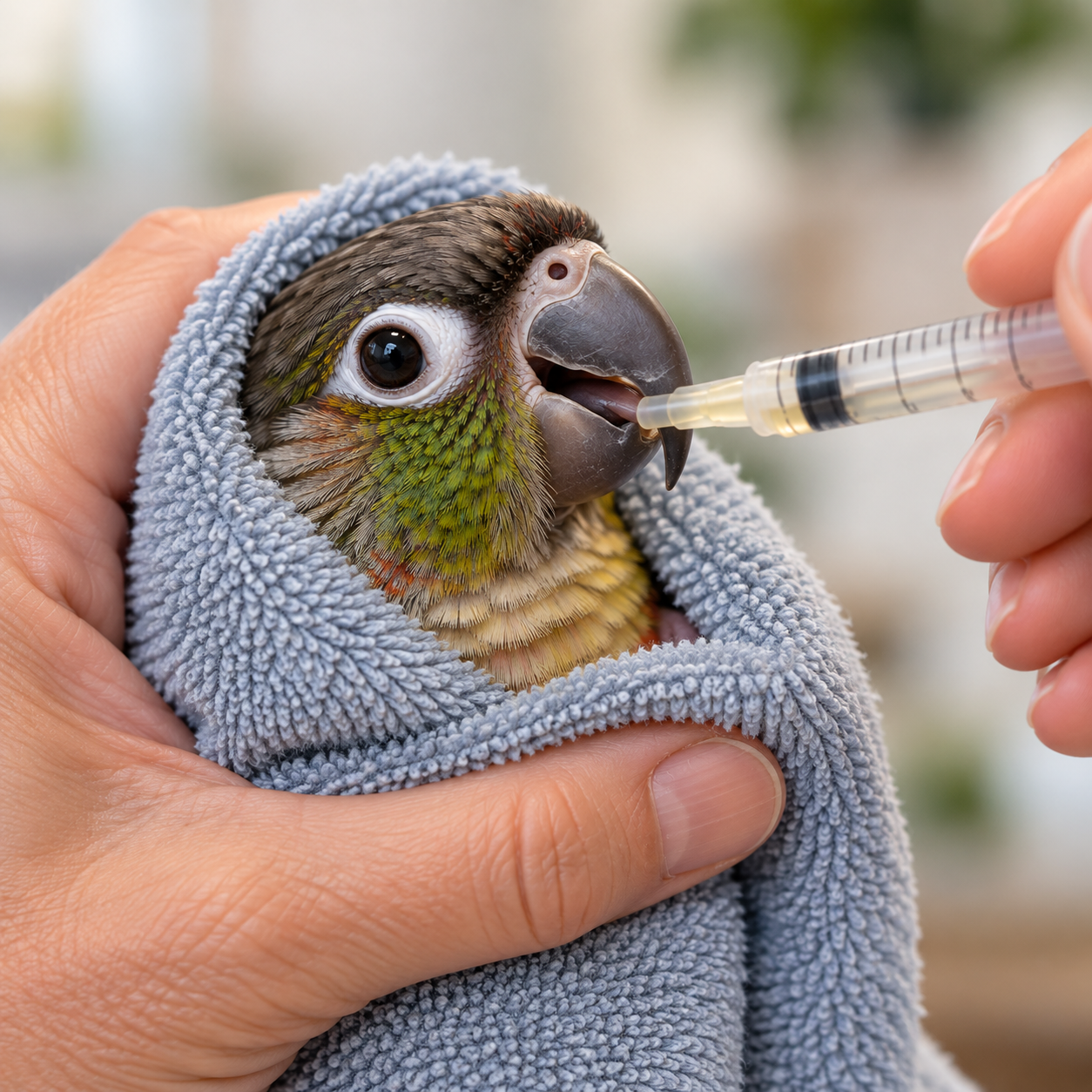
While you're arranging veterinary care, keep a bird that appears weak or ill in a quiet, familiar environment and minimize unnecessary handling, chasing, or activity. Sick birds may have much less reserve for coping with stress than healthy birds.
Continue observing from a short distance so you can notice changes in breathing, posture, responsiveness, and ability to perch. If your bird becomes weaker or develops breathing difficulty while you're waiting for veterinary guidance, the situation has become more urgent.
What Will the Avian Veterinarian Look For?
Your avian veterinarian won't evaluate the half-closed eyes in isolation. They'll look at your bird's overall condition and try to determine whether the change is coming from the eyes themselves or from a broader health problem.
Is this an eye problem or a whole-bird problem?
The examination often begins before your bird is even handled. Your veterinarian may first observe breathing, posture, alertness, balance, and how your bird is sitting in the carrier. Once it's safe to examine your bird more closely, they'll evaluate the eyes along with weight, body condition, hydration, strength, mouth, nostrils, feathers, and other physical findings.
Your veterinarian may be looking for clues such as:
- Redness, swelling, discharge, cloudiness, or other eye changes
- Changes in breathing rate or effort
- Weight loss or poor body condition
- Weakness, balance problems, or abnormal posture
- Changes around the nostrils, mouth, or sinuses
- Signs of dehydration or another underlying illness
Half-closed eyes are a sign, not a diagnosis
There isn't one disease that causes a bird to sit with half-closed eyes. Birds may become sleepy or less responsive for many reasons, ranging from an uncomfortable eye to respiratory, digestive, nutritional, infectious, or other health problems.
The physical examination helps your veterinarian decide what needs to be investigated next. Depending on what they find, they may recommend additional testing rather than trying to diagnose the problem from the eye appearance alone.
Early evaluation matters
Birds are very good at masking early illness, which is why small changes in behavior can matter. Veterinary guidance notes that experienced owners may notice subtle changes — such as sleeping more, interacting less, or vocalizing less — before more obvious signs develop.
You don't need to know what's wrong before making the call. Your job is to notice that something has changed. Your veterinarian's job is to figure out why.
One of the best things you can give your veterinarian is a good baseline: “This isn't normal for my bird.” Knowing your bird's usual eating, activity, vocalizing, posture, and sleep patterns can make subtle changes much easier to recognize and describe.
Frequently Asked Questions
Why does my bird keep closing both eyes during the day?
Brief daytime naps can be normal, especially if your bird wakes easily and returns to normal eating, climbing, vocalizing, and interaction. If your bird keeps sitting with both eyes half closed during a normally active time or seems noticeably sleepier or less alert than usual, call your avian veterinarian that day.
My bird is sleepy but still eating. Could they still be sick?
Yes. Birds may continue eating even when they aren't feeling well. Appetite is reassuring, but it doesn't outweigh a clear change in alertness, activity, posture, breathing, droppings, or interaction.
Why is my bird fluffed up with its eyes closed?
Birds may briefly fluff their feathers while resting or napping. Persistent fluffing combined with closed or half-closed eyes, unusual quietness, or reduced activity is more concerning and may indicate that your bird isn't feeling well.
When should I take a sleepy bird to the emergency vet?
Seek urgent veterinary care if your bird is struggling to breathe, very weak, unable to perch normally, losing balance, poorly responsive, collapsed, or sitting weakly on the cage floor. These signs are more serious than ordinary sleepiness.
Is it normal for a bird to sleep a lot during the day?
Short daytime naps can be normal, but a sudden increase in sleeping is different. If your bird is spending much more time asleep or sitting quietly with half-closed eyes during times when they would normally be active, pay attention to the change and contact your avian veterinarian if it persists or occurs with other symptoms.
In Conclusion: Know What's Normal for Your Bird
A short, relaxed nap is normal. A bird that suddenly spends much more time sitting quietly with both eyes half closed is different. In many cases, the most important clue isn't one isolated symptom — it's a meaningful change from your bird's normal routine.
Pay attention to the whole picture: alertness, activity, posture, appetite, droppings, breathing, vocalizing, and interaction. If the sleepiness is new, persistent, or happening along with other changes, call your avian veterinarian that day rather than waiting several days to see what happens.
If your bird is struggling to breathe, very weak, unable to perch normally, poorly responsive, or rapidly getting worse, seek urgent veterinary care.
The takeaway: You don't have to know what's wrong to know that something has changed. Knowing your bird's normal daily habits can help you recognize those subtle changes earlier — when getting veterinary guidance may matter most.
Related Bird Eye & Health Guides
7 Parrot Eye Problems and What to Do About Them
Why Is My Bird Keeping One Eye Closed?
Why Is My Parrot's Eye Swollen?
Why Is My Bird Rubbing Its Eye?
Why Does My Bird Have Eye Discharge? Common Causes
References
Doneley, B., Harrison, G. J., & Lightfoot, T. L. (2006). Maximizing information from the physical examination. In G. J. Harrison & T. L. Lightfoot (Eds.), Clinical avian medicine. International Veterinary Information Service. https://www.ivis.org/library/clinical-avian-medicine/maximizing-information-from-physical-examination
Harrison, G. J., Lightfoot, T. L., & Flinchum, G. B. (2006). Emergency and critical care. In G. J. Harrison & T. L. Lightfoot (Eds.), Clinical avian medicine (Vol. 1, pp. 213–232). Spix Publishing. https://www.ivis.org/library/clinical-avian-medicine/emergency-and-critical-care
Hess, L. (2025). Illness in pet birds. MSD Veterinary Manual. https://www.msdvetmanual.com/bird-owners/routine-care-and-safety-of-birds/illness-in-pet-birds
Hess, L. (2026). Eye disorders of pet birds. MSD Veterinary Manual. https://www.msdvetmanual.com/bird-owners/disorders-and-diseases-of-birds/eye-disorders-of-pet-birds
Rich, G., Hess, L., & Axelson, R. (n.d.). Recognizing the signs of illness in pet birds. VCA Animal Hospitals. https://vcahospitals.com/know-your-pet/recognizing-the-signs-of-illness-in-pet-birds
About the Author
Diane Burroughs, LCSW, founded BirdSupplies.com in 1998 and has more than 30 years of hands-on experience with companion parrots. Her work focuses on avian behavior, nutrition, feather health, and practical care that helps bird owners recognize problems and take the right next step. This article is educational and is not a substitute for diagnosis or treatment by an avian veterinarian.