
Is Eye Discharge Ever Normal?
If you've noticed moisture, crusting, or discharge around your bird's eye, this guide is for you. We'll help you understand what different types of eye discharge can mean, what other signs to look for, and when an eye problem needs prompt veterinary attention.
Quick answer: A briefly watery eye after bathing, preening, or minor irritation may clear quickly and return completely to normal. But continuing or recurring discharge — especially with redness, swelling, squinting, rubbing, or a partly closed eye — should not be watched for several days. Call your avian veterinarian that day and let the veterinary team determine how quickly your bird should be examined.
This article is meant for bird owners trying to understand eye discharge and the signs that may accompany it. It is not a substitute for veterinary care if your bird has significant swelling, thick or colored discharge, obvious eye trauma, keeps the eye closed, has trouble breathing, appears painful, or suddenly seems weak or ill.
In This Guide
- Is Eye Discharge Ever Normal?
- Why Does My Bird Have Eye Discharge?
- What Does the Color of Eye Discharge Mean?
- What Else Should I Look For?
- What Should I Do Right Now?
- What Will the Avian Veterinarian Check?
- Could Diet Play a Role?
- Frequently Asked Questions
- In Conclusion: Don't Ignore Changes in Your Bird's Eyes
A little moisture around your bird’s eye isn’t always cause for alarm. You might notice a slightly watery eye after sleeping, bathing, preening, or getting a bit of dust or dander near the eye. What matters is whether the eye quickly returns to normal.
Morning tears or something more?
A tiny amount of clear moisture that disappears quickly may simply be temporary irritation. The eye should remain bright and open, without swelling, redness, or continued tearing.
Discharge that keeps returning, becomes thick or sticky, or begins collecting around the eyelids or surrounding feathers is different and deserves attention.
When eye discharge is a warning sign
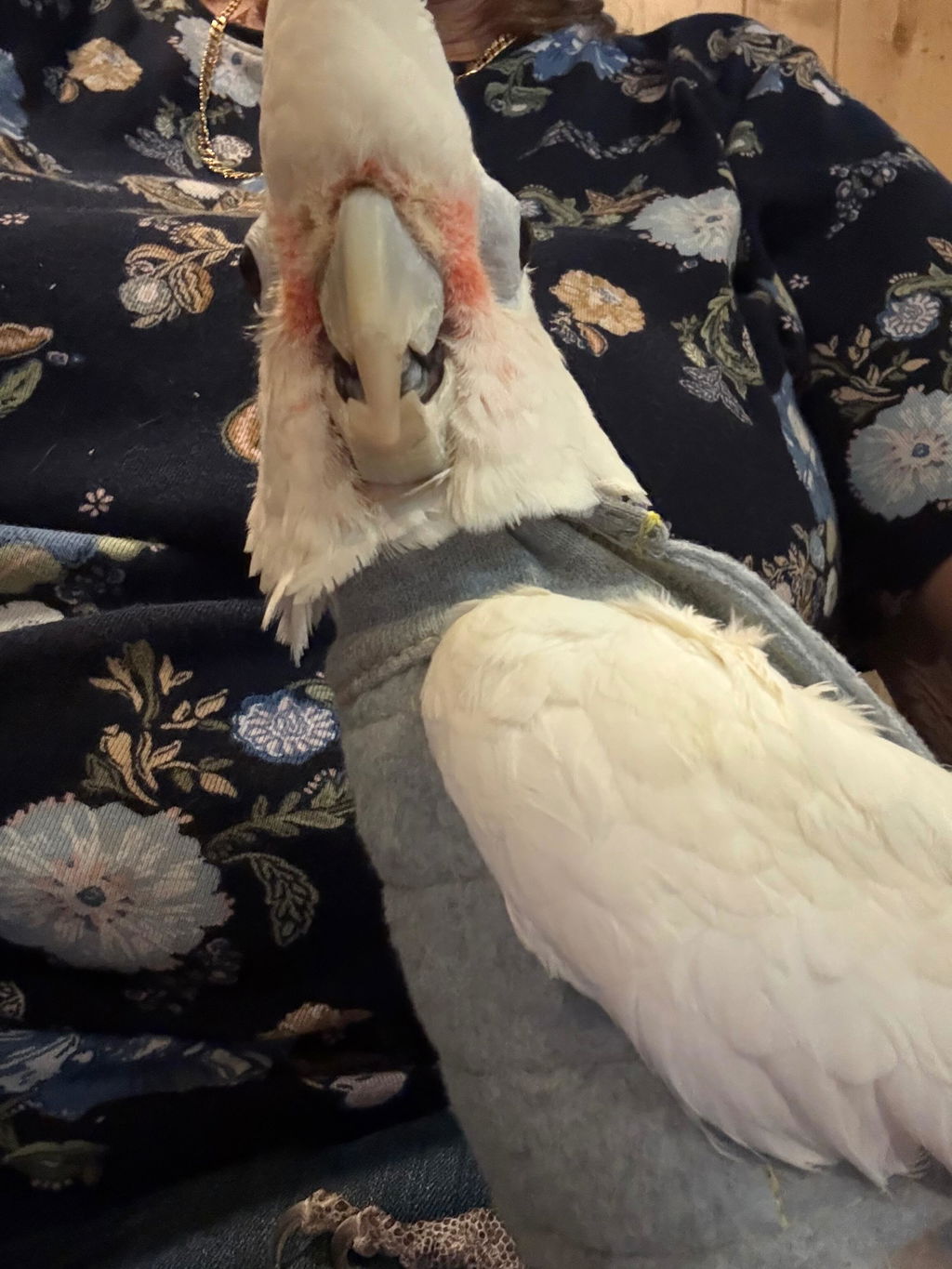
Cloudy, yellow, green, or crusty discharge is more concerning, especially when it appears along with redness, swelling, squinting, repeated blinking, rubbing the eye, or keeping the eye partly closed.
Pay attention to your bird as a whole, too. A bird that becomes unusually quiet, fluffed up, less interested in food, or simply seems “off” may be showing you that the problem goes beyond minor eye irritation.
Should I try to wipe it away?
If a small amount of discharge has collected on the feathers around the eye, gently soften it with warm water and a clean, soft cloth or gauze. Don’t scrub, pick at dried material, force the eye open, or put human eye drops or medications in the eye unless your veterinarian specifically recommends them.
Cleaning can make your bird more comfortable, but recurring discharge needs an explanation — not just repeated wiping.
Why Does My Bird Have Eye Discharge?
Eye discharge can come from the eye itself or from nearby structures such as the sinuses. The appearance of the discharge can offer clues, but it usually can’t tell you the exact cause on its own.
An eye infection
An eye infection may cause watery, cloudy, sticky, or crusty discharge along with redness, swelling, squinting, or increased blinking. Some birds will also rub the side of their face against a perch or toy because the eye is uncomfortable.
Because infections can resemble scratches, irritation, and other eye problems, treatment shouldn’t be chosen based on appearance alone.
An irritated or scratched eye
Birds spend their days climbing, chewing, preening, and exploring, so dust, dander, food particles, toy fibers, or other debris can occasionally irritate an eye. A small scratch to the surface of the eye can also cause tearing, blinking, squinting, or sensitivity.
A brief watery eye that clears completely may be simple irritation. Continued tearing, redness, or keeping the eye partly closed suggests something more than a passing annoyance.
Sinus disease or another underlying problem
A bird’s eyes, nostrils, and sinuses are closely connected. That means a problem that appears to be “just the eye” can sometimes originate in the sinuses or respiratory tract.
Sinus irritation or infection may cause watery eyes or swelling around the eye along with sneezing, nasal discharge, changes around the nostrils, or abnormal breathing. Recurring eye problems may also be a clue that something beyond the surface of the eye needs to be investigated.
What Does the Color of Eye Discharge Mean?
Color and texture can help you describe what you’re seeing, but they can’t diagnose the problem. Think of them as clues rather than answers.
Clear or watery discharge
Clear tearing is often the first change bird owners notice. It can occur with temporary irritation, but it may also accompany a scratch, inflammation, or a sinus problem — particularly when it continues or keeps returning.
White, yellow, or green discharge
Thicker white, yellow, or green discharge is more concerning for inflammation or infection, particularly when the eye is also red, swollen, crusted, or partly closed. The color itself doesn’t identify the organism or tell you which treatment is appropriate.
| What you notice | What it may mean | What to do |
|---|---|---|
| Clear and watery | Temporary irritation, debris, or an early eye or sinus problem | See whether it clears quickly; call if it continues or returns |
| White or cloudy | Inflammation or possible infection | Contact your avian veterinarian |
| Yellow or green | Possible infection or significant inflammation | Arrange an avian veterinary exam |
| Crusty or dried | Discharge that has dried around the eye or has been recurring | Gently clean loose debris and address why it is happening |
Crusty or dried discharge
Dried discharge can collect along the eyelids or in the surrounding feathers. You can soften loose material with warm water, but don’t pick or pull at anything attached to the eyelid.
The important question isn’t simply whether the discharge is wet or dry — it’s whether the eye stays clear afterward or the problem keeps returning.
What Else Should I Look For?
Eye discharge is only one piece of the picture. Take a few moments to look at the eye, your bird’s face, and your bird’s behavior as a whole.
-
Is it one eye or both?
A problem affecting one eye may be localized, such as irritation, debris, or a scratch. Problems involving the sinuses, infection, or environmental irritation can sometimes affect one or both eyes. -
Is the eye red or swollen?
Look for redness of the eyelids, puffiness, or swelling around the eye or face. Even subtle swelling matters if it is new or increasing. -
Is your bird squinting or keeping the eye closed?
Repeated blinking, squinting, or holding an eye partly closed can indicate discomfort and should be taken seriously. -
Is your bird rubbing the eye?
Repeatedly rubbing the face against a perch, toy, cage bar, or foot is another sign that the eye may be irritated or painful. -
Are there respiratory or sinus signs?
Sneezing, nasal discharge, noisy breathing, swelling near the nostrils, or changes around the cere can suggest that the eye problem is connected to the sinuses or respiratory tract. -
Is your bird acting like themselves?
Eating, playing, vocalizing, and interacting normally are reassuring signs. Becoming quiet, fluffed up, sleepy, less interested in food, or noticeably less active makes the situation more concerning.
What Should I Do Right Now?
If your bird has continuing eye discharge, redness, swelling, squinting, or another obvious change to the eye, this is where I would stop “watching and waiting.” Bird eyes are delicate, and problems that initially look minor can sometimes progress quickly.
Keep the eye as clean as possible
If discharge has collected on the feathers around the eye, gently soften it with warm water and clean gauze or a soft cloth. Wipe away only what comes loose easily. Don’t scrub the eyelid, force the eye open, or pull at dried material.
Avoid home remedies
Skip human eye drops, leftover antibiotics, herbal rinses, and medications that weren’t prescribed for this particular problem. A scratch, infection, foreign body, and sinus problem can look surprisingly similar at home but require very different treatment.
Call your avian veterinarian that day
If the eye continues to water, produces discharge, looks red or swollen, or your bird is squinting or rubbing at it, call your avian veterinarian that day. Describe exactly what you’re seeing and, if possible, ask to speak with a veterinary technician who can help determine how quickly your bird needs to be examined.
Be ready to mention whether one or both eyes are affected, what the discharge looks like, when it started, and whether you’ve noticed sneezing, nasal discharge, breathing changes, injury, appetite changes, or unusual behavior.
If your bird is keeping the eye closed, appears painful, has obvious trauma to the eye, develops significant swelling, or suddenly seems weak or ill, treat the situation as urgent.
What Will the Avian Veterinarian Check?
The goal of the exam is to determine whether the problem involves the surface of the eye, surrounding tissues, sinuses, or another underlying condition.
Finding the cause of the discharge
Your veterinarian will examine the eye and surrounding area for inflammation, injury, foreign material, swelling, or changes to the surface of the eye. The eyelids, nostrils, sinuses, and surrounding facial tissues may also provide important clues.
Depending on the exam, your veterinarian may stain the eye to look for a scratch or ulcer, examine a sample of the discharge, or recommend other testing when infection, sinus disease, or another underlying problem is suspected.
How treatment depends on the diagnosis
A scratched cornea, bacterial infection, foreign object, and sinus condition are not treated the same way. Your veterinarian may prescribe eye medication, oral medication, supportive care, or treatment directed at another condition contributing to the eye problem.
That’s why treating eye discharge based solely on what it looks like can be risky — finding the cause comes first.
Why early treatment matters
Eye tissue is delicate, and scratches, infection, inflammation, or repeated rubbing can cause additional damage when a problem progresses. Early evaluation gives your veterinarian the opportunity to identify the cause and begin appropriate treatment before the eye becomes more painful or difficult to manage.
Could Diet Play a Role?
Sometimes. Nutrition isn’t the explanation for every watery or irritated eye, but it does play an important role in maintaining the normal tissues of your bird’s eyes, sinuses, respiratory tract, and immune system.
Why vitamin A matters
Vitamin A helps maintain the healthy tissues that line the eyes, mouth, sinuses, and respiratory tract. Birds eating a predominantly seed-based diet are at greater risk of inadequate vitamin A because seeds are naturally low in this important nutrient.
Over time, inadequate vitamin A can affect these delicate tissues and may be associated with problems involving the eyes, sinuses, and respiratory system.
Supporting healthy eyes every day
The best nutritional approach is a varied, balanced diet rather than trying to correct one nutrient in isolation. A quality formulated diet along with bird-safe vegetables can provide vitamin A and other nutrients needed for everyday health.
Dark leafy greens, broccoli, sweet potato, red peppers, carrots, and other colorful vegetables provide beta-carotene and beneficial plant nutrients. Think nutritional variety rather than searching for one particular “eye food.”
Avoid concentrated vitamin A supplementation unless your avian veterinarian recommends it. More is not necessarily better, and excessive vitamin A can be harmful.
When nutrition isn't enough
Good nutrition supports your bird’s health over the long term, but it cannot tell you why an eye is suddenly watery, swollen, irritated, or producing discharge — and it isn’t a substitute for appropriate veterinary care.
Once an active eye problem has been addressed, it makes sense to look at the bigger picture, including whether your bird’s everyday diet is providing the nutrients needed to support healthy eyes, sinuses, and other tissues.
Frequently Asked Questions
My bird's eye is watery, but they're acting normal. Should I worry?
A briefly watery eye can happen from dust, dander, bathing, or minor irritation. But if the watering continues, comes back, or you notice redness, swelling, squinting, or discharge, call your avian vet that day—eye problems can worsen quickly.
Why is only one of my bird's eyes watering?
If only one eye is watering, the problem may be local to that eye, such as irritation, debris, or a small scratch. Infection or sinus disease can also affect just one eye. Regardless, persistent or recurring tearing should be checked by an avian veterinarian.
Can a sinus problem cause a watery eye?
Yes. A bird's eyes, nostrils, and sinuses are closely connected, so sinus irritation or infection can sometimes show up as a watery or swollen eye, often along with sneezing or nasal discharge.
Can I use human eye drops on my bird?
Not unless your avian veterinarian specifically tells you to. Different eye problems can look very similar, and using the wrong drops may delay the treatment your bird actually needs.
Can eye discharge spread to my other birds?
It depends on what's causing it. Because some infections can spread between birds, call your avian vet for advice about whether your bird should be temporarily separated from the rest of the flock.
In Conclusion: Don't Ignore Changes in Your Bird's Eyes
A little moisture after bathing or preening may be harmless, but persistent tearing, discharge, redness, swelling, squinting, or a bird that keeps an eye closed deserves prompt attention. Bird eye problems can worsen quickly, so when something doesn't look right, call your avian veterinarian that day and let the veterinary team help determine how urgently your bird should be seen.
Long term, good nutrition is another important part of protecting your bird's overall health. A balanced diet that provides adequate vitamin A helps maintain the normal tissues of the eyes, sinuses, and respiratory tract and supports normal immune function. Birds eating primarily seed-based diets are especially likely to benefit from a closer look at their overall nutrition.
Good nutrition can't prevent every eye problem, and it won't treat an active infection, injury, or sinus condition. But meeting your bird's nutritional needs may help reduce nutritional risk factors and support healthier eyes and tissues over time.
Your next steps: If your bird has active eye symptoms, start with a call to your avian veterinarian. Once the immediate concern is addressed, take a look at the bigger picture too — including diet, vitamin A-rich foods, environment, and the everyday habits that help support your bird's long-term wellness.
Related Bird Eye Health Guides
7 Parrot Eye Problems and What to Do About Them
Why Is My Parrot’s Eye Swollen?
Why Is My Bird Rubbing Its Eye?
References
Doneley, B., Harrison, G. J., & Lightfoot, T. L. (2006). Maximizing information from the physical examination. In G. J. Harrison & T. L. Lightfoot (Eds.), Clinical avian medicine. International Veterinary Information Service. https://www.ivis.org/library/clinical-avian-medicine/maximizing-information-from-physical-examination
Harrison, G. J., Lightfoot, T. L., & Flinchum, G. B. (2006). Emergency and critical care. In G. J. Harrison & T. L. Lightfoot (Eds.), Clinical avian medicine (Vol. 1, pp. 213–232). Spix Publishing. https://www.ivis.org/library/clinical-avian-medicine/emergency-and-critical-care
Hess, L. (2025). Illness in pet birds. MSD Veterinary Manual. https://www.msdvetmanual.com/bird-owners/routine-care-and-safety-of-birds/illness-in-pet-birds
Hess, L. (2026). Eye disorders of pet birds. MSD Veterinary Manual. https://www.msdvetmanual.com/bird-owners/disorders-and-diseases-of-birds/eye-disorders-of-pet-birds
Rich, G., Hess, L., & Axelson, R. (n.d.). Recognizing the signs of illness in pet birds. VCA Animal Hospitals. https://vcahospitals.com/know-your-pet/recognizing-the-signs-of-illness-in-pet-birds
About the Author
Diane Burroughs, LCSW, founded BirdSupplies.com in 1998 and has more than 30 years of hands-on experience with companion parrots. Her work focuses on avian behavior, nutrition, feather health, and practical care that helps bird owners recognize problems and take the right next step. This article is educational and is not a substitute for diagnosis or treatment by an avian veterinarian.
SHARING IS CARING! PLEASE SHARE ON YOUR FAVORITE SOCIAL MEDIA NOW!