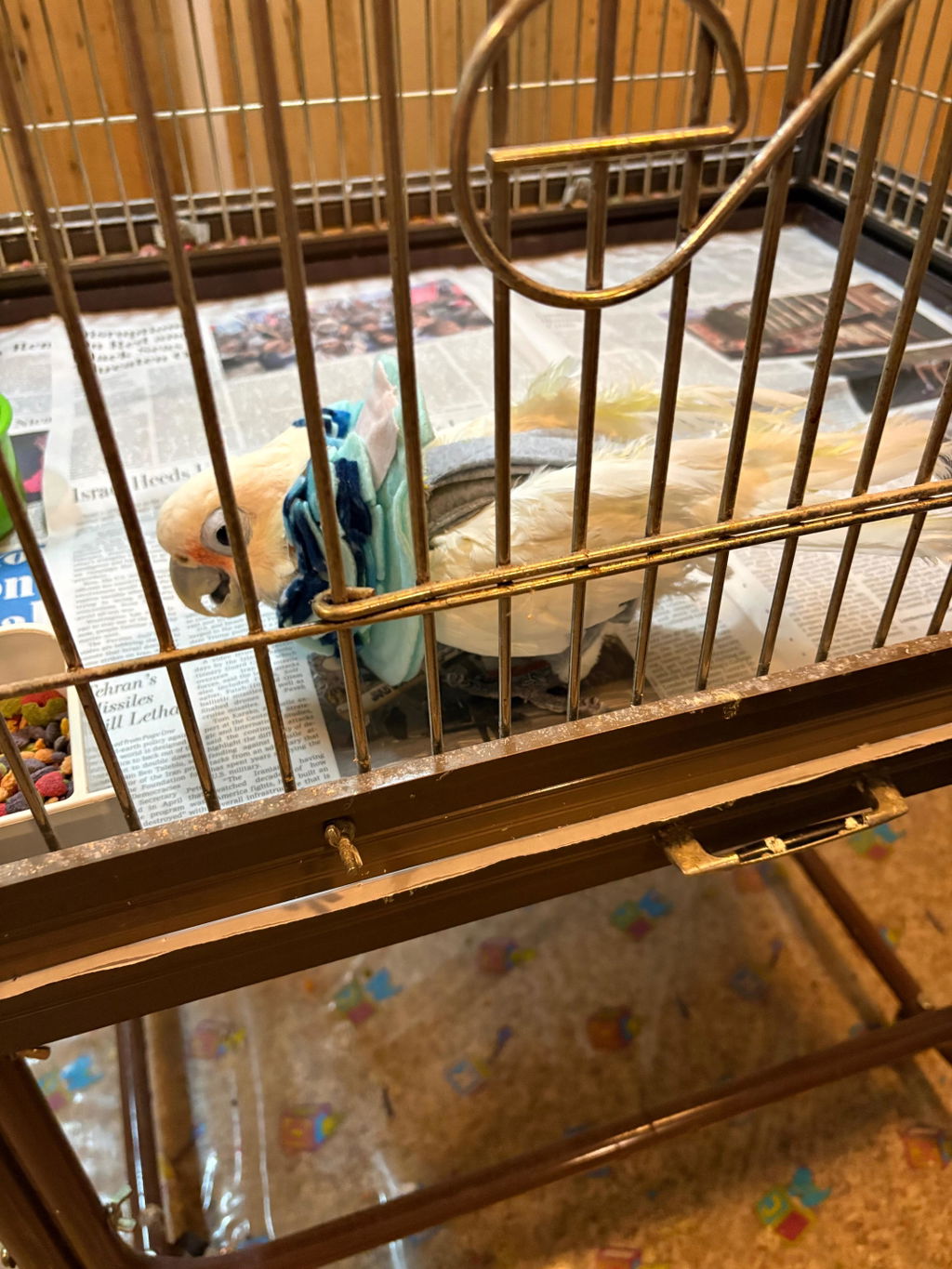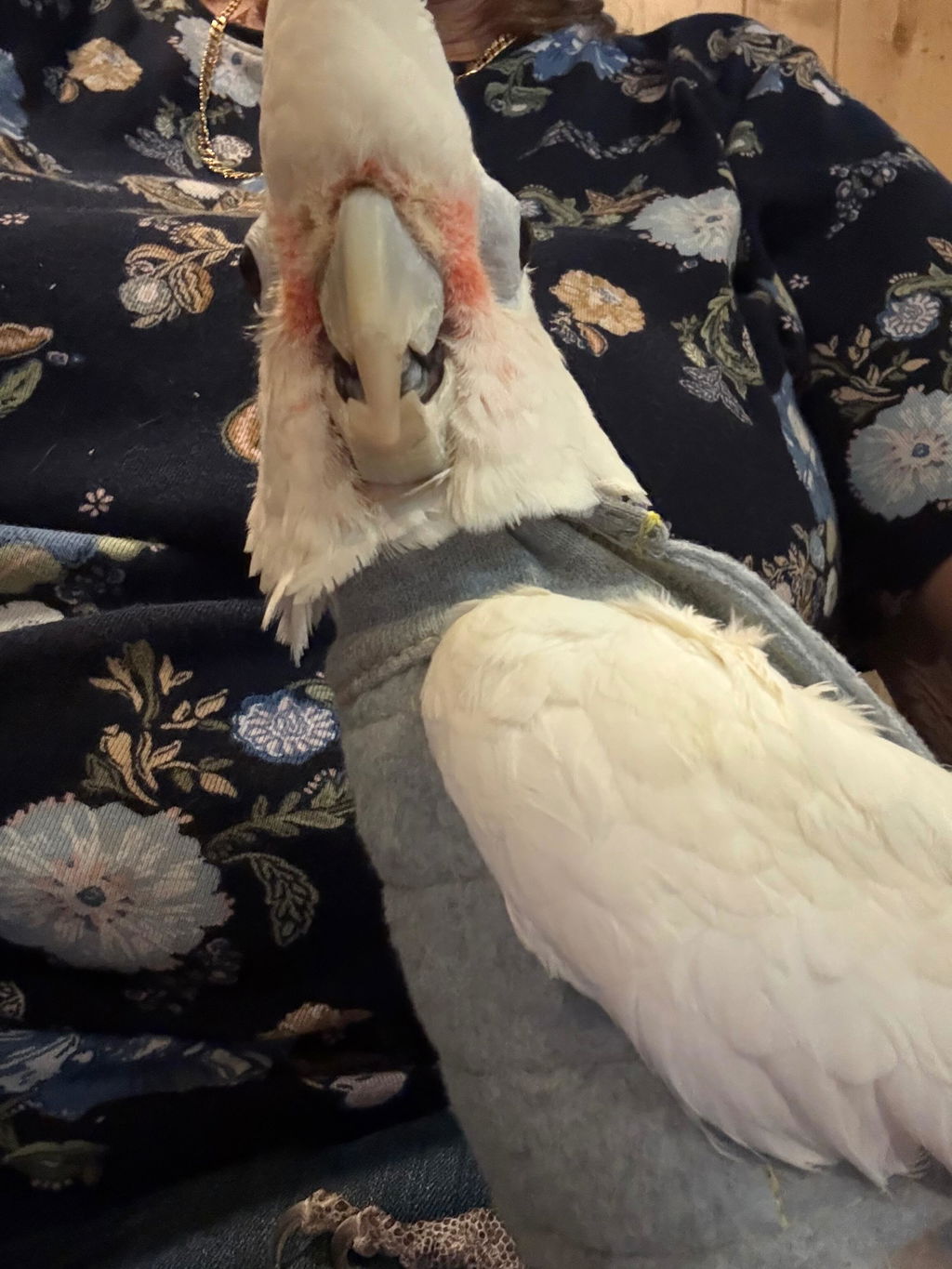

If your bird keeps closing the same eye while awake, don’t assume it is just tired. Repeated one-eye closure usually means the eye or nearby tissue is uncomfortable. The cause may be as simple as dust or a seed hull, but it can also involve an injury, infection, or pressure from swollen sinus tissue. This guide will help you decide what you can safely watch, what you should not attempt at home, and when to contact an avian veterinarian.
Does this sound like your bird?
- Your bird keeps closing the same eye while awake.
- The eye opens for a while, then closes again.
- Your bird is blinking, squinting, or rubbing one side of its face.
- One eye looks different from the other.
- You are trying to decide whether your bird is resting or uncomfortable.
Call an avian veterinarian promptly if:
- The eye stays closed or your bird cannot open it normally.
- You see swelling, redness, cloudiness, blood, or discharge.
- Your bird repeatedly rubs or scratches the eye.
- The problem followed a collision, bite, scratch, or chemical exposure.
- Your bird is fluffed, unusually sleepy, breathing differently, or eating less.
In this article:
Is Closing One Eye Ever Normal?
Sometimes. A relaxed bird may briefly close one eye while resting, settling down, or feeling secure. The eye should open normally once the bird becomes alert, and there should be no rubbing, swelling, discharge, redness, or change in appetite or activity.
When it looks like normal resting
Normal one-eye closure is brief and happens when your bird is calm. The body looks relaxed, both eyes open normally afterward, and your bird continues eating, moving, vocalizing, and interacting as usual.
When the same eye keeps closing
If your bird repeatedly closes the same eye while awake, opens it only briefly, or starts blinking and rubbing more than usual, the eye is probably uncomfortable. One isolated moment may mean nothing, but a repeated pattern—especially with redness, swelling, discharge, or quieter behavior—should be taken seriously.
Key takeaway:
Briefly closing one eye while resting may be normal. Repeatedly closing the same eye while awake is not something to ignore.
What Could Be Bothering the Eye?
Closing one eye is your bird’s way of protecting an eye that feels irritated or painful. It tells you that something is wrong, but it does not tell you what is causing it.
Dust, a seed hull, or another irritant
Sometimes the problem is something small and local, such as dust, a feather particle, a seed hull, or a loose fiber near the eye. Smoke, aerosols, strong fragrances, and cleaning chemicals can also irritate the eye.
You may notice sudden blinking, tearing, squinting, or repeated rubbing. If the irritation does not settle quickly or the eye stays closed, your bird should be examined.
A scratch, collision, or infection
A bird can injure the eye by bumping into a toy, cage wire, window, or another bird. Scratches to the eyelid or surface of the eye can be painful, and infection may develop in the eye or surrounding tissue.
Swelling, thick discharge, visible cloudiness, bleeding, or an eye that remains tightly closed are more serious signs and need prompt veterinary care.
Pressure from the sinuses or respiratory tract
A bird’s sinuses sit close to the eyes, so swelling or infection in the sinus tissue can create pressure around one eye. The eye may look puffy or stay partly closed even though the problem began nearby.
Watch for sneezing, nasal discharge, noisy breathing, appetite loss, or swelling around the eye or nostril. Those signs suggest the problem may involve more than the eye itself.
What Other Signs Change the Level of Concern?
A closed eye is important, but the other changes you see help show how serious the problem may be. Swelling, discharge, cloudiness, repeated rubbing, appetite loss, breathing changes, or unusual sleepiness can mean the problem extends beyond simple irritation.
Changes around the eye
- Redness or swelling
- Clear tears, thick discharge, or dried crust
- Cloudiness or a bluish appearance
- Wet or missing feathers around the eye
- Repeated blinking, rubbing, or scratching
Changes in the rest of the bird
- Sneezing or nasal discharge
- Noisy or open-mouth breathing
- Fluffed posture or unusual sleepiness
- Eating less
- Lower activity, weakness, or poor balance
One eye closed versus both eyes partly closed
When only one eye stays closed, the problem is often on that side—such as irritation, injury, swelling, or sinus pressure. When both eyes are partly closed while your bird is awake, especially along with fluffed feathers, low appetite, or reduced activity, the concern is broader and may involve pain, weakness, or illness affecting the whole body.
| What You See | What It May Mean | What to Do |
|---|---|---|
| Brief closure while resting | Normal relaxation | Watch for normal reopening |
| The same eye keeps closing | Ongoing discomfort | Contact an avian veterinarian if it continues |
| Closed eye with swelling or discharge | Inflammation, injury, infection, or sinus disease | Arrange prompt veterinary care |
| Closed eye with cloudiness or blood | Possible injury to the eye itself | Treat as urgent |
| Both eyes partly closed with low energy | Pain, weakness, or broader illness | Seek same-day veterinary guidance |
What Should You Do Before the Veterinary Visit?
Keep this simple: observe the eye, document what changed, and avoid anything that could make the problem worse.
Take a clear photo or short video
Photograph both eyes in the same light and record whether the affected eye stays closed or opens intermittently. A short video of blinking, rubbing, posture, or breathing can also help your avian veterinarian see what is happening.
Write down when the problem started
Note whether the change was sudden, whether there was a recent collision or exposure to dust or cleaners, and whether your bird is eating, moving, and breathing normally.
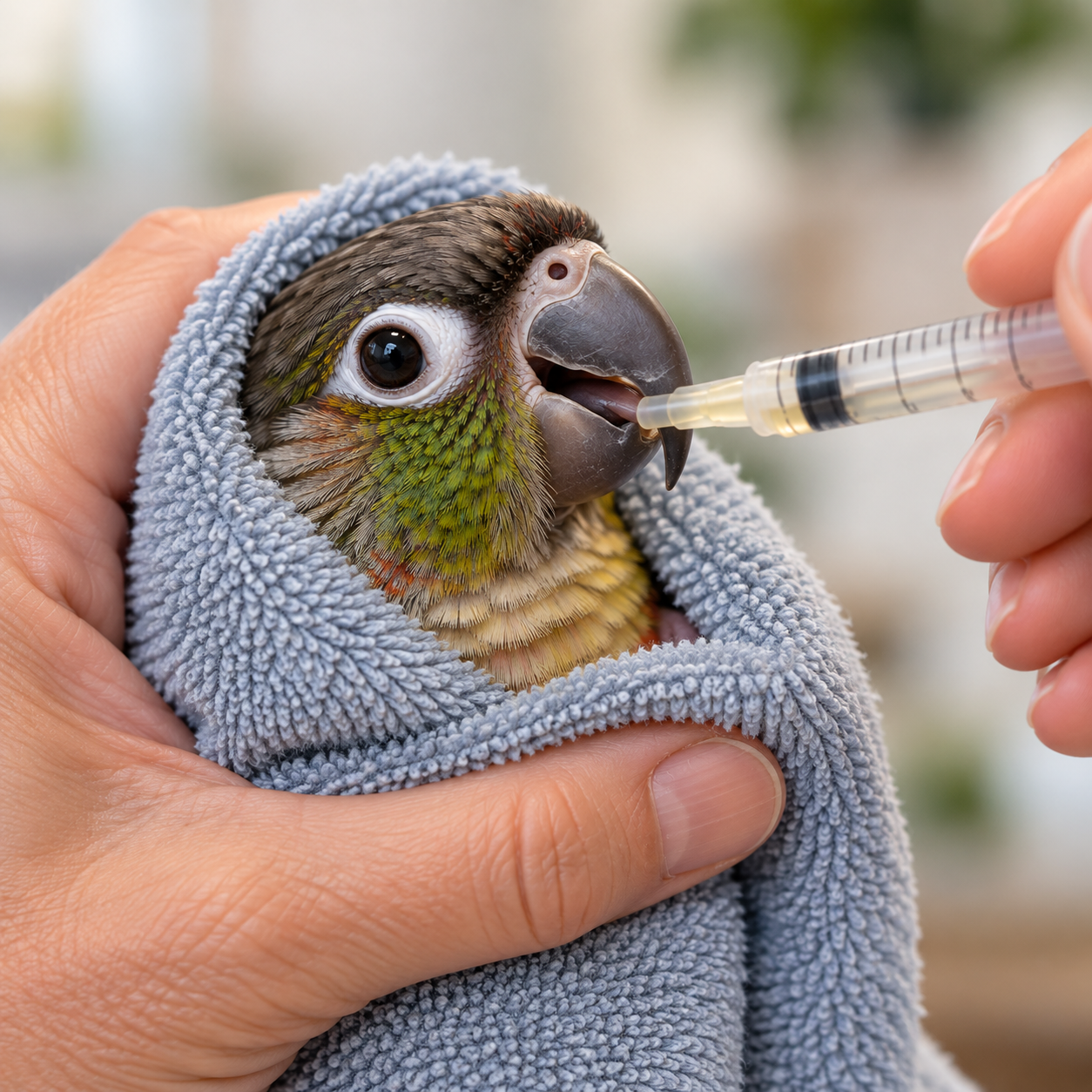
Do not force the eye open
Do not use fingers, tweezers, cotton swabs, or pressure around the eye. Sterile, preservative-free saline may be used only for loose surface dust or debris—not for swelling, injury, embedded material, or an eye that remains closed.
What Should You Do Next?
If your bird briefly closes one eye while resting, then opens it normally and acts like itself, you can watch for changes. If the same eye keeps closing while your bird is awake—or you also see rubbing, swelling, discharge, cloudiness, appetite loss, or low energy—contact an avian veterinarian.
Remove obvious irritants
- Move the bird away from smoke, aerosols, fragrances, and chemical cleaners.
- Reduce dust, clean any heavily soiled cage areas, and replace dirty cage paper.
- Remove sharp or abrasive objects near the bird’s resting area.
- Keep handling calm and minimal.
Do not experiment with eye medication
Do not use human redness-relief drops, leftover antibiotics, steroid drops, oils, ointments, or medication prescribed for another bird. The wrong product can irritate the eye, hide important symptoms, or make an injury worse.
Call an avian veterinarian if the eye keeps closing
If your bird keeps closing the same eye while awake, especially along with rubbing, swelling, discharge, cloudiness, a recent injury, appetite loss, or unusual behavior, the eye should be examined. These signs can point to pain, inflammation, infection, sinus pressure, or damage that cannot be diagnosed safely at home.
Could Diet Be Part of the Bigger Picture?
A bird that repeatedly keeps one eye closed still needs veterinary evaluation. If your bird also eats mostly seeds, refuses fresh foods, or picks out only a few favorite ingredients, improving the diet can support the tissues lining the mouth, sinuses, and respiratory tract.
Support a Seed-Heavy or Limited Diet
Choose nutritional support based on what your bird actually eats. These products do not treat a closed eye, injury, infection, swelling, or sinus disease.

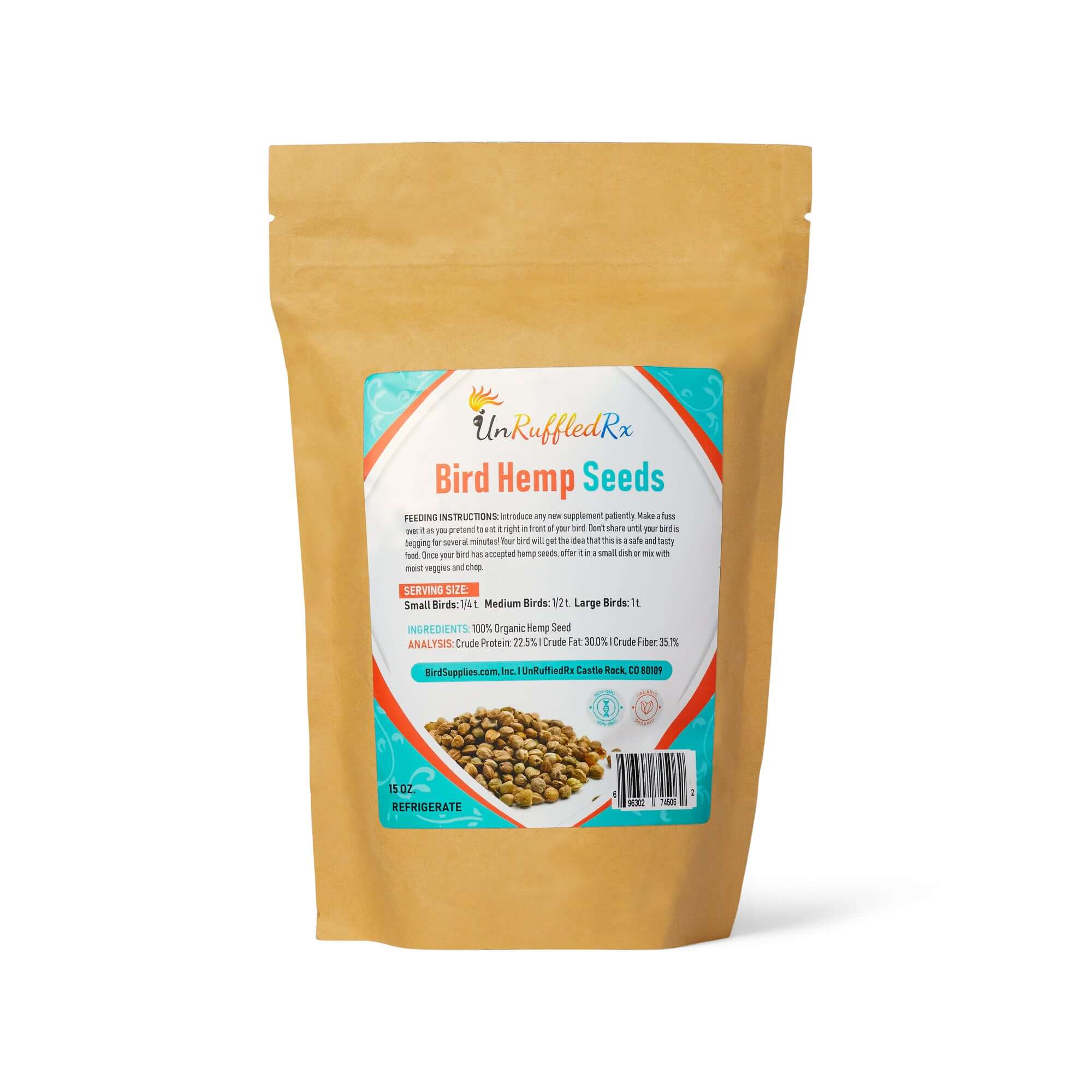
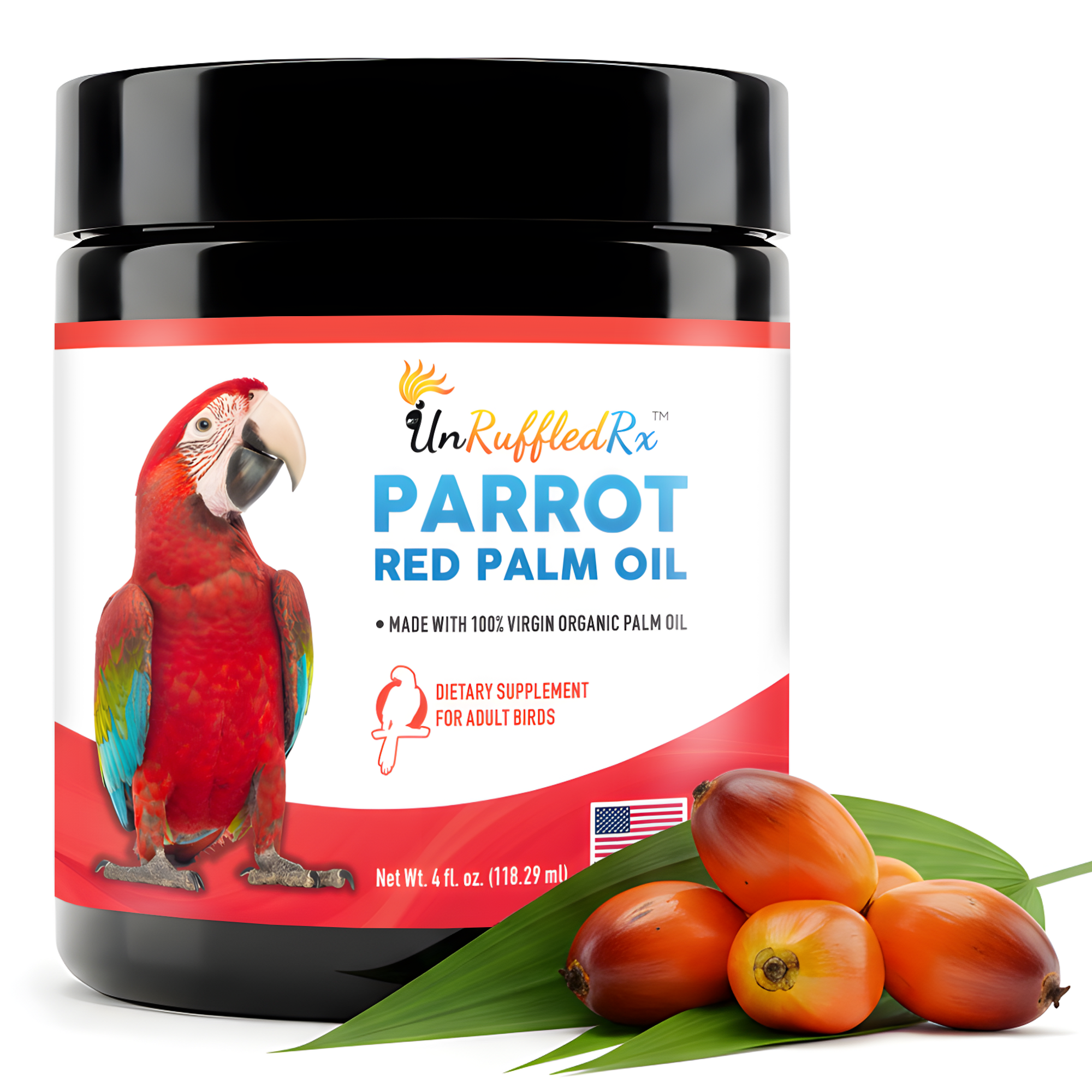
Red Palm Oil
Best for: Birds eating mostly seeds or avoiding orange, red, and dark-green foods.
Adds carotenoid-rich plant nutrition to a varied diet and supports the tissues lining the mouth, sinuses, and respiratory tract.
Add Carotenoid-Rich Nutrition
FeatherUp! Bird Vitamins
Best for: Selective eaters with broader nutritional gaps, limited food variety, or poor feather quality.
Provides targeted nutritional support for birds that may not receive a complete range of vitamins from their everyday diet.
Support Broader NutritionNeed the full eye-health guide?
This article focuses on one eye staying closed. For swelling, discharge, cloudiness, rubbing, sinus disease, and nutritional causes, read 7 Parrot Eye Problems and What to Do About Them.
Frequently Asked Questions
Why does my bird open one eye and then close it again?
The eye may still be irritated or sore even if your bird can open it for a few seconds. Watch for extra blinking, rubbing, tearing, swelling, or discharge. If it keeps happening, contact an avian veterinarian.
Can a seed hull make my bird keep one eye closed?
Yes. A seed hull or another small piece of debris can cause sudden blinking, tearing, squinting, or rubbing. Do not force the eye open or try to remove anything that looks stuck.
Can a sinus problem make my bird close one eye?
Yes. Swelling in the sinus area can put pressure around one eye. You may also notice puffiness, sneezing, nasal discharge, breathing changes, or a drop in appetite.
Related Eye-Health Guides
7 Parrot Eye Problems and What to Do About Them
Why Is My Parrot’s Eye Swollen?
Why Is My Bird Rubbing Its Eye?
References
Doneley, B., Harrison, G. J., & Lightfoot, T. L. (2006). Maximizing information from the physical examination. In G. J. Harrison & T. L. Lightfoot (Eds.), Clinical avian medicine. International Veterinary Information Service. https://www.ivis.org/library/clinical-avian-medicine/maximizing-information-from-physical-examination
Harrison, G. J., Lightfoot, T. L., & Flinchum, G. B. (2006). Emergency and critical care. In G. J. Harrison & T. L. Lightfoot (Eds.), Clinical avian medicine (Vol. 1, pp. 213–232). Spix Publishing. https://www.ivis.org/library/clinical-avian-medicine/emergency-and-critical-care
Hess, L. (2025). Illness in pet birds. MSD Veterinary Manual. https://www.msdvetmanual.com/bird-owners/routine-care-and-safety-of-birds/illness-in-pet-birds
Hess, L. (2026). Eye disorders of pet birds. MSD Veterinary Manual. https://www.msdvetmanual.com/bird-owners/disorders-and-diseases-of-birds/eye-disorders-of-pet-birds
Rich, G., Hess, L., & Axelson, R. (n.d.). Recognizing the signs of illness in pet birds. VCA Animal Hospitals. https://vcahospitals.com/know-your-pet/recognizing-the-signs-of-illness-in-pet-birds
About the Author
Diane Burroughs, LCSW, founded BirdSupplies.com in 1998 and has more than 30 years of hands-on experience with companion parrots. Her work focuses on avian behavior, nutrition, feather health, and practical care that helps bird owners recognize problems and take the right next step. This article is educational and is not a substitute for diagnosis or treatment by an avian veterinarian.