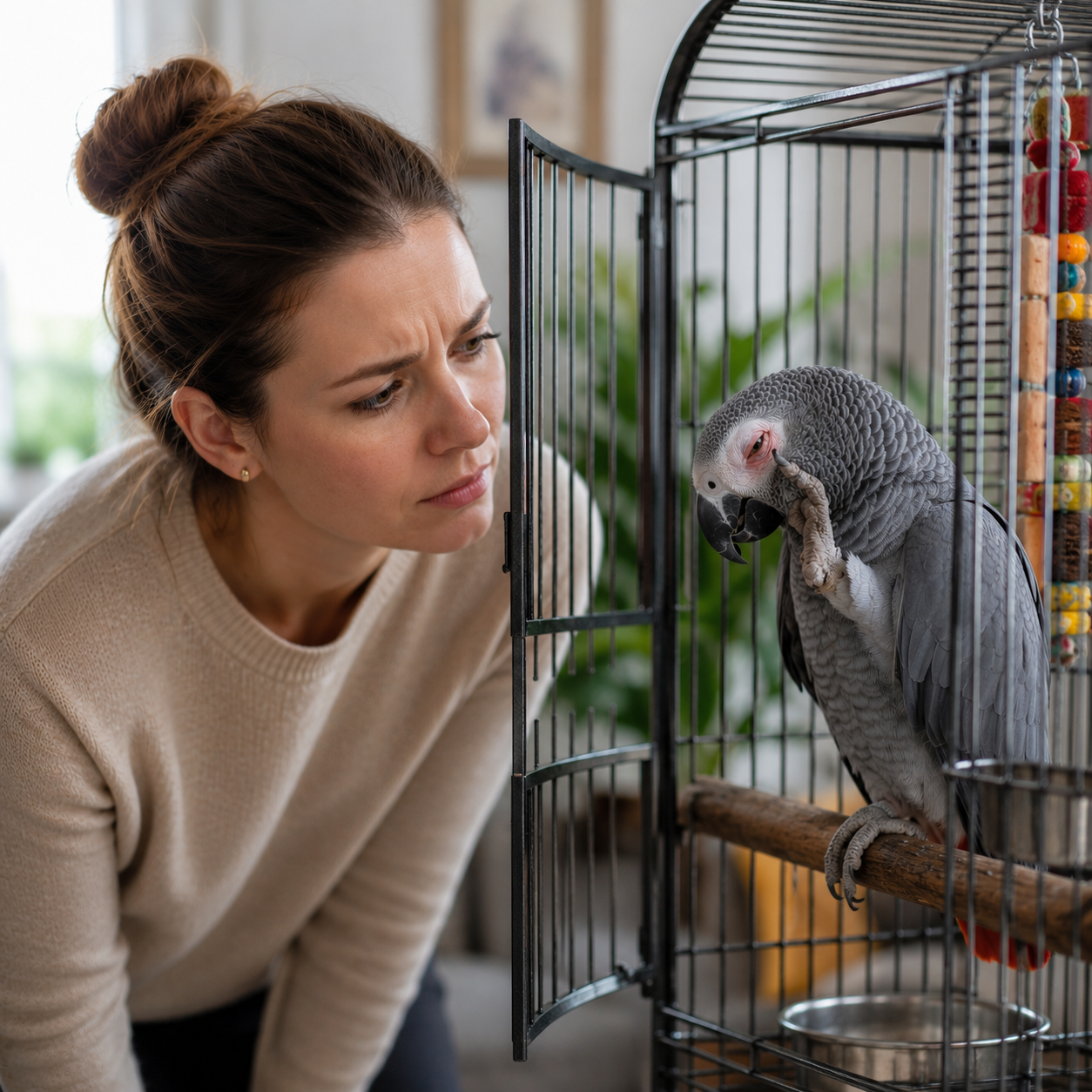

Your bird rubs its eye against a perch, toy, cage bars, or even its own foot, and suddenly you're wondering whether it's simply grooming—or trying to tell you something is wrong. Occasional eye rubbing is completely normal, but repeated rubbing, especially when it affects only one eye or occurs with swelling, redness, discharge, or squinting, may signal irritation, injury, infection, or another underlying problem. This guide will help you recognize the difference and know when it's time to call an avian veterinarian.
Who Is This Article For?
This guide is for bird owners whose parrot:
- Keeps rubbing one eye repeatedly
- Rubs its eye on a perch, toy, cage bars, or your hand
- Scratches around one eye with its foot
- Is rubbing its eye along with blinking, squinting, or tearing
- Started rubbing its eye after a collision or possible injury
You'll learn when eye rubbing is a normal part of grooming, when it may indicate a health problem, and what to do next.
Quick Answer
Occasional eye rubbing is usually a normal grooming behavior. However, frequent rubbing—especially if only one eye is affected or it's accompanied by swelling, redness, discharge, cloudiness, or the eye staying closed—may indicate irritation, injury, infection, or another eye problem that should be evaluated by an avian veterinarian.
In This Article
Does this sound like your bird?
- Your bird keeps rubbing the same eye.
- It rubs its eye on a perch or toy every few minutes.
- One eye seems more irritated than the other.
- The eye looks watery, red, or slightly swollen.
- You're wondering whether this is normal grooming or something more serious.
Call an avian veterinarian promptly if:
- The eye stays closed or cannot open normally.
- Eye rubbing suddenly becomes frequent or intense.
- You notice swelling, redness, cloudiness, or discharge.
- The rubbing began after a collision, bite, or scratch.
- Your bird is sneezing, breathing differently, eating less, or acting unusually quiet.
Is Eye Rubbing Ever Normal?
Parrots spend a large part of their day preening, so it's easy to assume that rubbing an eye is just another grooming behavior. In reality, healthy parrots don't typically rub their eyes. If your bird keeps returning to the same eye, it's usually because something is irritating or bothering it.
How parrots naturally keep their eyes clean
Parrots have a built-in way to clean and protect their eyes. In addition to their upper and lower eyelids, they have a thin third eyelid that sweeps across the eye like a windshield wiper, helping remove tiny bits of dust and keep the surface of the eye moist.
They also regularly preen the small feathers around the eye and may occasionally work on a nearby pin feather as its protective sheath flakes away. That's very different from repeatedly rubbing the eye itself with a foot, claw, perch, or toy.
Normal grooming versus repeated rubbing
Gentle grooming around the eye area is normal. Repeated eye rubbing is not. If your bird keeps rubbing the same eye—or you notice redness, swelling, discharge, excessive tearing, or squinting—it's time to look for the underlying cause rather than assuming it's part of normal grooming.
Key takeaway:
If your bird keeps rubbing the same eye, your concern is reasonable. Healthy parrots may occasionally groom the feathers around their eyes, but repeated eye rubbing can be a sign that something is irritating or hurting the eye.
When Is Eye Rubbing a Warning Sign?
If you notice your bird rubbing the same eye more than once or twice, it's worth paying attention. While not every case is an emergency, healthy parrots generally don't keep rubbing an eye unless something is bothering it.
How often is too often?
If your bird repeatedly rubs the same eye—or the eye becomes red, swollen, watery, or irritated—it's time to pay attention. Healthy parrots don't normally keep rubbing an eye unless something is bothering it.
When rubbing may mean pain instead of grooming
If the rubbing is accompanied by redness, swelling, squinting, discharge, or your bird seems unable to leave the eye alone, it's time to immmediatly contact an avian veterinarian. Birds are remarkably good at hiding discomfort, so persistent eye rubbing is often one of the earliest clues that something isn't right.
Why Is My Bird Rubbing Its Eye?
If your bird keeps rubbing the same eye, something is almost certainly bothering it. The cause could be as simple as a bit of dust or as serious as an injury or infection, so it's important to look at the whole picture rather than assuming it will go away on its own.
Something may be irritating the eye
Sometimes the answer is simple. A tiny piece of seed hull, feather fluff, dust, or other debris can irritate the eye. Most minor irritants pass quickly, but if your bird keeps rubbing the eye, it's unlikely the problem has resolved itself.
A scratch or minor injury
Birds can accidentally scratch an eye with a toenail, bump into a toy or perch, or injure an eye during flight. Even a tiny scratch can be surprisingly uncomfortable and cause repeated rubbing.
An infection or inflammation
Not every eye problem starts in the eye itself. Infections affecting the eye, eyelids, or even the nearby sinuses can make one eye uncomfortable and lead to persistent rubbing.
Something in the environment
Smoke, scented candles, aerosol sprays, cleaning products, and excessive dust can all irritate a bird's sensitive eyes. If you suspect something in your home is causing the problem, remove it immediately and see whether your bird becomes more comfortable.
Could diet play a role?
Yes, especially over time. Birds that don't get enough vitamin A are more likely to develop problems affecting the eyes and surrounding tissues. While diet usually isn't the immediate cause of sudden eye rubbing, it plays an important role in keeping the eyes healthy.
What Other Signs Should I Look For?
Eye rubbing is rarely the only clue. Take a minute to look closely at both eyes and your bird's overall behavior. The more details you can share with your avian veterinarian, the easier it will be to identify what's causing the problem.
Changes around the eye
Compare both eyes side by side. Look for redness, swelling, discharge, excessive tearing, cloudiness, squinting, or an eye that stays partially closed. Even subtle differences can provide important clues.
Changes in your bird
Is your bird acting normally otherwise? A bird that's sleeping more, eating less, sneezing, breathing differently, or avoiding activity may have more than just a simple eye irritation.
One eye versus both eyes
If only one eye is affected, the problem is often local to that eye, such as an irritant or minor injury. If both eyes become irritated at the same time, consider environmental irritants or an illness affecting the entire bird.
| What You Notice | What It Could Suggest | What You Should Do |
|---|---|---|
| Occasional gentle grooming around the eye feathers | Normal preening | Simply continue to observe. |
| Repeated rubbing of one eye | Irritation, debris, injury, or an eye problem | Watch closely and arrange an avian veterinary exam if it continues. |
| Redness, swelling, discharge, excessive tearing, or the eye staying closed | Pain, infection, injury, or another significant eye condition | Contact an avian veterinarian promptly. |
| Both eyes become irritated at the same time | Environmental irritants or a more generalized illness | Remove possible irritants and contact your avian veterinarian if symptoms persist. |
What Should I Do Right Now?
If your bird keeps rubbing the same eye, don't panic—but don't ignore it either. A few simple steps can help protect the eye while you determine whether veterinary care is needed.
Keep your bird comfortable
Repeated rubbing can make an irritated eye even more uncomfortable. Keep your bird calm, avoid rough play, and monitor whether the rubbing improves or continues.
Look for anything that may have caused it
Think about what changed before the rubbing started. Smoke, aerosol sprays, scented candles, cleaning products, excessive dust, or even bumping into a toy or perch can all irritate a bird's sensitive eye.
Avoid treating the eye yourself
Don't try to flush the eye or apply eye drops, ointments, or medications unless they've been prescribed by your avian veterinarian. Well-intentioned home treatments can sometimes make the problem worse.
When to call an avian veterinarian
If the rubbing continues, or you notice redness, swelling, discharge, cloudiness, or your bird keeps the eye partly closed, contact an avian veterinarian promptly. Eye problems often respond best when they're treated early.
What Will the Avian Veterinarian Check?
Your avian veterinarian's first job is to determine why your bird is rubbing its eye. The sooner the cause is identified, the sooner your bird can begin feeling more comfortable.
Finding the source of the irritation
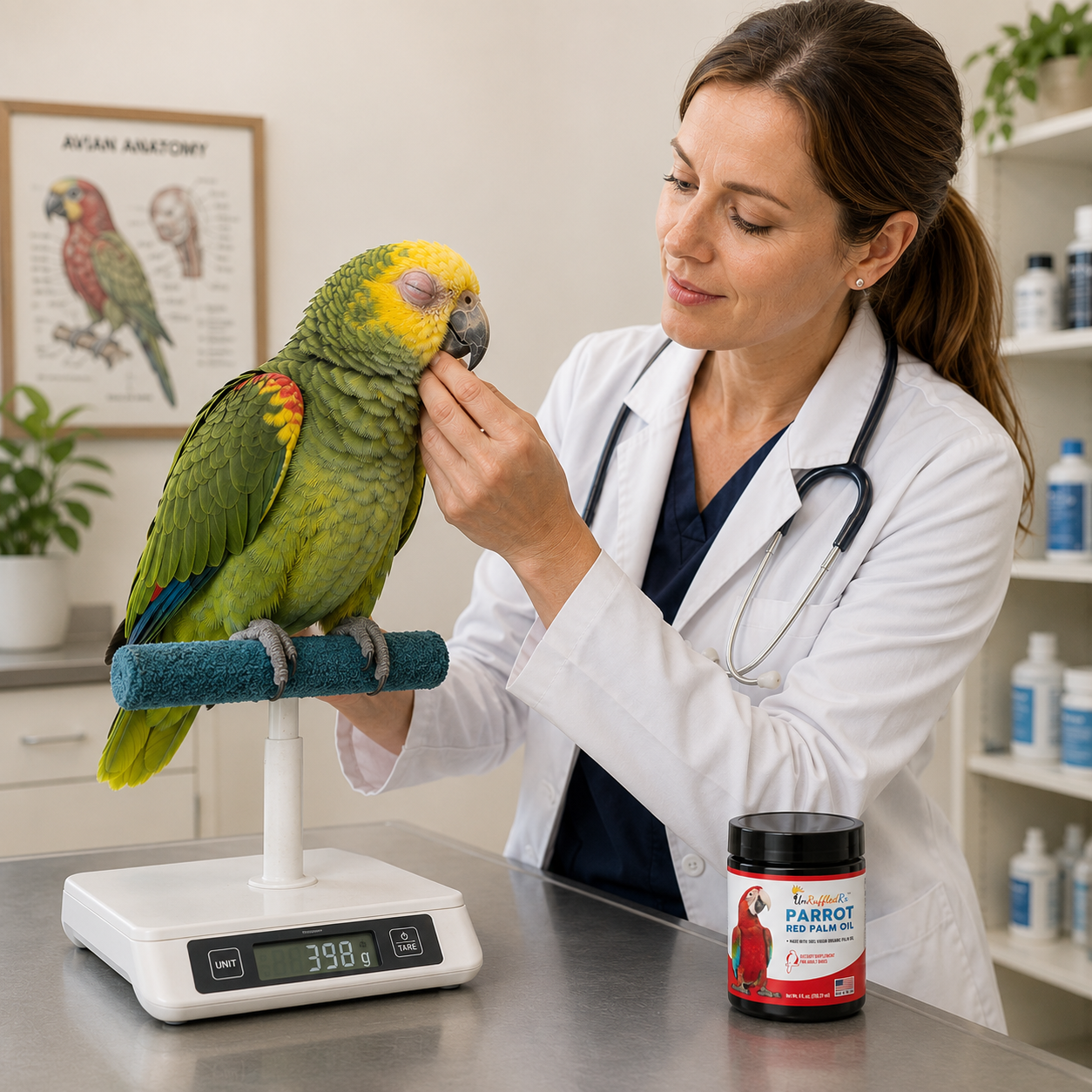
Your veterinarian will carefully examine the eye for scratches, debris, infection, swelling, or other abnormalities. They'll also look for clues that the problem may actually be coming from the eyelids, surrounding tissues, or even the sinuses.
Treatment depends on the cause
There's no single treatment for eye rubbing. Once the cause has been identified, your avian veterinarian can recommend the most appropriate treatment, whether that's removing debris, prescribing medication, or treating an underlying illness.
Could Diet Play a Role?
It can. While a healthy diet won't prevent every eye injury or infection, good nutrition helps support healthy eyes, normal tear production, and the tissues surrounding the eye. Birds fed a varied, plant-rich diet are generally better equipped to maintain healthy eyes throughout their lives.
One nutrient that deserves special attention is vitamin A. Birds that don't get enough vitamin A are more likely to develop problems affecting the eyes, skin, and respiratory tract. That's one reason avian veterinarians encourage offering a wide variety of colorful vegetables, leafy greens, sprouts, and high-quality foods rather than relying on seeds alone.
If your bird is rubbing an eye, nutrition isn't likely to solve the immediate problem—but over the long term, a balanced diet is one of the best ways to support healthy eyes and overall wellness.
Support a Seed-Heavy or Limited Diet
Choose nutritional support based on what your bird actually eats. These products do not treat swelling, injury, infection, or sinus disease.

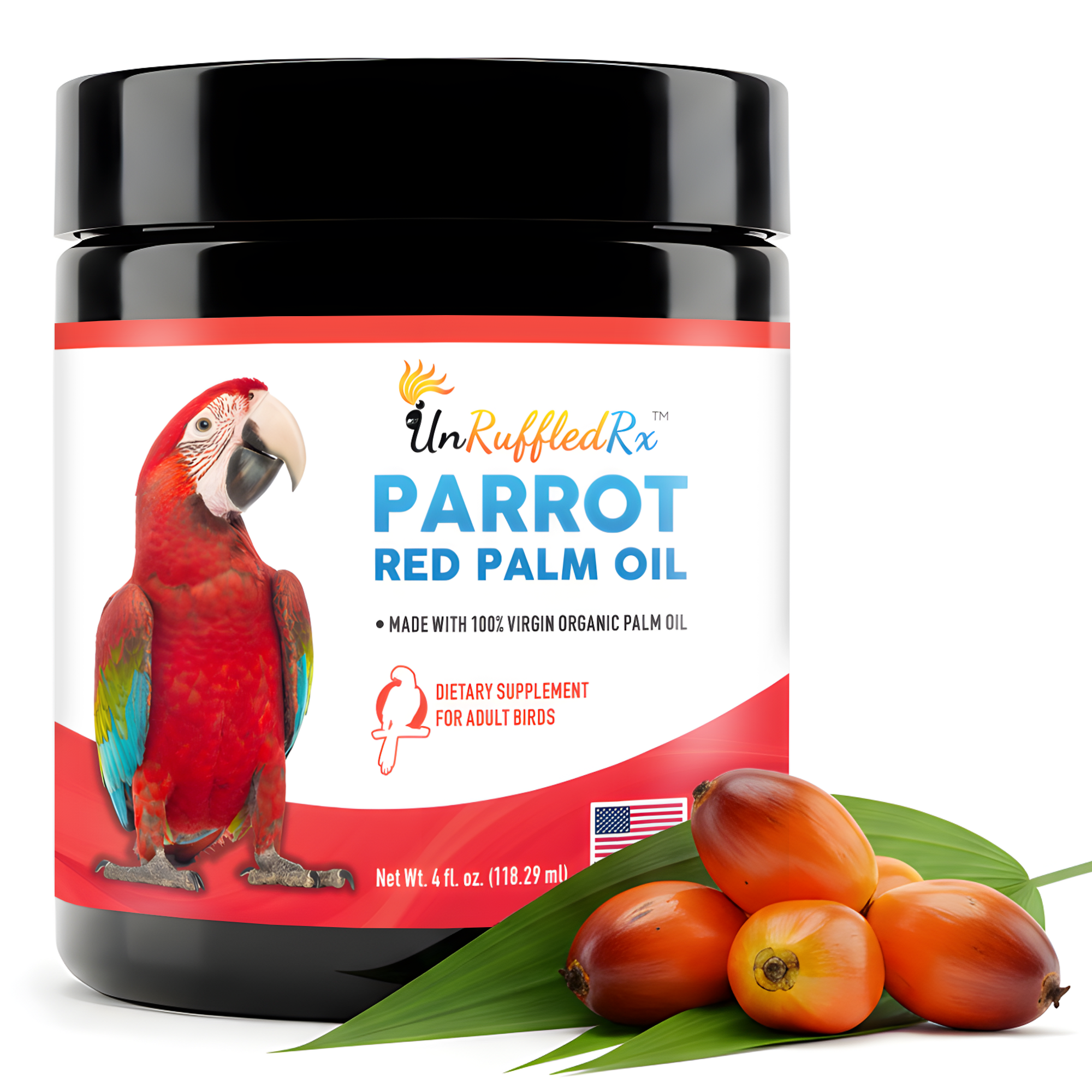
Red Palm Oil
Best for: Birds eating mostly seeds or avoiding orange, red, and dark-green foods.
Adds carotenoid-rich plant nutrition to a varied diet and supports the tissues lining the mouth, sinuses, and respiratory tract.
Add Carotenoid-Rich Nutrition
FeatherUp! Bird Vitamins
Best for: Selective eaters with broader nutritional gaps, limited food variety, or poor feather quality.
Provides targeted nutritional support for birds that may not receive a complete range of vitamins from their everyday diet.
Support Broader NutritionNeed the full eye-health guide?
This article focuses on the warning sign of a bird rubbing it's eye. For closed eyes, discharge, cloudiness, rubbing, sinus disease, and nutritional causes, read 7 Parrot Eye Problems and What to Do About Them.
Frequently Asked Questions
Is it normal for parrots to rub their eyes?
No. Healthy parrots may gently preen the feathers around their eyes, but repeatedly rubbing the eye itself isn't considered normal and usually means something is causing irritation.
Why does my bird keep rubbing only one eye?
If only one eye is affected, the cause is often something specific to that eye, such as debris, a scratch, or an eye infection. An avian veterinarian can determine the exact cause.
Can something get stuck in a bird's eye?
Yes. Dust, feather fluff, seed hulls, or other tiny particles can occasionally irritate the eye. If the rubbing continues or the eye becomes red or swollen, your bird should be examined.
Should I flush my bird's eye?
Unless your avian veterinarian has instructed you to do so, it's best not to flush or treat your bird's eye at home. Using the wrong product can sometimes make the problem worse.
When should I worry about eye rubbing?
If your bird keeps rubbing the same eye or you notice redness, swelling, discharge, cloudiness, or squinting, don't wait to see if it gets better on its own. Eye problems often respond best when treated early.