
Who Is This Article For?
This guide is for parrot owners whose bird has:
- A swollen eyelid or puffy eye
- Swelling around one eye or one side of the face
- A watery, red, or crusty eye
- An eye that suddenly looks different from the other
- Recurring swelling that comes and goes
You'll learn what may be causing the swelling, when it may be an emergency, and what to do next.
Quick Answer
A swollen eye in a parrot can be caused by irritation, injury, infection, sinus disease, or trauma. Mild swelling sometimes resolves quickly, but if the eye stays closed, develops discharge, becomes cloudy, follows an injury, or the swelling is getting worse, your bird should be examined by an avian veterinarian promptly.
In This Article
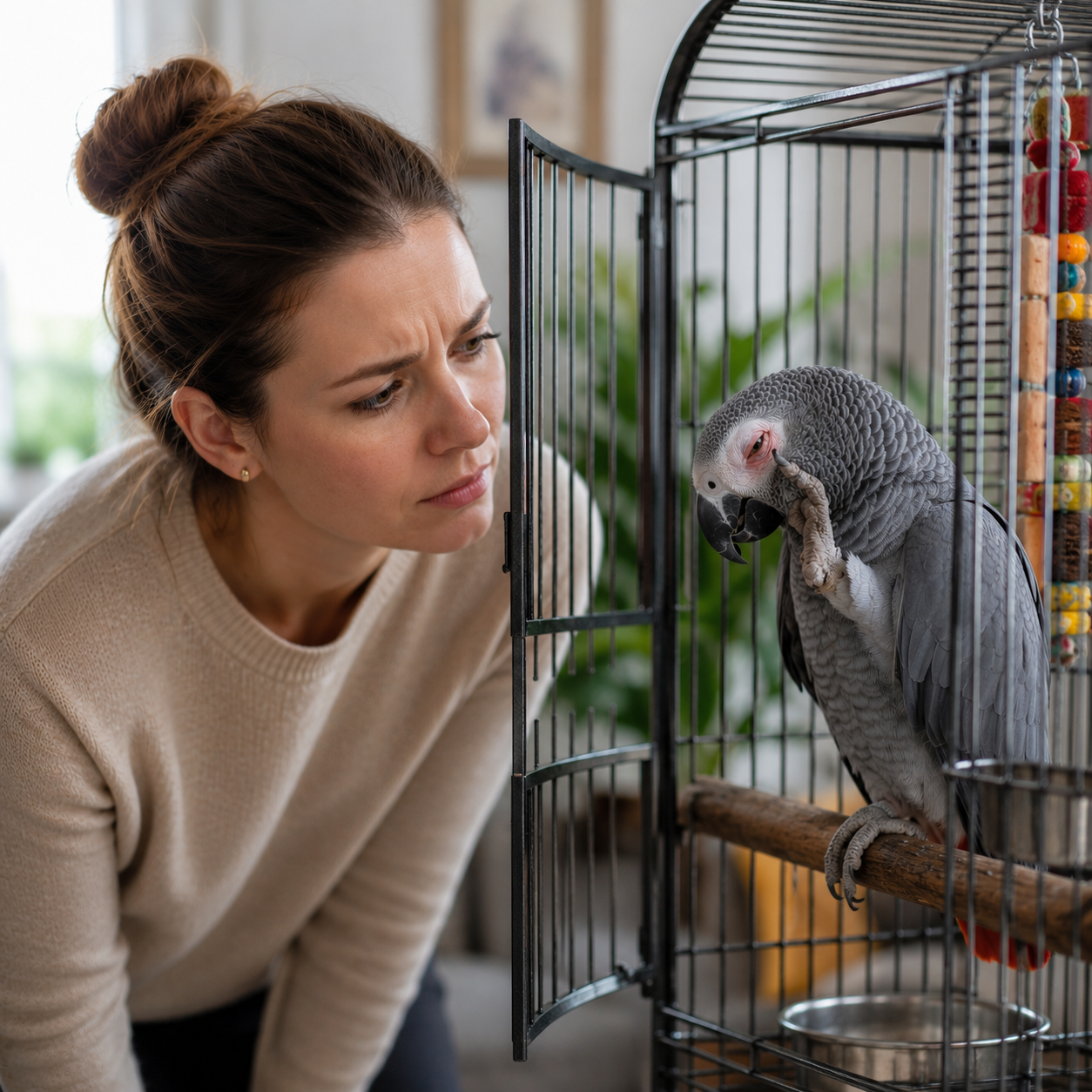
One side of your parrot’s face looks puffy, the eyelid appears enlarged, or the eye suddenly looks different from the other. Swelling around a bird’s eye can come from the eyelid, the eye itself, the surrounding tissue, or the nearby sinuses. This guide will help you understand what may be causing it, which signs make it urgent, and what to do right now.
Does this sound like your bird?
- One eyelid or the skin around the eye looks puffy.
- One side of your bird’s face looks larger than the other.
- The eye is partly closed, watery, red, or crusty.
- The swelling improves and then comes back.
- Your bird is still eating, but you are unsure whether it is safe to wait.
Call an avian veterinarian promptly if:
- The eye stays closed or cannot open normally.
- The swelling is increasing or spreading across the face.
- You see cloudiness, blood, thick discharge, or a visible injury.
- The swelling followed a collision, scratch, bite, or bird fight.
- Your bird is sneezing, breathing differently, eating less, or acting unusually sleepy.
In this article:
Is the Eye Actually Swollen?
Before trying to understand the cause, look closely at where the change is occurring. Bird owners often use “swollen eye” to describe swelling in the eyelid, the surrounding skin, the side of the face, or the eye itself.
Compare both sides
- Look at both eyes in the same light.
- Check whether the eyelid or bare skin around the eye looks enlarged.
- Notice whether the whole side of the face or area near the nostril looks puffy.
- Look for an eye that appears pushed outward or unusually prominent.
Watch how the eye behaves
- Does the eye open normally?
- Is your bird blinking, squinting, rubbing, or scratching?
- Is the swelling constant, worsening, or coming and going?
Key takeaway:
Swelling may come from the eyelid, eye, surrounding tissue, or nearby sinuses. The location and related symptoms help determine how urgent the problem may be.
When Is a Swollen Eye Urgent?
Mild puffiness can quickly become more concerning when it appears with pain, discharge, injury, breathing changes, or changes in your bird’s behavior.
Get prompt veterinary care if you see
- An eye that stays closed
- Cloudiness, blood, or a visible injury
- Thick, yellow, white, or crusty discharge
- Rapidly increasing swelling
- Swelling around the nostril or side of the face
- Breathing changes, appetite loss, weakness, or unusual sleepiness
Do not wait just because your bird is still eating
- Birds may continue eating during the early stages of an eye or sinus problem.
- Normal activity does not rule out pain, injury, or infection.
- Persistent swelling still deserves veterinary guidance.
What Could Be Causing the Swelling?
Swelling around a parrot’s eye can have several causes. The appearance alone usually cannot tell you whether the problem is irritation, injury, infection, sinus pressure, or a nutritional issue.
Debris in or around the eye
- Seed hulls, dust, feather particles, or loose fibers
- May cause sudden blinking, tearing, rubbing, or mild puffiness
- Persistent swelling suggests the eye needs to be examined
Injury or accident
- Collision with a window, cage, perch, wall, or toy
- Scratch to the eyelid or eye surface
- Swelling may appear even when the injury is difficult to see
Bite or scratch from another bird
- Bird fight, cage-mate bite, or accidental claw injury
- Small punctures near the eye may be hidden by feathers
- Bites and punctures can swell or become infected
Infection or sinus swelling
- May affect the eyelid, eye, surrounding tissue, or nearby sinuses
- May appear with redness, discharge, crusting, sneezing, or nasal discharge
- The swelling may come from sinus tissue rather than the eye itself
Nutrition or environmental irritation
- Seed-heavy diets may contribute to poor vitamin A intake and recurring sinus or tissue problems
- Smoke, aerosols, fragrances, cleaners, and heavy dust can irritate the eye and respiratory tract
- Neither explanation should be used to dismiss sudden or persistent swelling
What Other Signs Should I Look For?
The swelling itself matters, but the other changes you see can help show whether the problem is limited to the eye or may involve the sinuses, respiratory tract, or the bird’s overall health.
Changes around the eye
- Redness
- Clear tears, thick discharge, or dried crust
- Cloudiness or a bluish appearance
- Wet, matted, or missing feathers
- Repeated blinking, rubbing, or scratching
Changes in the rest of the bird
- Sneezing or nasal discharge
- Noisy or open-mouth breathing
- Fluffed posture or unusual sleepiness
- Eating less
- Lower activity, weakness, or poor balance
One-sided versus both-sided swelling
- One-sided swelling often points to a local injury, irritation, infection, or sinus problem.
- Swelling on both sides, especially with respiratory or whole-body signs, may indicate a broader illness.
- The pattern can guide urgency, but it cannot diagnose the cause.
| What You See | What It May Mean | What to Do |
|---|---|---|
| Mild puffiness with normal eye opening | Possible irritation or early inflammation | Remove irritants and watch closely for progression |
| Swelling with blinking or rubbing | Eye discomfort, debris, scratch, or inflammation | Contact an avian veterinarian if it continues |
| Swelling with discharge or crust | Possible infection or sinus disease | Arrange prompt veterinary care |
| Swelling after a collision, bite, or scratch | Possible eye or tissue injury | Treat as urgent |
| Swelling with sneezing or breathing changes | Possible sinus or respiratory involvement | Seek same-day veterinary guidance |
What Should I Do Right Now?
Keep the next steps simple: document the swelling, remove obvious irritants, and avoid treatments that could make the problem worse.
Take a clear photo or short video
- Photograph both eyes in the same light.
- Record whether the swelling is constant, worsening, or coming and going.
- Capture rubbing, blinking, sneezing, posture, or breathing changes.
Remove obvious irritants
- Move your bird away from smoke, sprays, fragrances, cleaners, and heavy dust.
- Replace dirty cage paper and clean heavily soiled areas.
- Keep handling calm and minimal.
Do not treat the eye yourself
- Do not force the eye open.
- Do not press on the swelling.
- Do not use human eye drops, leftover antibiotics, steroid drops, oils, or ointments.
- Do not try to remove anything that appears stuck or embedded.
Call an avian veterinarian if the swelling continues
- Seek same-day guidance if the eye stays closed, swelling increases, discharge appears, or your bird acts unwell.
- Treat cloudiness, blood, breathing trouble, or a recent injury as urgent.
What Will the Avian Veterinarian Need to Check?
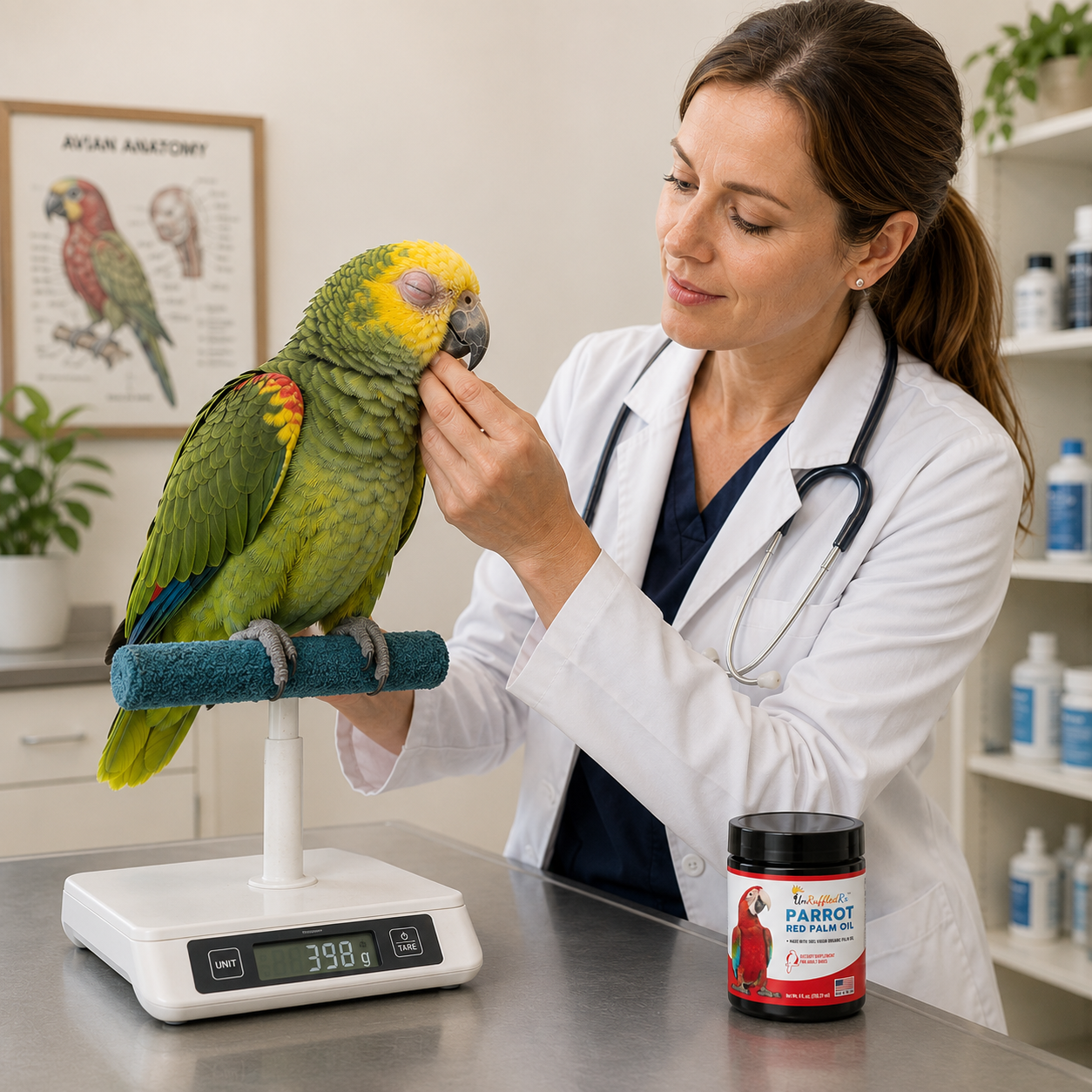
The veterinarian will need to determine where the swelling begins and whether it involves the eye, eyelid, surrounding tissue, nostril, or nearby sinus structures.
Where the swelling is coming from
- Eyelid
- Eye surface
- Surrounding skin or tissue
- Sinus or nostril
- Deeper injury or infection
What treatment depends on
- Whether there is debris, trauma, infection, or sinus disease
- Whether samples, flushing, medication, imaging, or other testing are needed
- Whether diet may be contributing to recurring eye or sinus problems
Could Diet Be Part of the Bigger Picture?
Sudden swelling still needs veterinary evaluation. Nutrition becomes more relevant when your bird eats mostly seeds, refuses fresh foods, or has recurring eye, sinus, respiratory, skin, or feather problems.
When nutrition may be contributing
- Your bird eats mostly seeds.
- Your bird avoids orange, red, and dark-green foods.
- Eye or sinus problems keep returning.
- Feather quality and overall diet are also poor.
Keep the distinction clear
- Poor nutrition may contribute to weakened tissues and recurring sinus problems.
- Nutrition does not explain away sudden swelling.
- Dietary products support nutrition; they do not treat an eye injury, infection, or active sinus disease.
Support a Seed-Heavy or Limited Diet
Choose nutritional support based on what your bird actually eats. These products do not treat swelling, injury, infection, or sinus disease.

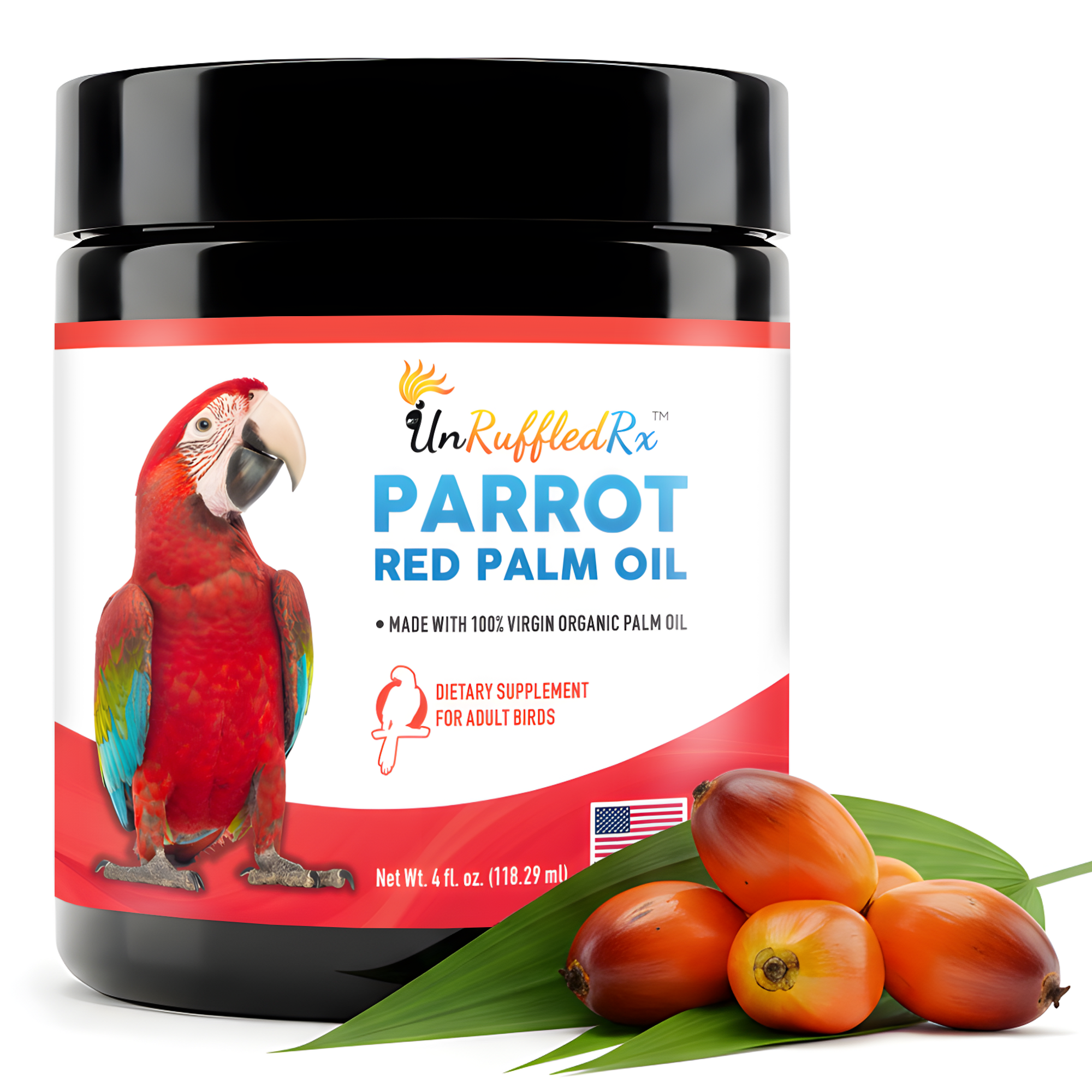
Red Palm Oil
Best for: Birds eating mostly seeds or avoiding orange, red, and dark-green foods.
Adds carotenoid-rich plant nutrition to a varied diet and supports the tissues lining the mouth, sinuses, and respiratory tract.
Add Carotenoid-Rich Nutrition
FeatherUp! Bird Vitamins
Best for: Selective eaters with broader nutritional gaps, limited food variety, or poor feather quality.
Provides targeted nutritional support for birds that may not receive a complete range of vitamins from their everyday diet.
Support Broader NutritionNeed the full eye-health guide?
This article focuses on swelling around the eye. For closed eyes, discharge, cloudiness, rubbing, sinus disease, and nutritional causes, read 7 Parrot Eye Problems and What to Do About Them.
Frequently Asked Questions
Can I watch a slightly swollen eye overnight?
- Only when the swelling is very mild, the eye opens normally, and there are no other symptoms.
- Persistent, worsening, or recurring swelling needs veterinary guidance.
Why does the swelling go down and come back?
- Irritation, sinus pressure, inflammation, or recurring infection may fluctuate.
- Repeated swelling still needs evaluation.
Can a sinus problem make only one eye swell?
- Yes, especially when swelling affects one side of the face.
- You may also notice sneezing, nasal discharge, or breathing changes.
Can I use leftover eye drops?
- No.
- The wrong medication may worsen an injury, irritate the eye, or hide important symptoms.
Can a seed-heavy diet contribute to swollen eyes?
- Poor vitamin A intake may contribute to recurring sinus and tissue problems.
- It does not replace veterinary evaluation of active swelling.
Related Eye-Health Guides
Why Is My Bird Keeping One Eye Closed?