
Who this is for: Bird owners who have been sent home from the veterinarian with an oral medication and need a reliable way to make sure their bird receives the prescribed dose.
Not for: Bird owners who have never been shown how to safely restrain a bird or give liquid medication by mouth. If you're new to this, ask your avian veterinarian or veterinary technician to demonstrate the technique before trying it on your own.
Quick answer: With a few basic skills — safe toweling, calm handling, and slow, steady dispensing from an oral syringe — you and your bird can learn a medication routine that is much less stressful. The goal is to avoid chasing and struggling, give the exact prescribed dose, and make the whole process quick and predictable.
Medication Is Different From a Supplement
Your veterinarian has examined your bird and may have run tests to figure out what is going on. Based on what they found, they prescribed this medication because they believe it will help your bird recover.
That’s why it’s important to give the medication exactly as directed — the right amount, at the right times, for the full length of treatment.
If your bird seems to be getting worse, develops new symptoms, or you think they may be reacting to the medication, call your veterinarian right away.
How to Give Your Bird Oral Medication With Less Stress
1. Get Everything Ready First
Measure the medication before you pick up your bird. Have the syringe, towel, and a favorite reward ready so you're not searching for supplies while holding an increasingly irritated bird.
Check the prescription label:
2. Keep the Environment Calm
Use a quiet, familiar area and move normally. Avoid turning medication time into a chase around the room if possible.
The goal isn't to convince your bird that medicine is fun. It's to make the routine as calm and predictable as you can.
3. Towel Your Bird Safely
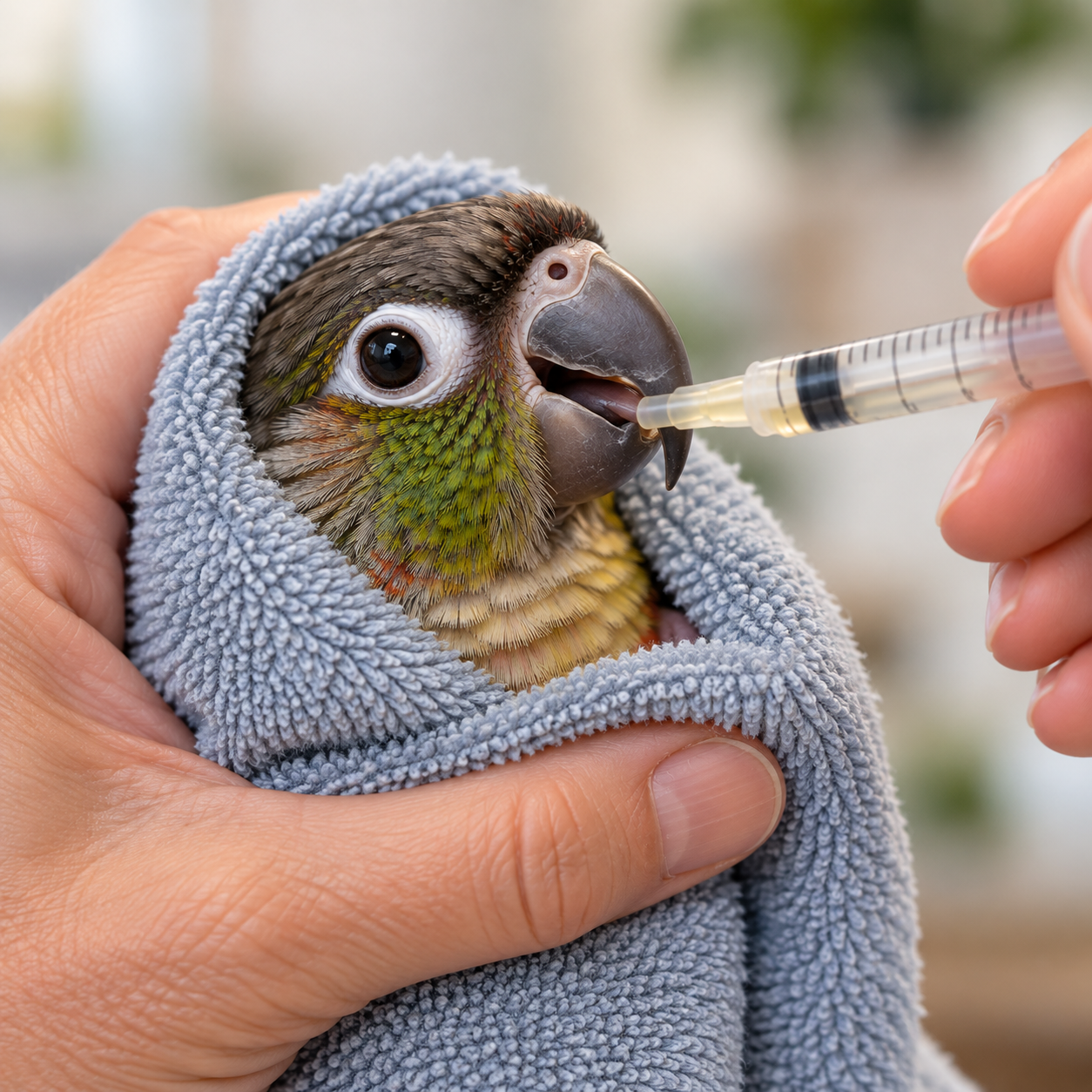
If your bird won't voluntarily take medication from a syringe, you may need to towel them. Secure the wings gently while allowing the chest to move freely for normal breathing.
Use only as much restraint as you need, and work efficiently.
See our step-by-step guide to towel training a bird.
4. Keep Your Bird Upright
Hold your bird securely in an upright position. Avoid unnecessary pressure on the chest or neck.
5. Give the Exact Dose Slowly
Following the technique your veterinarian demonstrated, bring the oral syringe to the side or corner of the beak and give the medication slowly.
Pause as needed so your bird has time to swallow. Don't squirt the entire dose rapidly into the mouth.
6. Make Sure Your Bird Swallows
Watch for swallowing as you give the medication. Taking a few extra seconds is better than rushing and having medicine end up on the towel instead of in your bird.
7. Release and Reward
Once the medication is in, you're done. Don't turn the session into nail trimming, an examination, or another handling task just because your bird is already in the towel.
Release your bird and offer praise, a favorite treat, attention, or simply a return to a favorite perch.
Towel → syringe → swallow → release → reward → done.

Hint: A Small Hospital Cage Can Make This Easier
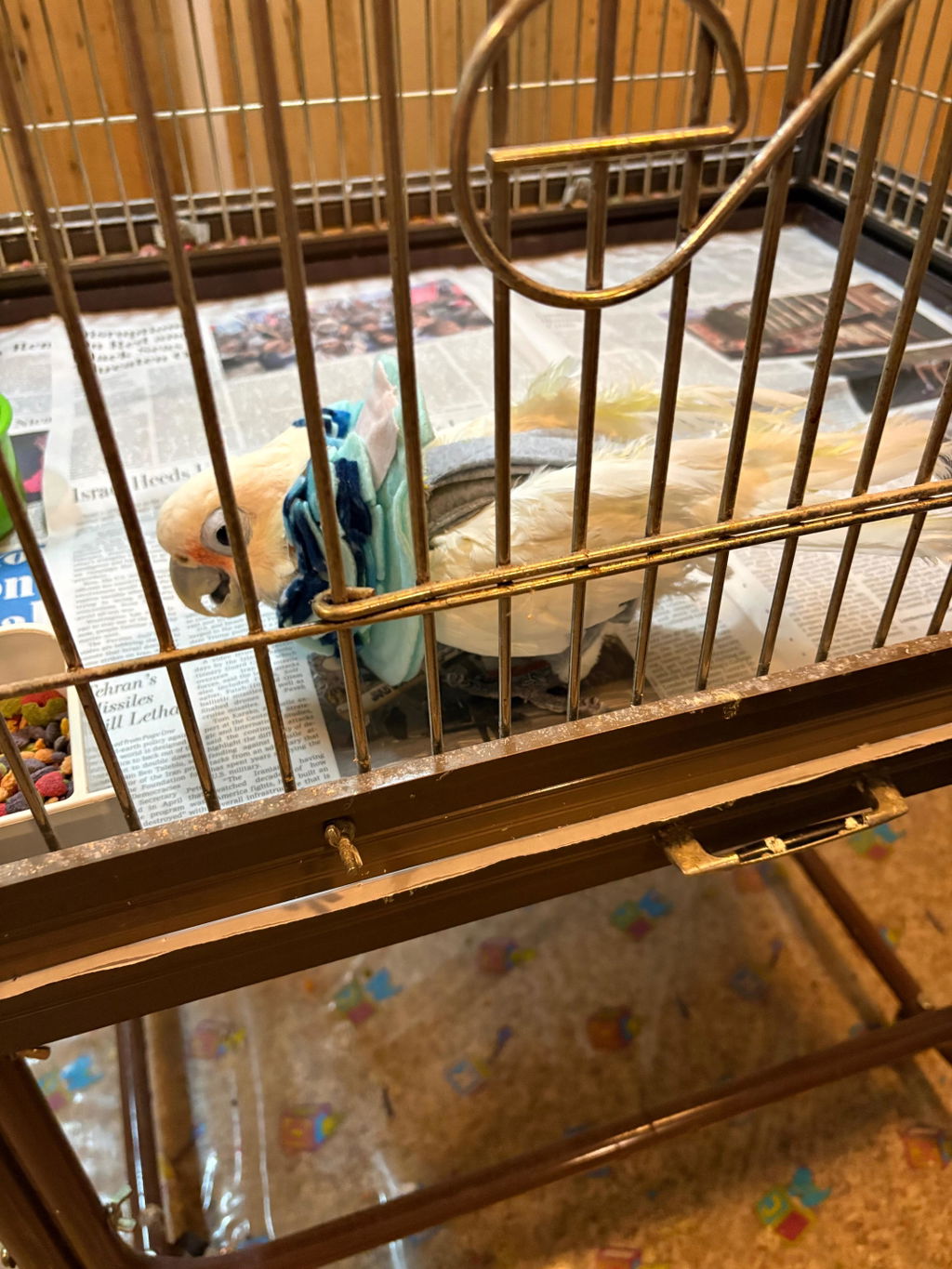
If your bird is already resting in a small rehabilitation or hospital enclosure, you can often medicate them without chasing them around a larger cage. Reach in calmly, towel if needed, give the medication, reward, and you're done.
Related: How to Make a Hospital or Rehabilitation Cage for a Sick Bird
What If Your Bird Really Fights You?
Stop and reset rather than gripping harder or turning it into a wrestling match.
If you're struggling to hold your bird safely, medication is going everywhere, or you can't tell whether the full dose is getting in, call your veterinarian and ask them to demonstrate the technique again.
For some birds, two people make the process much easier: one person calmly towels and holds while the other gives the medication.
Can I Hide Bird Medicine in Food?
Sometimes, but ask your veterinarian first. The important question is whether your bird will eat all of the medicated portion so you know the full dose was received.
Putting medication into a large bowl of food may feel less stressful, but if your bird only eats part of it, you won't know how much medicine they actually received.
Frequently Asked Questions
What if my bird spits some of the medicine out?
Don't automatically give another full dose. You may not know how much your bird swallowed. Call the prescribing veterinarian and ask what they want you to do.
Can I put my bird's medication in drinking water?
Only if your veterinarian specifically tells you to. Birds don't drink a predictable amount of water, so it can be difficult to know how much medication they received.
What if my bird won't open their beak?
Don't force the beak open aggressively. Ask your veterinarian to show you the safest way to position the syringe and give the medication to your particular bird.
Will my bird hate me after I give medicine?
After a few practice sessions, giving medication should take only a few seconds. Talk to your bird in a calm, reassuring voice while you work — you can even tell them, “This is going to help you feel better.”
Your bird may still squawk, complain, or throw a little toddler-style fit. That doesn't mean you're doing something wrong. Keep the routine calm, give the medication as prescribed, release your bird as soon as you're finished, and follow with praise or a favorite reward.
What if I miss a dose?
Follow the instructions from the prescribing veterinarian or call the clinic. Don't double the next dose unless your veterinarian specifically tells you to.
Can I train my bird to take medicine from a syringe?
Yes. When your bird is healthy, you can teach them to approach a syringe and take a small amount of a tasty, sugar-free juic voluntarily. That training can make future medication much easier — but when your bird is already sick and needs treatment now, getting the prescribed dose comes first.
Related Posts
How to Towel Train a Bird: A Step-by-Step Guide
Learn safe towel handling before you need it for medication, veterinary care, or an emergency.
How to Make a Hospital or Rehabilitation Cage for a Sick Bird
Set up a small, quiet recovery space that makes medication, warmth, rest, and monitoring easier.
My Bird Won’t Eat Their Supplement: How to Teach Them to Accept It
Learn how to introduce a new supplement gradually using familiar food, short training sessions, and positive reinforcement.
About the Author
Diane Burroughs, LCSW, is the founder of BirdSupplies.com and UnRuffledRx. For more than 25 years, she has focused on practical companion bird care, feather health, nutrition support, and behavior-informed strategies that make everyday care easier for birds and their people. Her approach emphasizes preparation, positive reinforcement, low-stress handling, and working with an avian veterinarian when medical care is needed.