
Table of Contents
- What are pin feathers, and why does my bird look spiky?
- Do pin feathers hurt or itch?
- Pin feathers vs. blood feathers: what’s the difference?
- What actually helps itchy pin feathers feel better
- Can I help remove pin feathers safely?
- When pin-feather discomfort is no longer normal
- FAQ: quick answers owners search for
Who this is for:
Bird owners noticing pin feathers and wanting to understand what’s happening —and how to support comfort and healthy feather growth without causing pain or stress to their pet.
Who this is not for:
This guide is not intended for birds with open skin, active bleeding, rapidly expanding bald areas, obvious feather destruction, or signs of illness such as weakness or loss of appetite. Those situations are not part of normal feather growth and require avian or exotics veterinary care.
Quick check (start here):
- Likely normal: Scratching or preening happens in short bursts, usually where new feathers are coming in. Your bird works at the area, gets some relief, and then goes back to eating, playing, resting, or interacting as usual.
- More concerning: Your bird keeps going back to the same exact spot or starts skipping normal activities just to keep grooming.
- Call a vet: You see bald patches, broken skin, bleeding, weakness, or clear feather pulling instead of normal preening.
What are pin feathers, and why does my bird look spiky?
What pin feathers actually are
Pin feathers are new feathers growing in through the skin after the old feather has been shed. Each one is wrapped in a protective keratin sheath that supports early development. Visually, they look like pale or whitish “spikes,” especially on the head and neck where they’re easy to see.
It’s common for pin feathers to appear in clusters during a molt, which can make a bird suddenly look rough or unkempt even when feather replacement is proceeding normally.
Unopened pin feathers are not stuck. Most simply are not ready to open yet.
Why they often appear all at once
Feathers don’t grow one at a time. During a molt, the body turns on groups of feather follicles together, often in the same area, so old feathers drop and new ones start growing on a similar schedule.
That’s why pin feathers can seem to appear all at once. The follicles were already preparing beneath the skin—you’re just seeing the moment when growth becomes visible. When many feathers start growing at the same time, the skin can feel busy and irritated even though nothing is medically wrong.
Do pin feathers hurt or itch?
| Stage | How It Feels |
|---|---|
| Early Growth | Tender pins, sensitivity; avoid handling |
| Itchy Phase | Scratching/rubbing increases; bathing helps |
| Release | Sheaths flake off; comfort improves |

Early growth: tenderness
In the earliest stage, each pin feather is still connected to a small blood supply. The surrounding skin and follicle are sensitive, which is why touching or squeezing pin feathers at this point can be uncomfortable or painful.
What this looks like:
- Your bird flinches, pulls away, or guards the area
- Lower tolerance for handling, especially around the head and neck
What helps at this stage:
- Leave pin feathers alone — this is not the stage to “help” open them
- Reduce handling around sensitive areas
- Support feather growth with a balanced diet that includes adequate protein, vitamin A, and trace minerals
- Keep routines calm and predictable to reduce stress while the skin is tender
The itchy phase (what most owners notice)
As the keratin sheath dries and starts to break down, pin feathers often itch. This is when scratching, rubbing, and focused preening usually increase.
What this looks like:
- Rubbing the head on perches, toys, or cage bars
- Scratching at areas where pin feathers are visible
- Short bursts of grooming that stop once some relief is reached
This stage can look behavioral, but it’s usually physical irritation from growing feathers.
What helps at this stage:
- Offer regular bathing or gentle misting to soften the keratin sheath
- Maintain adequate humidity, especially in dry indoor environments
- Use smooth, non-abrasive perches to reduce irritation while rubbing
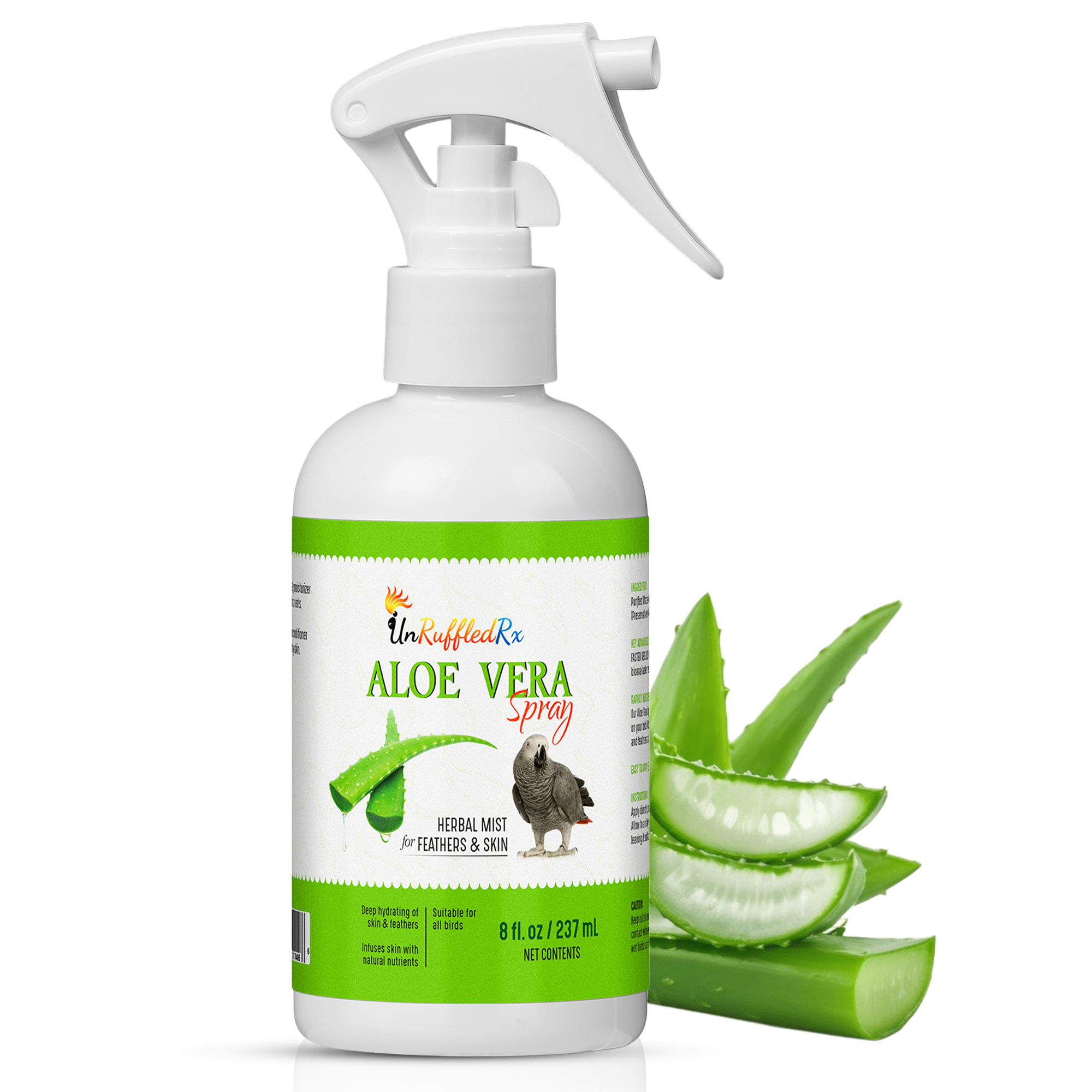
- A bird-safe soothing spray can help relieve dryness between baths, used sparingly and as directed
- If a bird wants help, they will clearly invite it — and only when the sheath is dry and flaky.
The release phase
Once a pin feather is fully mature, the sheath dries completely and flakes away, allowing the feather to open and settle into place. Fine white flakes are common during this stage.
What this looks like:
- Less sensitivity to touch
- Improved comfort
- A gradual return to normal handling tolerance
What helps at this stage:
- Continue bathing to support natural flaking
- Only assist with sheaths if your bird clearly invites it
- Avoid squeezing or cracking sheaths that are still tight or shiny
- Stay hands-off if your bird prefers to manage the process alone — many do
Pin feathers vs. blood feathers: what’s the difference?
Pin feathers are new feathers that are still growing. Early in that process, they’re connected to a small blood supply, which is why touching or breaking them too soon can hurt
Blood feathers are simply larger feathers that are still growing and still connected to an active blood supply. You’ll usually see them in the wings or tail, where feathers are thicker and take longer to finish growing. Because these feathers are bigger, breaking one can cause more bleeding than a small body feather.
Why this matters
If a blood feather breaks, it can bleed heavily. In smaller birds especially, uncontrolled bleeding can become dangerous if it isn’t addressed quickly.
What to do if a blood feather breaks
- Find the source: Bleeding usually comes from the feather shaft itself, not the surrounding skin.
- Apply a clotting agent: Use cornstarch, flour, or styptic powder and apply steady, gentle pressure.
- Limit movement: Place your bird in a warm, quiet space and monitor closely to be sure the bleeding stops.
If bleeding stops with steady pressure and a clotting agent, monitor closely for 30–60 minutes. You may reapply the clotting agent once or twice if minor bleeding restarts.
If bleeding continues beyond 10–15 minutes, appears heavy, or you’re unsure it’s controlled, contact an avian or exotics veterinarian right away.
What not to do
Do not pull a blood feather yourself. Removal is extremely painful and can worsen bleeding or damage the follicle. Blood feathers should only be removed by an avian veterinarian or trained professional.
What actually helps itchy pin feathers feel better
Goal: ease skin irritation, keep scratching from becoming fixated, and protect new feathers as they grow.
Action steps (safe home support)
- Offer regular bathing or misting: Water softens keratin sheaths and reduces itch intensity while aloe vera supports irritated skin and follicles.
- Improve humidity if air is dry: Dry indoor air can make sheaths feel tighter and more irritating.
- Reduce physical friction: Check for rough perches, toys, or cage areas rubbing pin-feather zones.
- Limit handling during tender stages: Avoid touching pins unless your bird clearly accepts it.
If your bird is visibly itchy but otherwise acting normally, these steps usually provide meaningful relief.
Can I help remove pin feathers safely?
Do birds need help?
Most birds manage pin feathers on their own through preening and bathing. Helping is optional, not required.
When help may be appropriate
- The pin feather is fully mature and dry
- The sheath looks dull and flaky, not dark or tight
- Your bird leans into the touch or clearly invites help
When not to help
- If your bird flinches, pulls away, or guards the area
- If the sheath looks tight, shiny, or painful
- If handling increases stress or irritation
Many experienced owners choose not to help at all and rely on bathing, humidity, and time.
When pin-feather discomfort is no longer normal
Normal pin-feather irritation improves gradually. The signs below suggest something beyond routine molt discomfort.
- Fixation on one area that worsens day after day
- Broken skin, redness, or bleeding
- Bald patches that are not filling back in
- Behavior changes such as withdrawal, poor appetite, or low energy
If these signs appear, stop home troubleshooting and consult an avian veterinarian.
FAQ: quick answers owners search for
Is it too late to help if my bird already has itchy pin feathers?
Once pin feathers show up, the process has already started under the skin. If they’re itchy or sore, food changes won’t stop that — but vitamin A, vitamin E, and omega fatty acids support skin health and feather structure, helping current feathers finish well and setting the bird up for better growth next time.
How long should pin-feather itchiness last?
Itchiness often comes in waves and improves as sheaths open. Escalation or fixation suggests a problem.
Is it normal for head pin feathers to bother birds more?
Yes. Birds can’t preen their own heads or neck easily, so head pin feathers often cause more visible irritation.
Can pin feathers turn into plucking?
Persistent irritation without relief can contribute to fixation. Early comfort support helps reduce that risk.
Related Posts Bird Owners Often Find Helpful
Why Is My Bird Molting and Itching? Complete Feather & Skin Care Guide
How to Help a Molting Bird Without Making Things Worse
Why Seed Diets Fail Birds During Molt (and What to Do Instead)
Pin Feathers Explained: When Molting Gets Itchy
Is My Bird Plucking or Just Having a Rough Molt?
Humidity, Bathing, and Molting: What Indoor Birds Actually Need
When Molting Becomes a Chronic Problem (and How to Break the Cycle)
References
Chen, M.-J., Xie, W.-Y., Jiang, S.-G., Wang, X.-Q., Yan, H.-C., & Gao, C.-Q. (2020). Molecular signaling and nutritional regulation in the context of poultry feather growth and regeneration. Frontiers in Physiology, 10, Article 1609. https://doi.org/10.3389/fphys.2019.01609
Lightfoot, T. L. (2024, September). Skin and feather disorders of pet birds. In Merck Veterinary Manual. Merck & Co., Inc. https://www.merckvetmanual.com/bird-owners/disorders-and-diseases-of-birds/skin-and-feather-disorders-of-pet-birds
Lucas, A. M., & Stettenheim, P. R. (1972). Avian anatomy: Integument (Agriculture Handbook No. 362). U.S. Department of Agriculture. https://naldc.nal.usda.gov/catalog/CAT87209099
McGraw, K. J. (2006). Mechanics of carotenoid-based coloration. In G. E. Hill & K. J. McGraw (Eds.), Bird coloration, Vol. 1: Mechanisms and measurements (pp. 177–242). Harvard University Press.
Stettenheim, P. R. (2000). The integumentary morphology of modern birds—An overview. American Zoologist, 40(4), 461–477. https://doi.org/10.1093/icb/40.4.461
Meet Diane Burroughs, LCSW – licensed psychotherapist, ABA-trained behavior guru, and your go-to expert for avian anxiety (yes, birds get stressed too!). Certified in Nutrition for Mental Health, Diane turns science into real-world solutions for feathered friends. She’s the author of multiple bird behavior books, offers one-on-one behavior consultations, and is the brain behind UnRuffledRx – a line of science-backed parrot wellness products that actually work.
Diane’s creations have flown off the shelves into avian vet clinics and bird stores across the U.S., and her work has been featured in the Journal of Avian Medicine & Surgery and at Exoticscon. With 30+ years of hands-on experience, she’s helped thousands of birds thrive with customized behavior plans, proving that happy birds make happy humans.
SHARING IS CARING! PLEASE SHARE ON YOUR FAVORITE SOCIAL MEDIA NOW!