
Table of Contents
- Quick answer: What should I do for my bird on July 4?
- Why birds freak out during fireworks
- What to do before dark
- What to do while fireworks are going off
- Should I cover the cage, leave the TV on, or use a night light?
- Protect your bird’s breathing and air quality
- Calming support for fireworks week
- What to do the next day
- FAQ
Your bird is settling in for the night.
Then the first firework explodes.
Suddenly your parrot is screaming, flapping, pacing, clinging to the cage bars, or acting like the whole sky is falling apart.
If you are asking, “Will my bird freak out during fireworks?” you are not overreacting. Fireworks are loud, sudden, unpredictable, and often happen right when birds are supposed to be winding down for sleep.
The best thing you can do is not wait until your bird is already scared.
Make a July 4 bird plan before a week or two before the madness.
Quick answer: What should I do for my bird on July 4?
If fireworks are expected near your home, move your bird to a quiet indoor room before the noise starts. Close windows and curtains, use soft background sound, keep the room calm, and avoid handling your bird if they are already frightened.
Your fast fireworks plan:
- Move your bird to the quietest room before dark
- Close windows, blinds, and curtains
- Use soft TV, music, a fan, or white noise
- Leave a dim light on if your bird is prone to night frights
- Keep guests, kids, dogs, and party chaos away from the cage
- Use calming support before the loudest part of the night
- Let your bird recover with a quiet routine the next day
The goal is simple: reduce the sudden booms, flashing lights, smoke, and chaos before your bird starts to panic.
Why birds freak out during fireworks
Fireworks come out of nowhere
Parrots are wired to notice sudden sounds.
In the wild, a unexpected sounds could signal danger. Bright lights are scary. So when fireworks start outside, your bird can react in panic instantly.
Some birds scream. Some freeze. Some launch off the perch. Some crash around the cage breaking wing and tail feathers. Some seem fine in the moment but act skittish the next few weeks.
The flashing lights can make it worse
It is not just the sound.
Fireworks also create flashes, shadows, and movement outside the window. If your bird is already covered or trying to sleep, sudden bursts of light can be especially unsettling.
Closing blinds and curtains can help your bird feel less exposed.
July 4 changes the whole house
Fireworks night is rarely just fireworks. People celebrate for a week or two.
There may be guests, excited kids, doors opening and closing, dogs barking, late bedtime, loud TV, outdoor cooking smells, and less normal attention from you.
For a sensitive bird, all of that can stack up fast.
If your bird is skittish, plan ahead
If your bird startles easily, has night frights, or tends to crash around the cage when scared, consider setting up a secure hard-sided bird carrier before the fireworks begin.
A sturdy carrier can help protect a panicked bird from flapping into cage bars, falling from tall perches, or injuring themselves during sudden booms.
Place the carrier in a quiet, dim, well-ventilated area away from windows, flashing lights, guests, dogs, and party noise. An interior room, hallway, bathroom, basement, or walk-in closet may work well if the space is safe, breathable, and temperature-controlled.
Do this before the festivities begin. Moving a frightened bird after the fireworks start can add more stress.
Use familiar bedding or a low perch if appropriate, offer water if your bird will be in the carrier for a while, and check calmly without hovering.What to do before dark
The biggest mistake bird owners make is waiting until the fireworks are already booming.
By then, your bird may already be in panic mode.
Move your bird early
If you can, move your bird to the quietest room in the house before fireworks begin.
A bedroom, interior room, basement, or room away from street-facing windows may work better than the normal cage location.
If you live in an apartment and cannot move your bird far from the noise, do what you can: close windows, pull blinds, use curtains, add soft background sound, and keep the room steady.
Make the room feel boring in a good way
Keep the room calm and predictable.
- Familiar cage
- Familiar perch
- Familiar food and water
- Soft light
- Closed curtains
- Low household energy
Use enrichment earlier in the day
A bird with something safe to do earlier in the day may settle better at night.
Offer a familiar foraging toy, shreddable, foot toy, or favorite healthy food activity before evening.
Do not wait until the fireworks start to introduce something brand new.
What to do while fireworks are going off
Do not grab your bird in a panic
If your bird is already scared, think safety first.
A frightened bird may bite, launch, crash, or fly into something even if they are normally gentle.
In many cases, your bird is safest inside a secure cage or sleep cage while you sit nearby and keep your energy calm.
Keep your own energy low
Your bird watches you.
If you rush into the room, flip lights on and off, talk loudly, or keep hovering over the cage, your bird may feel like there really is an emergency.
Move slowly. Speak softly. Keep the room steady.
Check without hovering
It is okay to check on your bird.
Just do it calmly.
Look for signs that your bird is coping: sitting on the perch, eating, preening, softly vocalizing, or resting.
Watch more closely if your bird is flapping wildly, falling, crashing into cage bars, panting, open-mouth breathing, tail bobbing, or acting weak.
Should I cover the cage, leave the TV on, or use a night light?
Should I cover my bird’s cage during fireworks?
It depends on your bird.
Some birds feel safer with a breathable cage cover. Others panic if they hear scary sounds but cannot see enough to orient themselves.
If your bird is prone to night frights, try a partial cover, especially on the window-facing side, instead of making the cage completely dark.
Should I leave a dim light on?
For many birds, yes.
A soft night light or dim lamp can help a startled bird see the perch, cage bars, and surroundings if they wake suddenly.
The room should not be bright and stimulating. It should be calm, soft, and easy to navigate.
Should I leave the TV or music on?
Soft background sound can help mask sudden booms.
Use the TV, music, a fan, white noise, or nature sounds at a comfortable volume.
The goal is not to blast noise over fireworks. The goal is to make the outside sounds feel less sharp and sudden.
Best setup for many birds
- Quiet room
- Windows closed
- Curtains or blinds closed
- Soft background sound
- Dim light or partial cover
- Calm human energy
- No guests crowding the cage
Protect your bird’s breathing and air quality
Keep fireworks smoke outside
Birds have sensitive respiratory systems.
Keep your bird indoors during fireworks. Close windows and exterior doors, especially if smoke or firework fumes drift into your area.
If you use an air purifier, run it in the bird’s room before and during fireworks.
Skip outdoor bird time on July 4
Even if your bird loves sunshine, July 4 is not the best night for outdoor bird time.
A sudden boom can startle a bird into flying, jumping, biting, or crashing. Even birds with trimmed wings can sometimes fly farther than expected when frightened.
Give guests simple bird rules
If people are coming over, protect your bird from well-meaning chaos.
- No fingers through cage bars
- No opening the cage
- No feeding party food
- No crowding the bird room
- No loud visits once the bird is settling down
Calming support for fireworks week
Calming support works best as part of a plan.
It should not replace a quiet room, closed windows, soft sound, routine, sleep, and careful supervision.
Use calming support before the noise starts
If your bird tends to get stressed during fireworks, storms, travel, vet visits, or big routine changes, have calming support ready before July 4.
Do not wait until your bird is already screaming, flapping, or crashing around the cage.
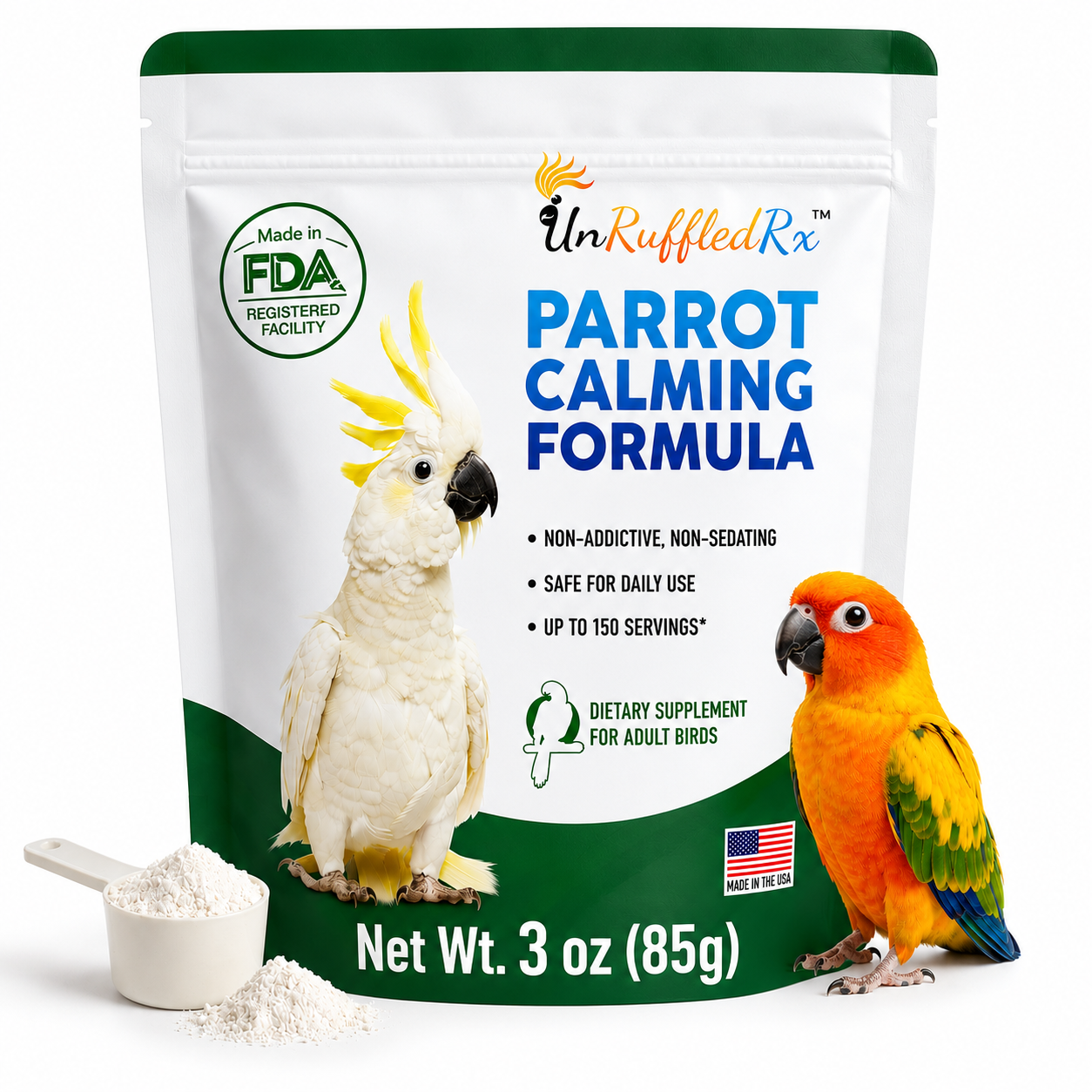
Parrot Calming Formula
Parrot Calming Formula is a daily calming powder made with L-Theanine and GABA to support relaxation without sedating your bird.
It can be used during predictable stressful times like fireworks week, thunderstorms, travel, boarding, vet visits, or major household changes.
Serenity Bird Calming Tea
Serenity Bird Calming Tea offers a gentle herbal option for birds who do well with a calming evening routine.
Use it as part of a predictable wind-down plan: quiet room, soft light, familiar sounds, and a calm bedtime setup.
What to do the next day
Expect your bird to be tired or touchy
Even if your bird gets through the night, they may be tired the next morning.
Some birds act cranky, clingy, withdrawn, or extra alert after a stressful night.
Think of it like an overtired toddler with feathers.
Return to normal routine
Routine helps birds feel safe again.
Offer breakfast at the normal time. Keep familiar sounds and activities in place. Avoid forcing interaction if your bird seems nervous.
Know when to call the vet
Stress can explain some behavior changes, but do not ignore signs of illness or injury.
Contact an avian veterinarian or emergency vet if your bird is open-mouth breathing, tail bobbing, wheezing, bleeding, limping, weak, fluffed, not eating, or acting seriously different.
FAQ: Birds and July 4 fireworks
Will my bird freak out during fireworks?
Some birds do and some birds do not. Birds that startle easily, have night frights, live near loud fireworks, or are already stressed may need extra support. Plan ahead before dark instead of waiting to see how bad it gets.
Can fireworks hurt birds?
Fireworks can scare birds and may cause panic, cage crashing, injury, biting, or stress-related behavior changes. Smoke and fumes can also irritate a bird’s respiratory system. Keep your bird indoors with windows closed.
Should I leave the TV on for my bird during fireworks?
Yes, soft TV, music, a fan, or white noise can help mask sudden booms. Keep the volume comfortable. Loud sound can become another stressor.
Should I cover my bird’s cage on July 4?
If your bird is used to being covered and finds it comforting, a breathable cover may help. If your bird has night frights, a partial cover and dim light may be safer than total darkness. You can move small bird cages into a bathroom or closet that has no window to reduce the stress.
Should I hold my bird during fireworks?
Usually, no. A scared bird may bite, launch, or crash even if they are normally sweet. Your bird may be safer in a secure cage while you sit nearby and speak calmly.
What if my bird starts crashing around the cage?
Stay calm. Turn on a soft light, reduce sudden noise and flashes, and make sure your bird is safe. Do not grab wildly at your bird. If your bird is injured, bleeding, weak, or breathing abnormally, call an avian vet or emergency vet.
What if I live in an apartment and cannot move my bird far from the noise?
Close windows, blinds, and curtains. Is there a dark closet with no windows?
Use soft background sound. Move the cage as far from the window as possible. Keep a dim light on if your bird is prone to night frights. Stay calm and make the room as predictable as possible.
Can I get my bird used to fireworks sounds?
Some birds can be gently desensitized to low-volume sounds over time, but do not start on July 4. Desensitization should be slow, positive, and stopped immediately if your bird shows fear.
Why is my bird acting different after fireworks?
A frightening night can leave some birds skittish, tired, clingy, or defensive the for the next days. Return to routine, move slowly, and give your bird space. If your bird seems sick, injured, or dramatically different, call your avian vet.
Final thoughts
Fireworks may last only a few hours, but to a sensitive bird, those hours can feel huge.
Your parrot does not understand July 4.
They only know the room changed, the sky started booming, lights flashed outside, and everything felt unpredictable.
So make the plan before the first boom.
- Quiet room
- Closed windows
- Closed curtains
- Soft background sound
- Dim light if needed
- Calming support before the noise starts
- A quiet reset the next day
Your bird does not need a perfect July 4.
They need to feel safe.
Related posts
- 5 Essential Ways to Reduce Bird Stress
- Bird Breathing Problems
- 10 Essential Tips to Protect Your Birds at Home
- How Changes in Routine Can Stress Your Parrot
- Bird Calming Products
References and resources
- Lafeber: A Safe And Sane Fourth Of July For Your Bird
- Lafeber: A Feather-Safe Fourth of July
- AVMA: July 4 Safety
- BirdTricks: Strategies For A Terror Free 4th Of July
- Avian Avenue community discussions about birds and fireworks
- Reddit r/parrots community discussions about birds and fireworks
Diane Burroughs, LCSW is a licensed psychotherapist trained in ABA therapy techniques. She specializes in avian anxiety disorders and is certified in Nutrition For Mental Health. Diane has written bird behavior books and created UnRuffledRx parrot wellness supplies for bird owners who want practical, compassionate support at home.
Diane’s products have been featured in the Journal of Avian Medicine and Surgery and at ExoticsCon, a conference for exotic pet veterinarians. Her bird collars and supplements are stocked in avian vet clinics and bird stores throughout the United States.
TAGS: #BirdSafety #FireworksAndBirds #ParrotCare #BirdStress #FourthOfJulyPets