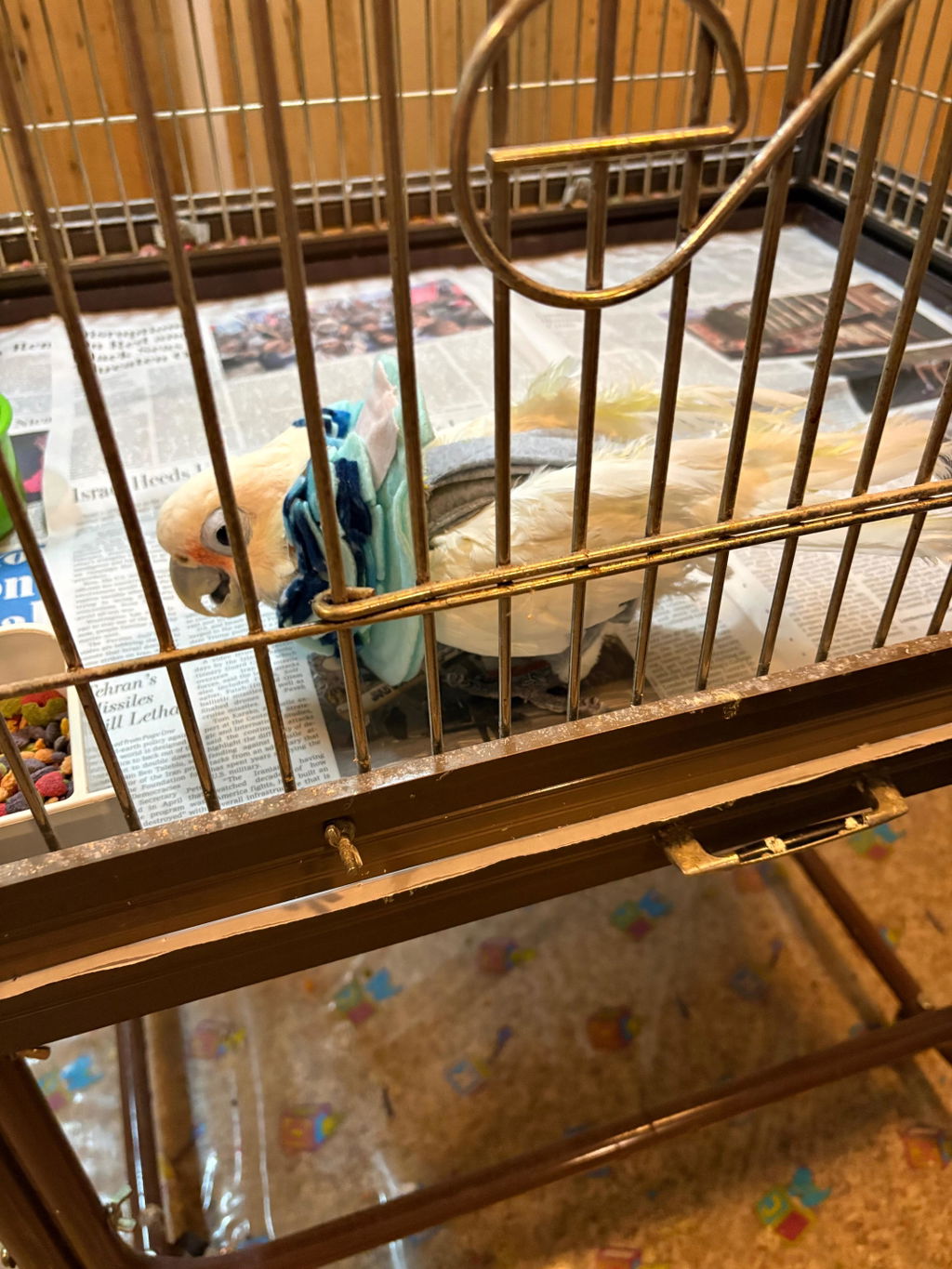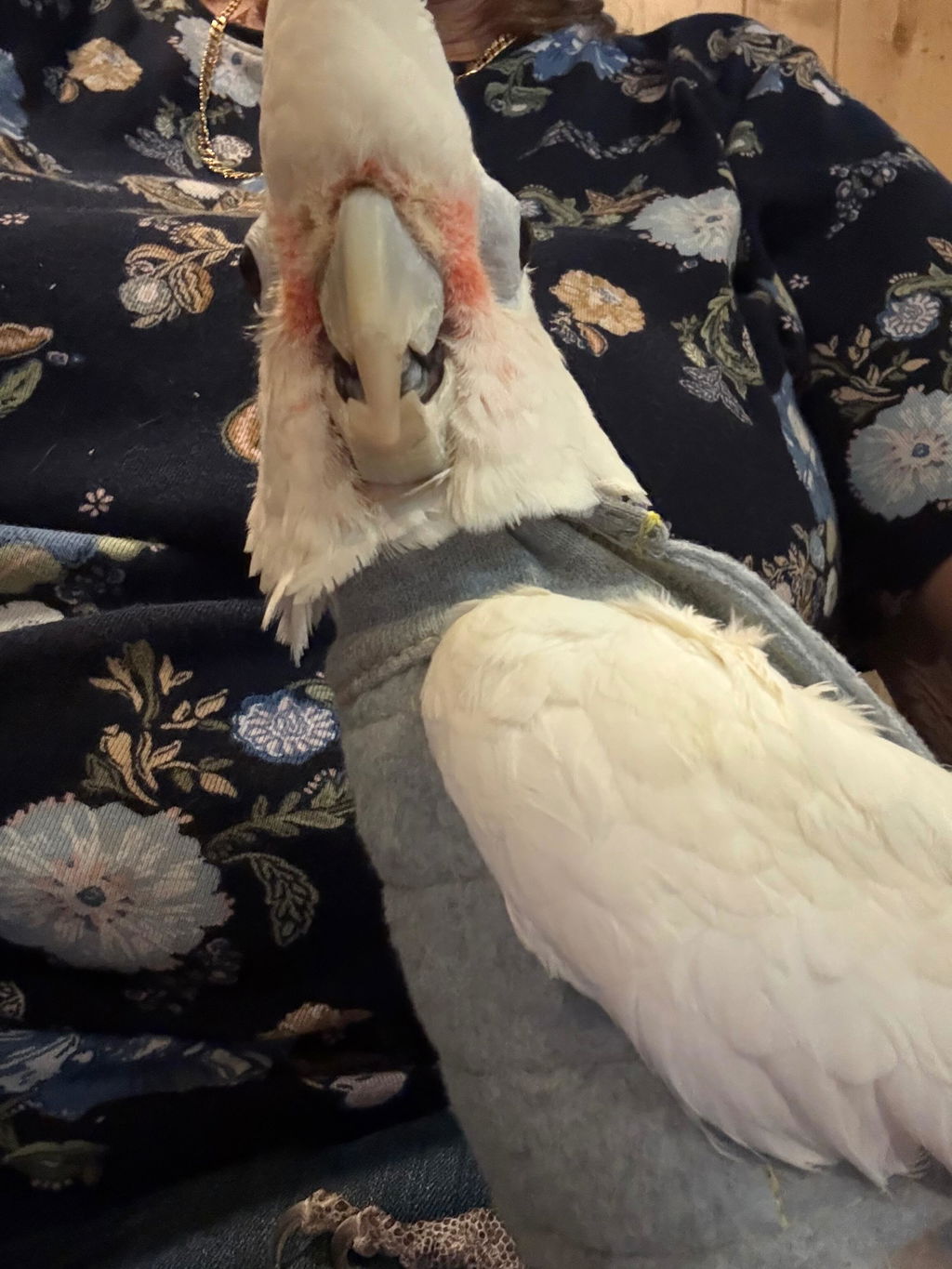

This is hormonal behavior — but not in a scary way.
It’s honestly just a bird being a bird. The soft cooing and wing flapping you’re seeing is classic “big feelings” Sun Conure behavior, especially in an adult bird. At eight years old, this isn’t a phase — it’s a normal biological response that just needs better direction.
The good news:
You don’t need to panic or shut your bird down. What matters is redirecting where that energy goes so it doesn’t turn into fixation, frustration, or long-term behavior issues.
Quick takeaways for worried bird owners
- Short bursts of hormonal behavior are normal — chronic patterns are not.
- Redirection works better than suppression for long-term behavior health.
- Most parrot hormones are unintentionally reinforced by well-meaning humans.
In this guide:
What am I seeing? Is this bird hormones?
What bird hormones looks like
- Soft cooing or murmuring sounds
- Wing flapping without flight
- Puffed posture and intense focus on a person
What does this mean?
byu/MrCheerio509 inConures
Why small birds look more dramatic
Smaller parrots can seem hormonal much of the year — and that’s not your imagination. Species lower on the food chain mature quickly and reproduce more frequently, so their bodies stay closer to breeding mode than long-lived parrots like macaws.
Is this normal or concerning?
When it’s normal
Occasional displays during certain seasons or situations are expected in adult parrots. Different parrot species become hormonal at different ages and size matters. Small parrots like cockatiels, budgies and conures can become hormonal before 1 year of age while larger parrots like cockatoos and macaws may not reach sexual maturity until age 7-8
When bird hormones becomes a problem
- It's happening daily or for long stretches of time
- It's getting more frequent, like a habit
- It's leading to frustration, screaming, nipping, or feather damage
- The bird doesn’t unwind on its own — it stays keyed into you and ignores toys, food, and its surroundings.
Why chronic hormones matter
When a bird stays hormonally “switched on” all the time, it takes a real toll. Females can start laying eggs repeatedly, and males stay stuck in a state of sexual frustration. In both cases, the bird’s body and nervous system never fully settle, which often shows up as irritability, fixation, and declining overall well-being.
What should I do now?
1. Actively reward independent behavior:
- Reward calm chewing, preening, or relaxed play. These are "natural parrot behaviors."
- Use quiet praise or a small favorite treat to reinforce the moments you want more of — when your bird is calmly playing, foraging, preening, or just relaxing on a perch.
- If your bird starts sexually begging or treating you like a mate, don’t try to handle it in the moment. Just disengage and walk away. The behaviors that stick are the ones that get a reaction—even a gentle one.
2. Give their pent up energy a natural parrot "job."
- Offer shreddable toys, chewable wood or palm - small birds need softer fibers while larger birds need tougher fibers
- Make foraging toys or paper-wrapped treats
- Simple problem-solving toys
Start where your bird can succeed
If your bird gets overstimulated outside the cage, begin these activities inside the cage first. Once calmer there, move them to a play stand or training perch.
What should I avoid?
Common mistakes that make this worse
- Rewarding the "courtship display" with extra attention or closeness
- Petting under wings, along the back, or near the tail
- Talking excitedly or leaning in during the behavior
Also avoid assuming:
- “He’ll grow out of it” when it’s happening daily
- More time out automatically equals better behavior
Why this matters more than most people realize
Hormonal energy doesn’t burn itself out. If a parrot doesn’t learn where to put that energy, it keeps showing up in louder, more persistent ways. Over time, birds can get stuck in a cycle where they’re constantly keyed up, easily frustrated, and unable to settle — and that’s exhausting for them.
This is where positive reinforcement is incredibly powerful. You’re not “training tricks.” You’re teaching your bird which behaviors help their body calm down. Every time you reward chewing, foraging, quiet play, or relaxed preening, you’re helping their nervous system learn a new default.
What makes this tricky is that birds don’t respond to intention — they respond to outcomes. If a behavior reliably leads to attention, closeness, or emotional engagement, the bird’s brain labels it as successful, even if the human didn’t mean to reinforce it.
Using treats without making it worse
Treats should immediately follow calm behavior
Get into the habit of having a bunch of preferred treats in your pocket or in a little treat bag - then intentionally observe for natural parrot behaviors.
- Reward settled, grounded moments
- Walk away during the hormonal display
- Think of treats as feedback, not bribery
This keeps learning clear
- Bird learns how to self-regulate
- Calm behavior becomes the default
- Hormonal displays lose their payoff
- Show the behavior you want.
- Reinforce it consistently.
- Let the rest fade.
When do I stop and call a vet?
In the world of bird behavior, "acting out" is rarely just a mood—it is a data point. Based on the 2026 clinical findings of Dr. Rob Marshall and Tailai O’Brien, reproductive hyperactivity is a primary cause of many health complaints in pet birds.

Use this 5-point protocol to determine if your bird's behavior has crossed the Risk Threshold from "normal parrot antics" to a medical priority:
- Watch Eating Habits: Don’t just check if they are eating. Watch for a bird that is obsessed with food or suddenly very picky. This is often a sign of hormone stress.
- Check the Feathers: Look for stress bars (lines across the feather) or dark spots. These are like "scars" from a time when your bird’s body was too stressed to grow healthy feathers.
- Notice "Power Downs": If your high-energy bird is suddenly "too good" or quiet, they might be in pain. Look for a bird sitting with both feet flat or wings drooping.
- Hormone Overdrive: Watch for mating behaviors like nesting or feeding toys. These aren't just quirks; they are a main cause of long-term sickness in pet birds.
- The Silent Pain Tell: Birds don't scream when they hurt. Look for squinting eyes or a "tight" face. If your behavior plan isn't working after 14 days, the problem is likely physical pain that only a vet can fix.
Bottom line
The Bottom Line: Your bird isn't being "bad," but their body is in a state of stress that they cannot control. Chronic hormonal behavior rarely resolves on its own and often leads to deeper health issues. By consistently rewarding calm, independent behavior and removing the triggers that "feed" the hormonal display, you help your bird settle into a lifestyle that is healthier for their body and much more livable for you.
Link to this blog:
Burroughs, D. (2026, February 4). Is my bird being hormonal or just acting weird? BirdSupplies.com. https://birdsupplies.com/is-my-bird-being-hormonal-or-just-acting-weird/
Related Posts Bird Owners Often Find Helpful
Is my bird being hormonal or just acting weird?
Bird nesting behavior: clear signs it’s hormonal
Hormonal bird behavior vs normal—what owners misread
Your bird laid an egg: what’s normal and what’s not
Sudden biting in birds: hormone season or real issue?
Mirrors and bird hormones: why obsession escalates
References:
Male hyper-sexual behavior and female ovarian hyperactivity [Video]. YouTube. https://www.youtube.com/watch?v=14xD_OUrZNA