
If your bird tosses vegetables, ignores chop, picks out the seeds, or only wants food from your plate, this guide is for you.
It is also for the bird owner who has tried “just putting vegetables in the bowl” and watched their bird act like broccoli is a personal insult. You are not failing. Your bird may simply not recognize fresh plant-based foods as safe food yet.
This guide is not for forcing a bird to eat vegetables by making them hungry. It is not for replacing a balanced diet with fruit. And it is not for birds who are sick, underweight, weak, egg-bound, medically fragile, or already eating less — those birds need an avian vet first.
The short answer:
You teach a bird to eat vegetables the same way birds naturally learn what is safe to eat — through repetition, curiosity, flock behavior, and safe exposure. Your bird watches what you trust. If they see you eating bird-safe vegetables, acting interested, and offering tiny low-pressure choices, you can use that flock mentality in your favor.
The pellet conversion study on Birdie’s Choice, Slow and Steady, and Tough Love was designed for seed-to-pellet conversion. But the learning principles behind those methods can also help you teach fresh foods like vegetables, greens, sprouts, herbs, chop, and small amounts of fruit.
Why Does My Bird Refuse Vegetables?
Your bird has to learn which foods are safe
In the wild, parrots are surrounded by a huge variety of plant-based foods — leaves, seeds, grasses, fruits, flowers, bark, shoots, nuts, and seasonal plants. But variety does not mean every plant is safe to eat.
That is one reason young parrots do not learn to eat by guessing. They watch what their parents and flock mates eat.
Your pet bird is wired the same way. If they have eaten mostly seeds or pellets for years, kale, carrots, squash, sprouts, herbs, or chop may not look like food yet. To your bird, that bright orange carrot shred or leafy green may feel unfamiliar, suspicious, or even unsafe.
So when your bird refuses vegetables, they are not necessarily being stubborn. They may simply be waiting for proof that this strange new food belongs in the “safe to eat” category.
This is where you become the teacher. When you eat bird-safe vegetables in front of your bird, act interested, offer tiny low-pressure tastes, and repeat the routine calmly, you are using their natural flock mentality in your favor.
Try this like a tiny food lesson:
- Show your bird the food first. Place a small amount of bird-safe vegetables or fruit where they can see it. Do not pressure them to eat it yet. Let it become familiar.
- Use a tabletop stand or safe perch. Bring your bird near you so they can watch without feeling forced or cornered.
- Eat the food in front of them. Take a bite of plain, bird-safe vegetable or fruit and let your bird see that you trust it.
- Make it playful. Act like this is the most interesting, delicious thing in the world — a little “ooh” and “mmm” goes a long way with a social bird.
- Do not offer it too soon. Let your bird watch. Let curiosity build. The goal is for them to start leaning in, watching closely, or begging because now the food looks interesting.
- Then offer one tiny taste. Keep it low-pressure. Touching, licking, shredding, or dropping the food still counts as progress.
Your bird is already watching you for cues about what to eat
Your bird pays close attention to how you act around food. When you use that happy, excited mealtime voice — “Chow chow time!” — you’re already teaching them, “This is safe, familiar, and part of our routine.”
Use that same energy with vegetables. Show the food, act delighted, take a tiny bite of a plain bird-safe piece, and let your bird see that fresh food is something the flock gets excited about too.
How Do I Serve Chop So My Bird Will Actually Eat It?
Once your bird is curious about a few vegetables or fruits, start making the pieces easier to eat. Small beaks often do better with small, bite-sized pieces — think rice-sized bits made with a handheld manual food chopper. That finely chopped mix of bird-safe vegetables, greens, and a little fruit is bird chop.
What Can I Add to Bird Chop to Make It More Interesting?
The best bird chop topper is not the sweetest or fattiest thing in the bowl. It is something that adds scent, texture, and curiosity while keeping the focus on healthy plant-based foods.
Start with a tiny sprinkle. A good chop topper should make vegetables more interesting without turning chop into a treat bowl. Herbs, sprouts, omega-rich seeds, and finely textured plant-based blends can all encourage a bird to investigate fresh food.
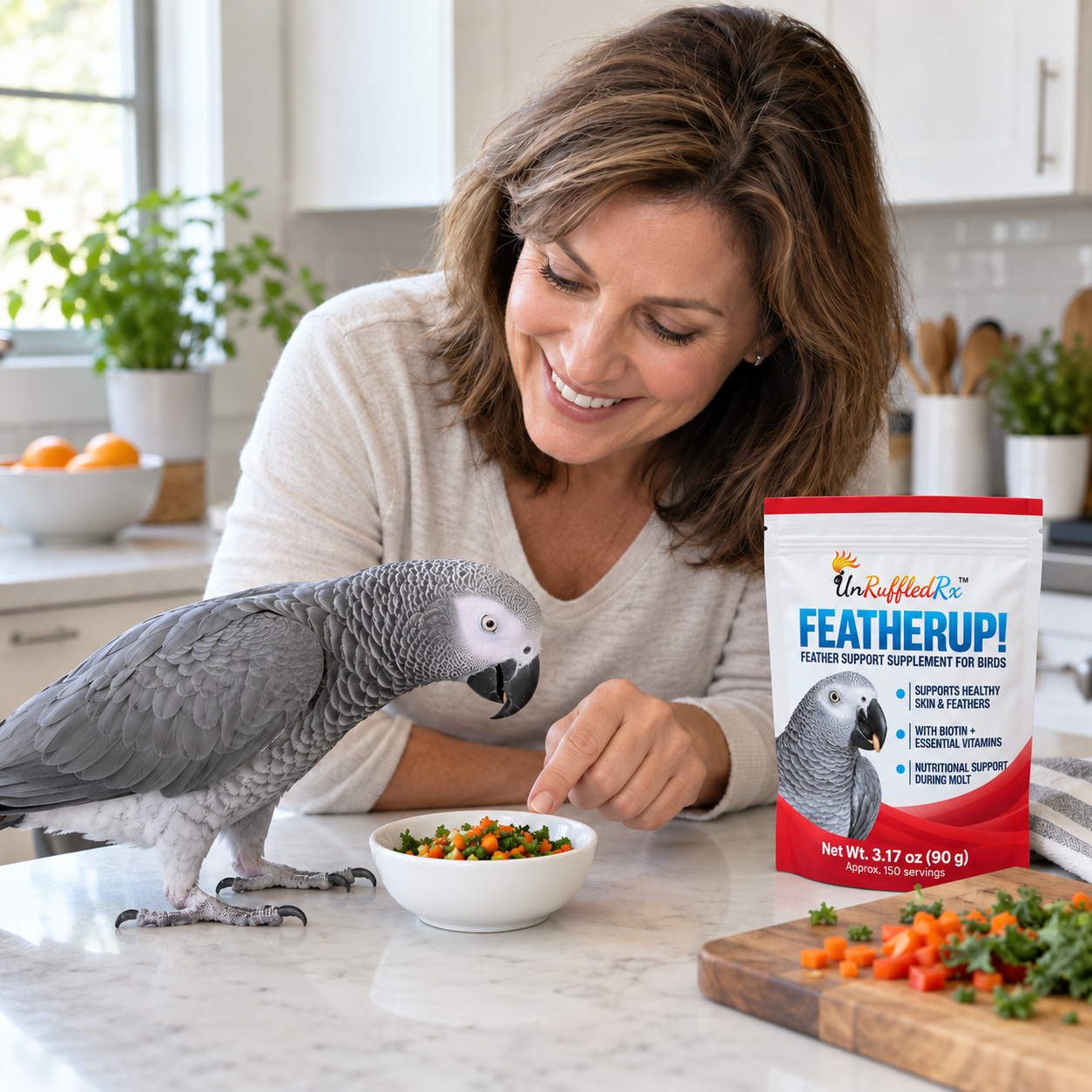
For an easy option, UnRuffledRx OmegaGlow and Serenity can both be used as bird chop toppers. OmegaGlow adds omega-rich seed texture from chia, flax, and hemp. Serenity adds a gentle herbal blend that brings natural aroma and variety to the bowl. Use them lightly over fresh chop, vegetables, greens, or sprouts so your bird has one more reason to explore.
Helpful Chop Toppers
Once your bird is curious about fresh food, a light sprinkle of texture, aroma, or healthy plant-based variety can make vegetables and chop more interesting.

OmegaGlow Seed Fusion
Adds tiny seed texture from chia, flax, and hemp to make bird chop more interesting while adding protein, fiber, and omegas.
Add Protein
Serenity Bird Calming Tea
Adds gentle herbal aroma and natural variety to greens, sprouts, vegetables, and chop. Use a tiny sprinkle to invite curiosity.
Add Herbal Interest
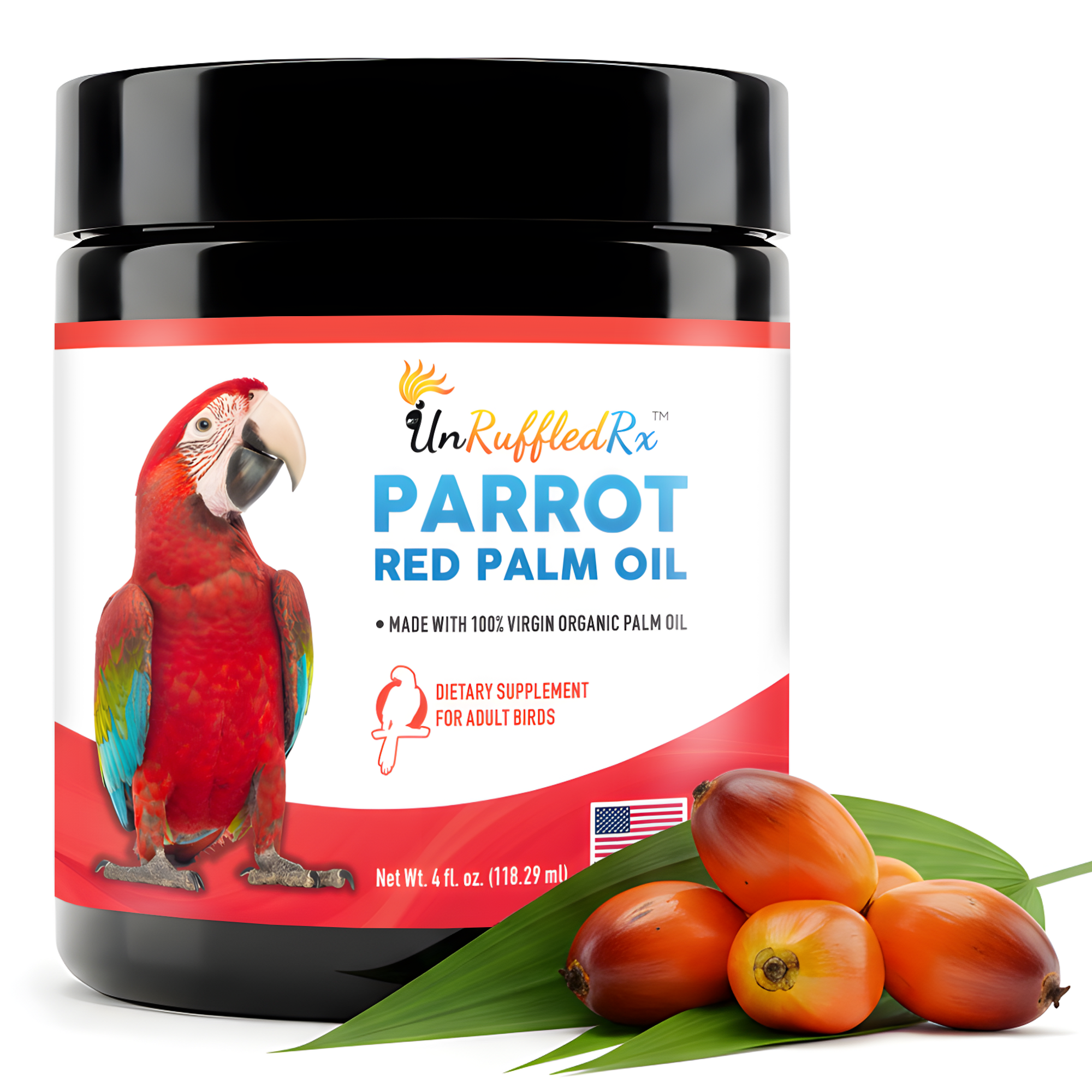
Red Palm Oil
A rich plant-based favorite for birds who enjoy bold color and flavor. Use sparingly as part of a varied fresh-food routine.
Add Vitamin A
Bird Sprouting Seeds
Adds fresh crunch, natural foraging texture, and living plant-based variety to vegetables, greens, and chop.
Add Fresh Crunch
What Should I Try Next If My Bird Still Won’t Eat Vegetables?
Use this chart to match your bird’s behavior to the first teaching approach to try. These ideas are adapted from evidence-based pellet conversion principles — choice, routine, exposure, and modeling — but with vegetables and chop, the goal is curiosity, not restriction.
| If Your Bird... | Try This Method | How to Adapt It for Vegetables |
|---|---|---|
| Watches you eat, wants your food, steps up, or likes attention. | Birdie’s Choice | Offer 2–3 tiny vegetable choices while you eat bird-safe veggies in front of them. Praise looking, touching, shredding, or tasting. |
| Is cautious, suspicious, routine-driven, or slow to accept new things. | Slow and Steady | Offer the same small fresh-food opportunity daily at the same time. Keep it low-pressure and repeat long enough for the food to become familiar. |
| Avoids vegetables skillfully, picks favorites, or ignores fresh food in the bowl. | Tough Love Adaptation | Do not restrict calories. Instead, use maximum fresh-food exposure: clipped greens, skewers, foraging cups, shallow dishes, and different textures in normal activity areas. |
Important:
Do not use hunger to force vegetables. Fresh-food training should be about safe exposure, modeling, curiosity, and repetition. If your bird is eating less, losing weight, producing fewer droppings, or acting unwell, pause and contact an avian vet.
FAQ: Birds, Vegetables, and Chop
How do I get my bird to eat vegetables?
Start by making vegetables feel safe and familiar. Eat plain bird-safe vegetables in front of your bird, offer tiny pieces, try different textures, and reward curiosity before expecting real eating.
Why will my bird eat from my plate but not their bowl?
Your bird may trust what they see you eating more than what suddenly appears in their bowl. Birds are social learners, and your plate can signal that a food is safe. Use that carefully with plain, bird-safe vegetables.
What vegetables should I try first?
Good starting options often include grated carrot, broccoli florets, leafy greens, cooked sweet potato, squash, peas, green beans, sprouts, and herbs. The best first vegetable is one you can offer safely in a texture your bird is willing to investigate.
What if my bird only picks out favorite pieces?
Try chopping ingredients more evenly, using smaller batches, and rotating one or two ingredients at a time. You can also offer some foods separately so your bird learns them as individual foods instead of only as part of chop.
Is fruit okay for birds?
Fruit can be offered in small amounts, but it should not become the main fresh-food goal. Vegetables, leafy greens, sprouts, herbs, and other healthy plant-based foods should make up the bigger focus.
How long does it take for a bird to accept chop?
Some birds investigate fresh food within days. Others need weeks of calm repetition. Look for progress before eating: watching, touching, shredding, licking, holding, or moving closer to the food.
Continue Learning About Bird Nutrition
Many bird nutrition problems are connected. Explore these evidence-based guides to help you build a healthier diet for your bird.
- What Should My Bird Actually Eat Every Day?
- My Bird Won't Eat Pellets. Will They Starve?
- How Do I Teach My Bird to Eat Vegetables and Chop?
- Vitamin A Deficiency in Birds: Signs, Causes & Best Foods
- Should You Put Bird Supplements in Water or on Food?
- Do Indoor Parrots Need Bird Lights?
- Why Winter Is Hard on Bird Bones
References
Cummings, A. M., Hess, L. R., Spielvogel, C. F., & Kottwitz, J. J. (2022). An evaluation of three diet conversion methods in psittacine birds converting from seed-based diets to pelleted diets. Journal of Avian Medicine and Surgery, 36(2), 145–152. https://doi.org/10.1647/21-00025