
Who this is for:
If your bird has inconsistent droppings, stress poops, low interest in vegetables, messy stool, mild digestive upset, or you’re trying to improve gut health naturally through daily feeding habits instead of relying only on supplements.
Who this is not for:
If your bird is vomiting, passing blood, losing weight, sitting fluffed, showing undigested food in droppings, or acting weak or lethargic, this is not a home nutrition situation. Those signs require avian or exotics veterinary care.
Quick check — start here:
- Digestive support foods may help if your bird has mild stool inconsistency, stress-related poop changes, or a dry repetitive diet.
- More concerning if your bird develops appetite changes, repeated regurgitation, persistent diarrhea, or ongoing weight loss.
- Vet-needed if abnormal droppings happen with weakness, vomiting, fluffed posture, blood, or undigested food.
In this guide:
- 1) Why bird digestion problems often start with diet
- 2) What healthy bird droppings should look like
- 3) Why moisture and fiber matter more than most owners realize
- 4) Best natural foods for bird digestion
- 5) How stress affects digestion in parrots
- 6) Foods that often make digestion worse
- 7) Do birds need probiotics?
- 8) Build a digestion-supportive chop bowl
- 9) When digestive symptoms need a vet
- 10) FAQ
Why bird digestion problems often start with diet
The question many owners are really asking:
“Why does my bird keep having poop changes even though nothing seems seriously wrong?”
Many digestive issues begin long before a bird looks visibly sick. Dry repetitive diets, low moisture intake, poor plant diversity, stress, and selective eating slowly affect the digestive tract over time.
Birds evolved to eat a wide variety of fresh foods, fibers, plant materials, seeds, buds, and seasonal nutrients — not the exact same dry foods every day for years.
What owners commonly notice first
- Messier droppings
- Stress poops
- Inconsistent stool quality
- Picky eating
- Low interest in vegetables
- Regurgitation during stressful or hormonal periods
Digestive problems often begin with repetitive low-diversity feeding patterns. Increasing moisture, plant diversity, fiber, and natural feeding behaviors helps support healthier gut function over time.
What healthy bird droppings should look like
Bird owners often panic over normal changes or overlook more serious ones.
A healthy dropping usually contains:
- A formed fecal portion
- White urates
- A small amount of clear urine
What may be normal
- Extra liquid after fruit or greens
- Temporary color changes after vegetables
- Slightly larger droppings after sleeping
What deserves attention
- Persistent loose stool
- Strong odor
- Undigested food
- Black, bloody, or unusually yellow droppings
- Dropping changes plus appetite or behavior changes
Droppings matter most when they change alongside the bird’s behavior.
Why moisture and fiber matter more than most owners realize
Many companion birds eat diets that are calorie-dense but biologically dry.
Fiber and moisture help support:
- Normal gut movement
- Hydration
- Healthier stool consistency
- Microbiome diversity
- Natural feeding behaviors
Birds that eat mostly dry foods often compensate by drinking more water, producing messy droppings, or overeating calorie-dense foods while still lacking nutritional diversity.
The digestive tract functions better when food contains moisture, texture, fiber, and nutrient variety — not just calories.
Best natural foods that support healthy digestion in birds
Sprouts — one of the best foods for bird gut health
Observable problem:
Bird eats mostly dry food and produces inconsistent or dry droppings while showing little interest in vegetables.
Why sprouts help:
Sprouts naturally increase moisture, enzyme activity, nutrient availability, and feeding enrichment.
Why this works:
Sprouting transforms dry dormant seeds into living foods with higher moisture content and improved nutrient accessibility.
Sprouting Seeds help support digestive variety while encouraging healthier feeding behaviors.
Omega-rich seeds for stool quality and digestive support
Observable problem:
Dry flaky droppings, low fresh food intake, dull feathers, or heavily processed diets.
Why omega-rich foods help:
Fiber-rich omega seeds may help support gut lining health, stool quality, and smoother digestive transit.
Why this works:
Foods containing fiber plus essential fatty acids help support both skin and digestive tissues.
OmegaGlow Seed Fusion contains chia, flax, and hemp hearts to support healthier stool quality and nutrient diversity.
| Ingredient | Digestive Support |
|---|---|
| Chia | Fiber + hydration support |
| Flax | Omega-3 + stool support |
| Hemp hearts | Healthy fats + nutrient diversity |
Greens that support digestive balance
Observable problem:
Bird refuses vegetables or eats an extremely repetitive diet.
Why greens help:
Greens support fiber intake, microbiome diversity, phytonutrients, and overall nutritional balance.
Why this works:
Plant diversity helps support healthier digestive function than relying entirely on dry processed foods.
Bird Greens helps add nutritional diversity for birds that struggle to eat enough fresh vegetables consistently.
Calming herbs and stress-related digestive upset
Observable problem:
Stress poops, watery droppings during changes, appetite changes, or regurgitation during hormonal periods.
Why calming herbs help:
The nervous system directly affects gut movement, stool quality, appetite, and digestive comfort.
Why this works:
Stress changes digestive function in both humans and birds. Supporting calmer behavior may also support calmer digestion.
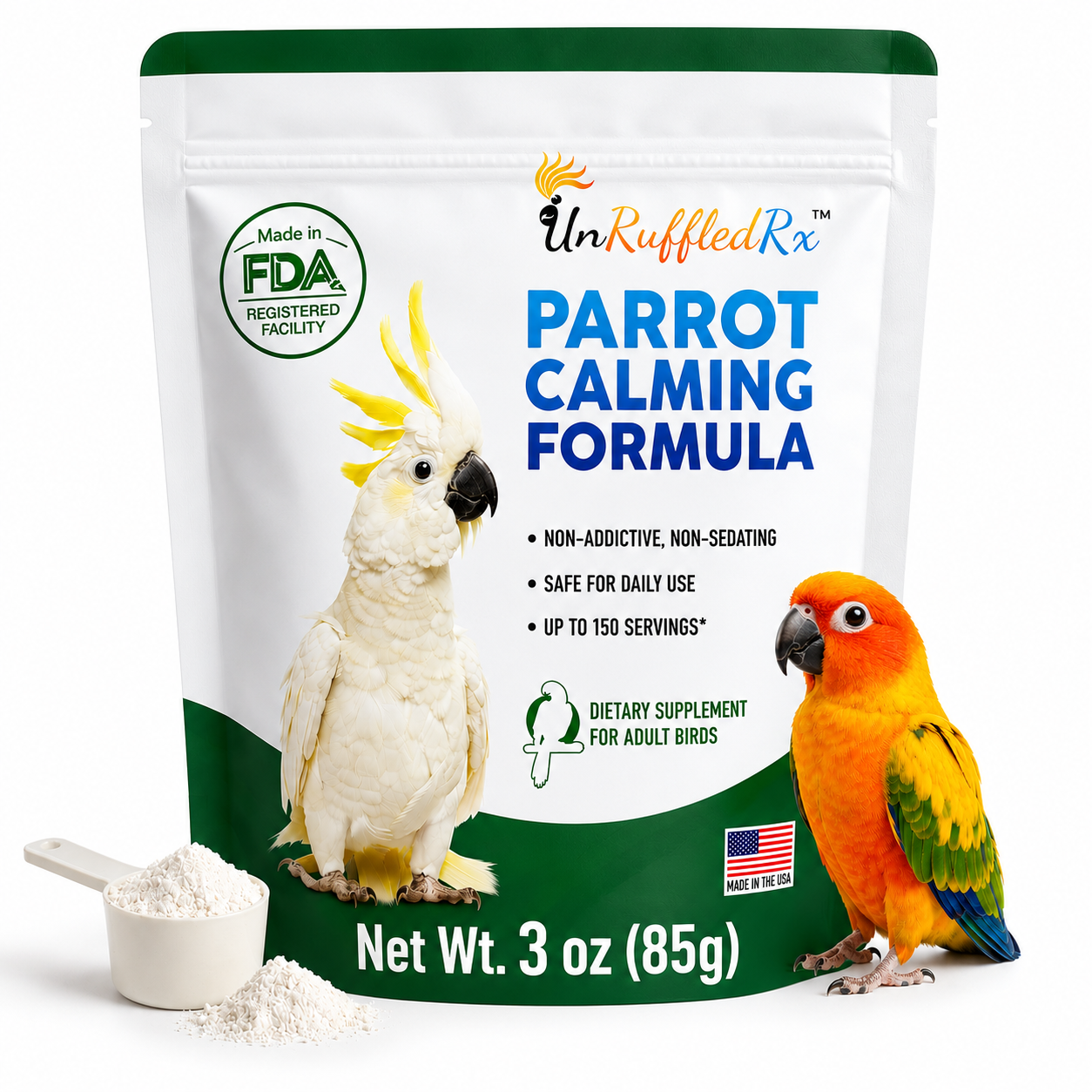
SereniTea contains calming herbs traditionally used to support digestive comfort during stress and environmental changes.
How stress affects digestion in parrots
Bird owners often notice digestive changes during:
- Travel
- Hormonal periods
- Routine disruption
- Boarding
- Household changes
- Vet visits
- New pets or people
Stress can affect:
- Appetite
- Gut movement
- Water intake
- Dropping consistency
- Regurgitation behavior
The gut and nervous system constantly communicate. Stress-related digestive changes are extremely common in parrots.
Foods and habits that often make digestion worse
- All-seed diets
- Spoiled chop
- Old sprouts left too long
- Highly processed human foods
- Very sugary foods
- Dirty water dishes
- Sudden dramatic diet changes
- Low moisture intake
The problem is usually chronic low-grade dietary stress — not one dramatic mistake.
Do birds need probiotics?
Bird owners are heavily marketed probiotic products, but probiotics are only one small part of digestive health.
Current avian evidence suggests probiotics may help support normal gut flora, especially after stress or antibiotics, but healthier feeding patterns matter far more long term.
A healthier microbiome is usually built through better daily feeding habits — not just adding a powder to an otherwise poor diet.
Build a digestion-supportive chop bowl
Small consistent upgrades usually work better than dramatic diet overhauls.
| Add | Why |
|---|---|
| Sprouts | Moisture + enzyme activity |
| Leafy greens | Fiber + phytonutrients |
| OmegaGlow | Healthy fats + stool support |
| Bird Greens | Plant diversity |
| SereniTea | Stress-supportive herbs |
When digestive symptoms need a vet
- Vomiting
- Undigested food
- Blood or black stool
- Persistent diarrhea
- Rapid weight loss
- Weakness or fluffed posture
- Refusal to eat
- Repeated regurgitation with illness signs
Digestive symptoms become much more serious when poop changes happen alongside behavior changes.
FAQ: quick answers bird owners search for
What foods help bird digestion naturally?
Fresh foods with moisture, fiber, plant diversity, and healthy fats usually support digestion better than repetitive dry diets.
Are sprouts good for parrots?
Yes. Sprouts increase moisture, feeding enrichment, and nutrient availability while helping diversify the diet.
Can stress affect bird droppings?
Yes. Stress commonly changes appetite, water intake, stool consistency, and regurgitation behavior.
Do birds need probiotics every day?
Not necessarily. Better daily feeding habits often matter more than relying entirely on probiotic products.
What’s the biggest digestive mistake bird owners make?
Feeding the same dry foods every day while underestimating the importance of moisture, fiber, and plant diversity.
Related posts bird owners often find helpful
Bird Digestive Issues: Weird Poop, Vomiting & When to Call a Vet
How Nutrition Affects Feather Health
Why Bird Weight Monitoring Matters
Feather Plucking: Causes, Signs & Solutions
References
Merck Veterinary Manual, 2024.
Harrison & Lightfoot, Clinical Avian Medicine.
Frontiers in Veterinary Science, Avian Nutrition & Gut Health Research.
Meet Diane Burroughs, LCSW — licensed psychotherapist, ABA-trained behavior specialist, and founder of UnRuffledRx. With 30+ years of hands-on bird experience, Diane helps bird owners improve bird wellness through practical, science-backed nutrition and behavior support.
SHARING IS CARING! PLEASE SHARE ON YOUR FAVORITE SOCIAL MEDIA NOW!