
Who is this for?
This guide is for bird owners who notice their bird’s tail moving up and down and are wondering whether they are seeing normal movement, balancing, post-exercise breathing, or a possible breathing problem.
Who is this not for?
If your bird is open-mouth breathing while resting, gasping, collapsing, unable to perch, severely weak, or obviously struggling for air, skip the troubleshooting and contact an avian or exotics veterinarian right away.
Quick answer: A little tail movement does not automatically mean your bird is sick. What is more concerning is a steady up-and-down bob that follows each breath and continues while your bird is calm and resting — especially when you also notice changes in posture, energy, eyes, feathers, or breathing.
In this guide:
What Does Tail Bobbing Look Like?
Why does the tail move when breathing is difficult?
True respiratory tail bobbing is more than a tail that happens to move up and down. When breathing takes more effort, a bird may use more of its body to move air, and that extra work can show up as a rhythmic movement of the tail with each breath.
Think about how your chest and abdomen work harder when you are trying to catch your breath. In a bird, that extra effort can become visible in the tail.
You do not need to measure how far the tail moves. What matters more is whether the movement repeats with each breath and continues once the bird is calm.
Look at the whole bird, not just the tail
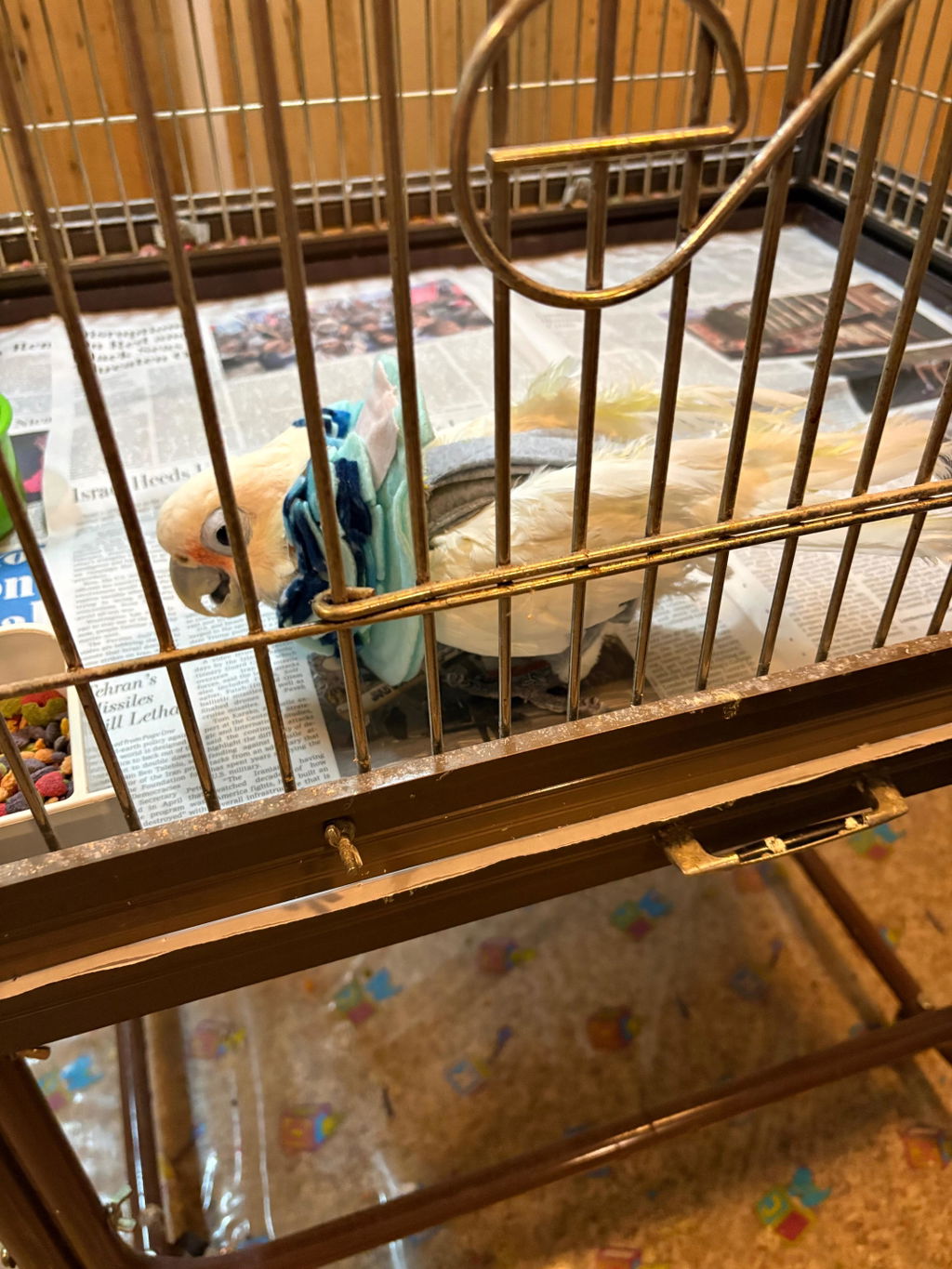
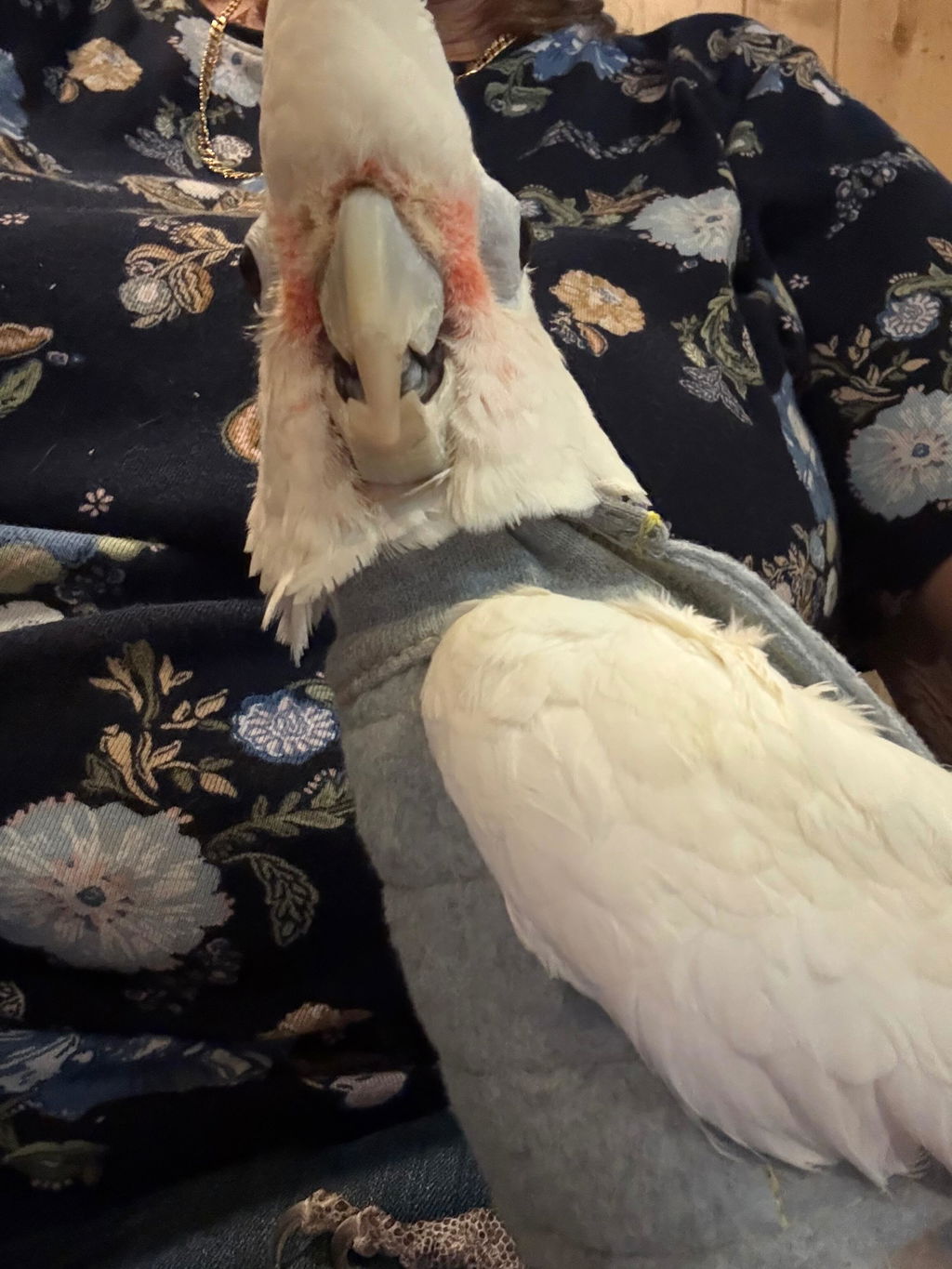
In the video above, the tail movement is only part of what you should notice. The bird also appears fluffed up with partially closed, squinty eyes while the tail continues to bob.
Preening, fluffing, or closing the eyes briefly does not prove a bird is sick. But when several changes show up together, the overall picture becomes more important than any single symptom.
Nicky Woodard @tinkytonks Youtube.com
Is it tail bobbing or is my bird just balancing?
Birds constantly adjust their tails while moving, stretching, preening, climbing, or balancing on one foot. Those movements usually change as the bird changes position.
Respiratory tail bobbing tends to be more regular. The tail keeps moving in rhythm with breathing even when the bird itself is sitting still.
If you are unsure, watch from a comfortable distance while your bird is settled on a stable perch. It is much easier to evaluate breathing when the bird is calm.
When Can Tail Movement Be Normal?
After flying or active play
Birds naturally breathe harder after flying, climbing, playing, or another burst of activity. You may briefly see more movement through the chest, abdomen, and tail while your bird catches its breath.
The important part is what happens next. Normal breathing should begin settling once the bird rests.
During excitement or vocalizing
Excitement, vigorous singing, calling, or being startled can temporarily increase a bird’s breathing rate. That can make normal breathing movements much easier to see.
Again, give your bird a chance to settle. Persistent tail bobbing while quietly resting is much more meaningful than movement during a burst of activity.
While moving or balancing
A tail that flicks, sways, rises, or drops while the bird changes position is not the same thing as a steady respiratory bob. Watch for the pattern rather than one isolated movement.
When Should I Worry About My Bird’s Tail Bobbing?
Tail bobbing deserves more attention when it is new, persistent, getting worse, or happening while your bird is resting. The clearest clue is usually not the tail alone — it is what the rest of the bird looks like at the same time.
| What you notice | Often less concerning | More concerning |
|---|---|---|
| When it happens | After flying, playing, singing, or excitement | While quietly resting |
| Tail movement | Changes as the bird moves or balances | Repeats rhythmically with each breath |
| Breathing | Settles after activity | Continues to look effortful |
| Posture & feathers | Normal posture; briefly fluffed | Staying fluffed, sitting low, or holding the wings differently |
| Eyes & behavior | Bright, alert, and active | Squinty, sleepy, unusually quiet, or weak |
| Other breathing signs | None | Wheezing, clicking, voice changes, or open-mouth breathing |
Look for patterns, generally not just one symptom. A tail bob after a flight is very different from a fluffed-up, sleepy bird whose tail moves with every breath while sitting quietly.
What other signs make tail bobbing more concerning?
Watch for open-mouth breathing, wheezing, clicking, voice changes, nasal discharge, weakness, reduced activity, poor balance, or difficulty staying comfortably perched.
Changes in normal behavior matter too. A normally chatty parrot that becomes unusually quiet or an active budgie that suddenly spends long periods sitting still is telling you that something has changed.
But my bird is still eating and acting normal
A bird can still eat, chirp, preen, and interact while a health problem is developing. Continued normal behavior is reassuring, but it does not completely rule out illness.
Instead of asking whether your bird is doing anything normal, ask whether anything has changed. Less stamina, more sleeping, quieter behavior, or breathing that looks different from usual can matter even when your bird still visits the food bowl.
What Can Cause Tail Bobbing?
Tail bobbing is a sign of increased breathing effort, not a diagnosis. Respiratory infections and other lung or airway problems are common possibilities, but they are not the only ones.
Heart disease, reproductive problems such as egg binding, airway obstruction, fungal disease, parasites, environmental irritants, and other conditions can also make breathing more difficult.
That is why it is risky to assume that a tail-bobbing bird simply has a “respiratory infection.” Your veterinarian needs to determine what is making breathing harder.
Want the deeper dive? See What Causes Breathing Problems in Birds?
What Should I Do If My Bird Is Tail Bobbing?
First, watch your bird while they are calm
Observe from a short distance rather than immediately picking your bird up. Look at breathing, posture, tail movement, eyes, feathers, activity, and ability to perch.
Notice whether the bobbing disappears after your bird settles or continues while resting. If possible, take a short video of the whole bird to show your veterinarian.
Know when it becomes urgent
Get veterinary help today if your bird has:
- Open-mouth breathing while resting
- Gasping or obvious difficulty moving air
- Pronounced tail bobbing with every breath
- Severe weakness
- Difficulty standing or perching
- Loss of balance
- Collapse
These signs can mean your bird is struggling to breathe. Do not wait for the symptoms to become more obvious.
Need to get your bird to the vet safely? A secure, well-ventilated carrier can make veterinary transport less stressful for both you and your bird. The Pak-o-Bird is designed for comfortable, secure travel and gives you a ready-to-go option when your bird needs veterinary care.
Shop Pak-o-Bird Bird Carriers →

Keep handling and stress to a minimum
A bird having trouble breathing does not need repeated examinations, chasing, or unnecessary restraint. Keep things quiet and prepare for veterinary transport.
If your bird is weak or having trouble perching, see How to Make a Bird Hospital Cage.
If you are struggling to find appropriate veterinary care, see What to Do When You Can’t Find an Avian Vet.
Sources Used for This Guide
- VCA Animal Hospitals. Recognizing the Signs of Illness in Pet Birds.
- VCA Animal Hospitals. Respiratory Disease in Birds.
- MSD Veterinary Manual. Illness in Pet Birds.
- MSD Veterinary Manual. Management of Pet Birds.
- MSD Veterinary Manual. Lung and Airway Disorders of Pet Birds.
- MSD Veterinary Manual. Heart and Blood Vessel Disorders of Pet Birds.
- LafeberVet. Avian Emergency & Critical Care.
- Orosz SE, Lichtenberger M. Avian Respiratory Distress: Etiology, Diagnosis, and Treatment. Veterinary Clinics of North America: Exotic Animal Practice. 2011;14(2):241–255.
Related Bird Breathing Guides
- Bird Breathing Problems: What’s Normal and When to Get Help
- What Causes Breathing Problems in Birds?
- Your Guide to Birds and Teflon
- Birds and Wildfire Smoke
- How to Make a Bird Hospital Cage
About the Author
Diane Burroughs, LCSW, is the founder of BirdSupplies.com and UnRuffledRx and has spent more than 25 years helping companion bird owners better understand bird care, behavior, enrichment, and wellness. Her educational work focuses on turning complicated bird-care information into practical information owners can understand and use.
Diane is not an avian veterinarian. BirdSupplies.com health content is educational and is not intended to diagnose or treat illness. Birds showing breathing difficulty, weakness, collapse, or other signs of acute illness should be evaluated by an avian or qualified exotics veterinarian.