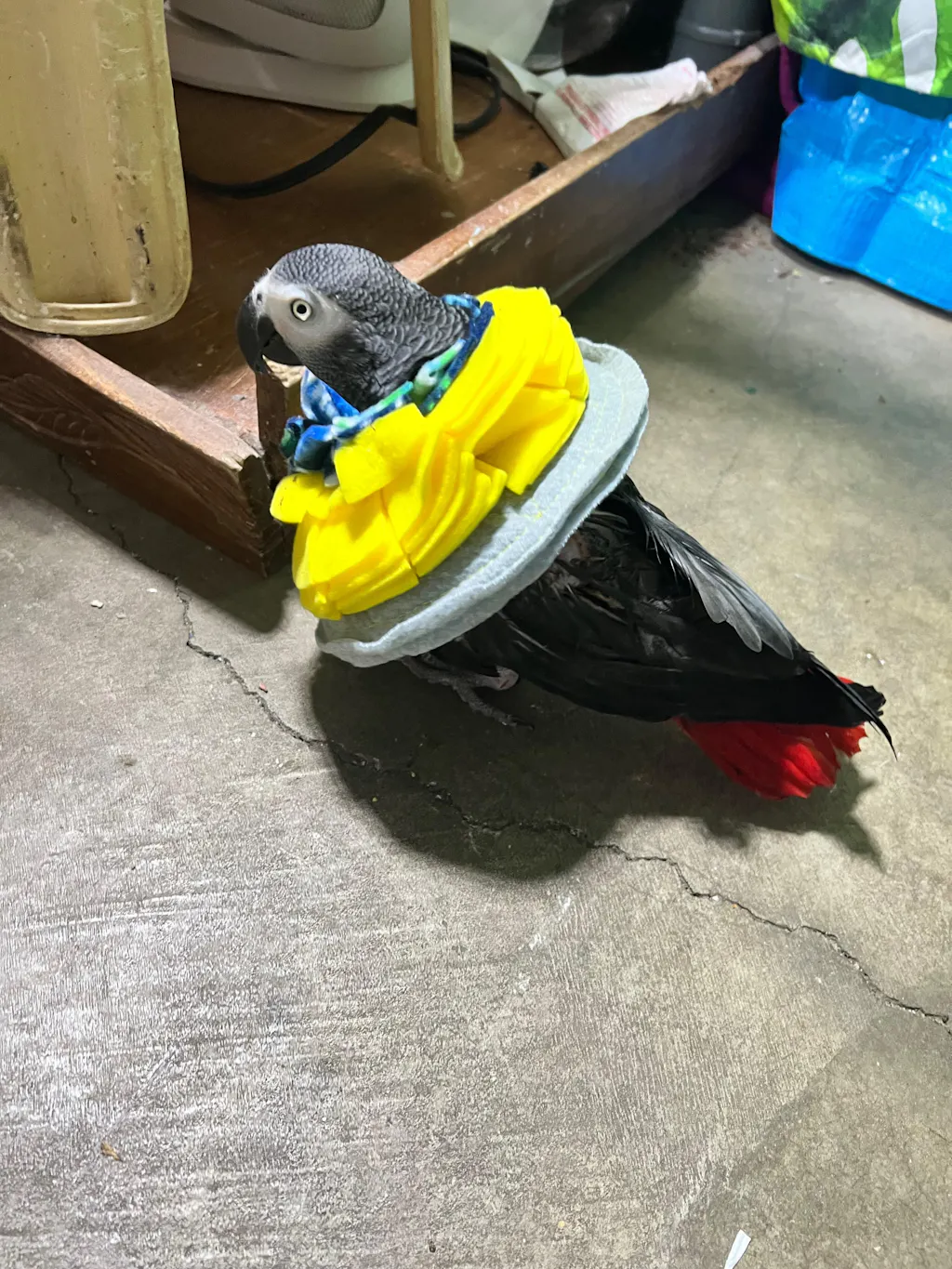
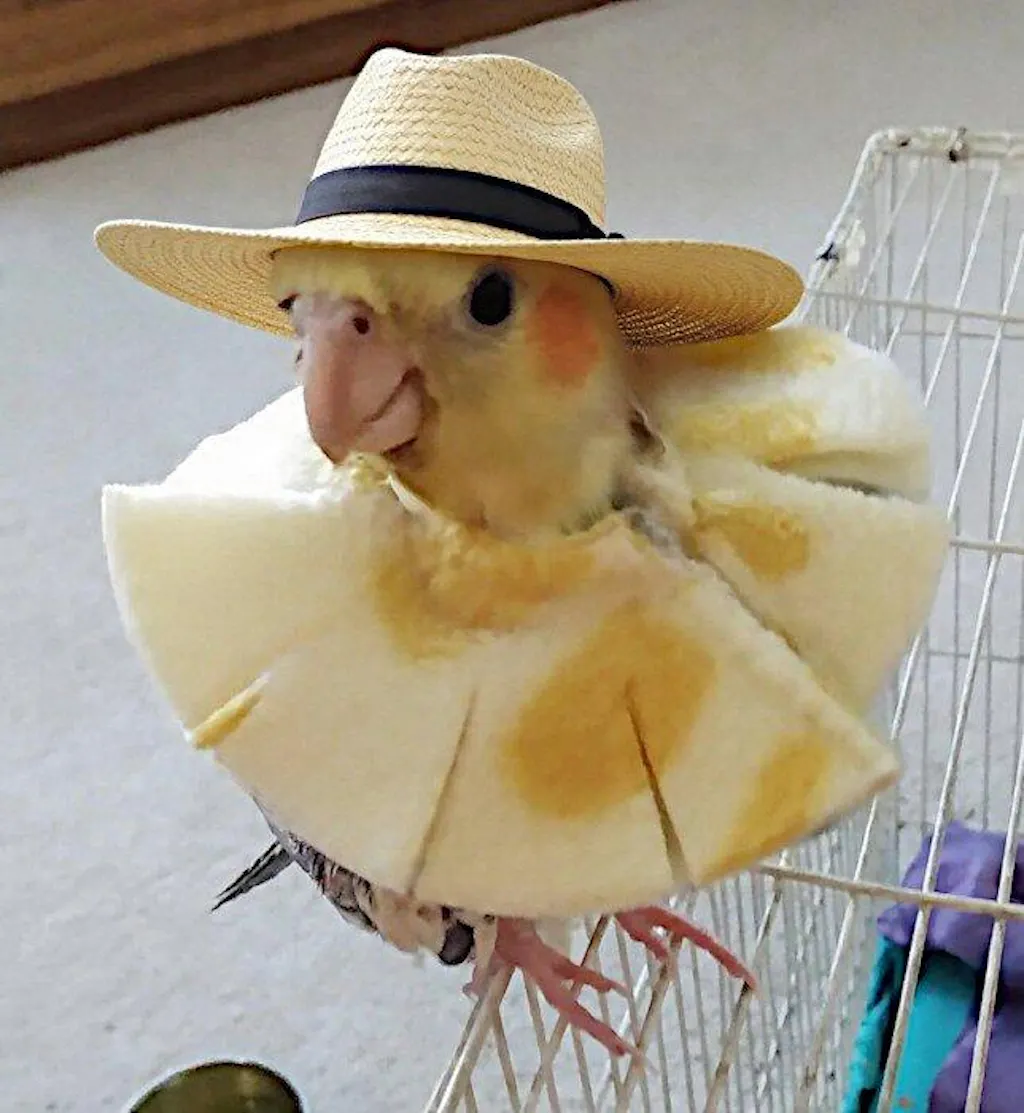
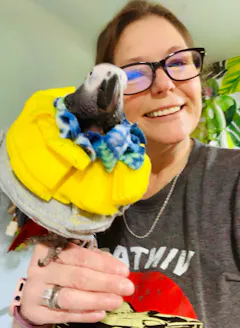
UnRuffledRx Fringy Cone Bird Collar
Watching your bird hurt itself is one of the hardest things a bird owner goes through. You're not overreacting. And you're not alone.
The Fringy Cone was designed for this exact situation — when the damage is spreading, the skin is involved, or nothing else has worked. It's our most protective collar, built to help you manage the self-mutilation cycle so your bird's body can finally begin to heal.
We Didn't Guess at the Design
We tested numerous designs alongside avian vets to get this right. The goal was a collar that creates a real physical barrier — blocking access to the chest, back, shoulders, under the wings, and in severe cases the legs and feet — without overwhelming your bird with weight or restricting their ability to eat, drink, perch, and move through their day.
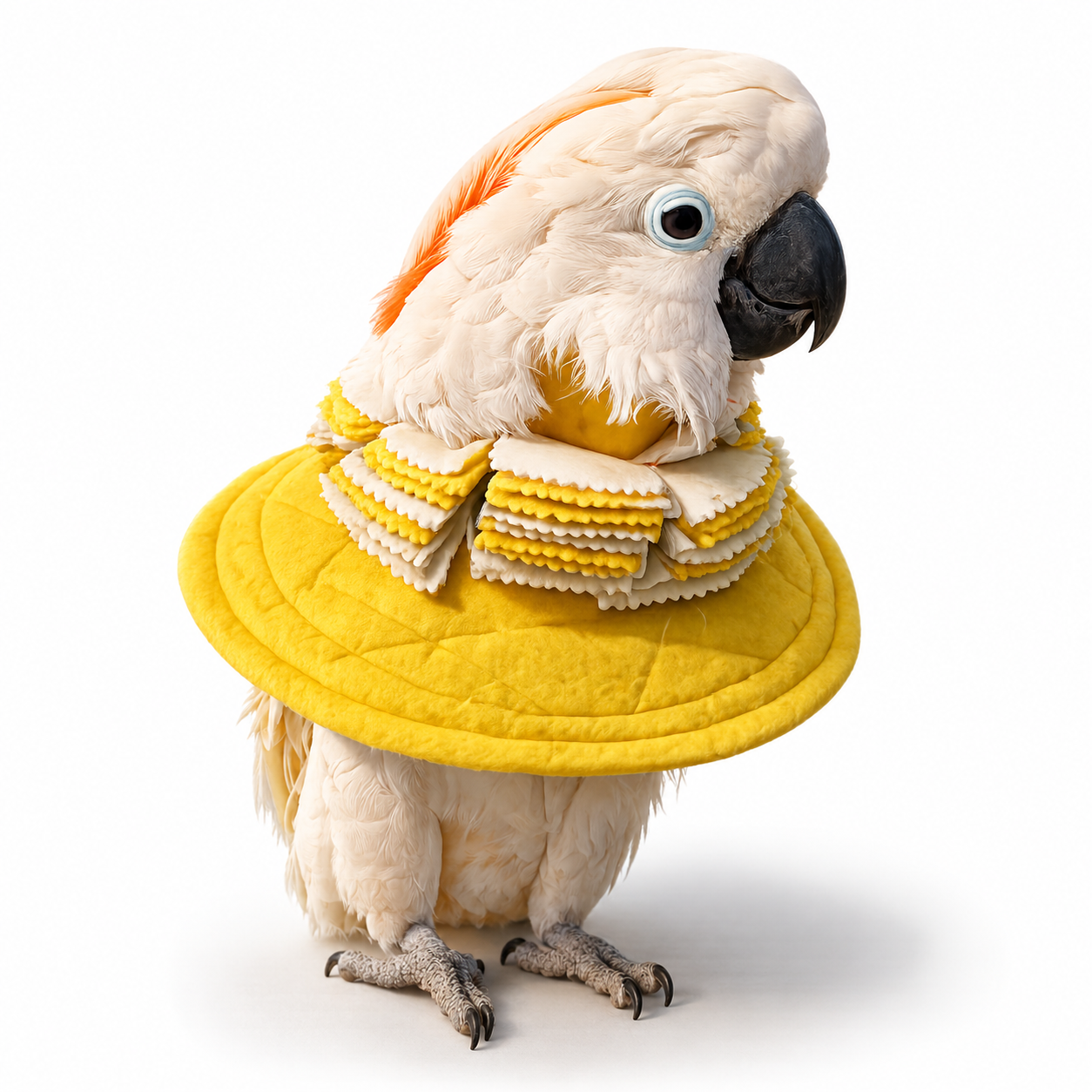
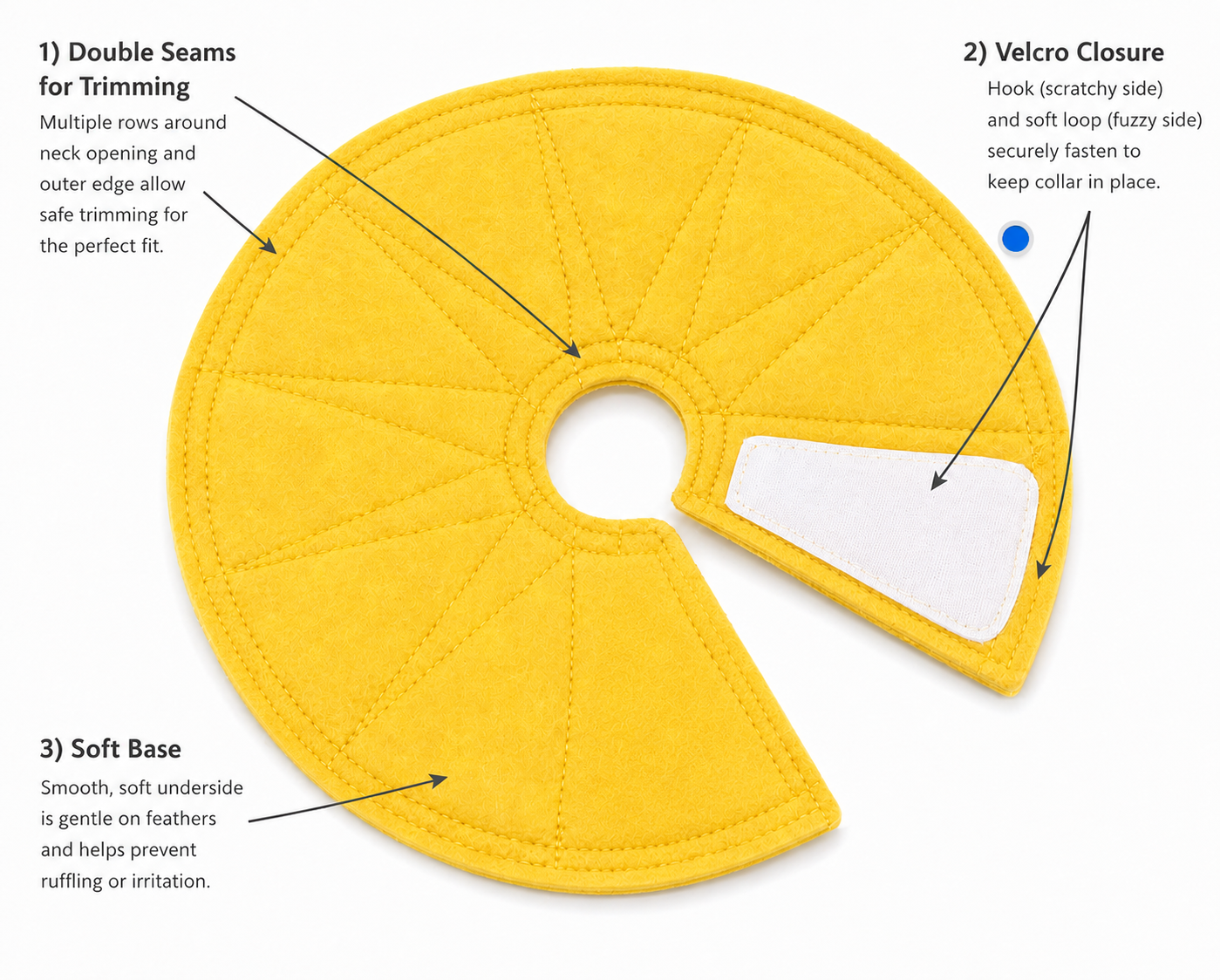
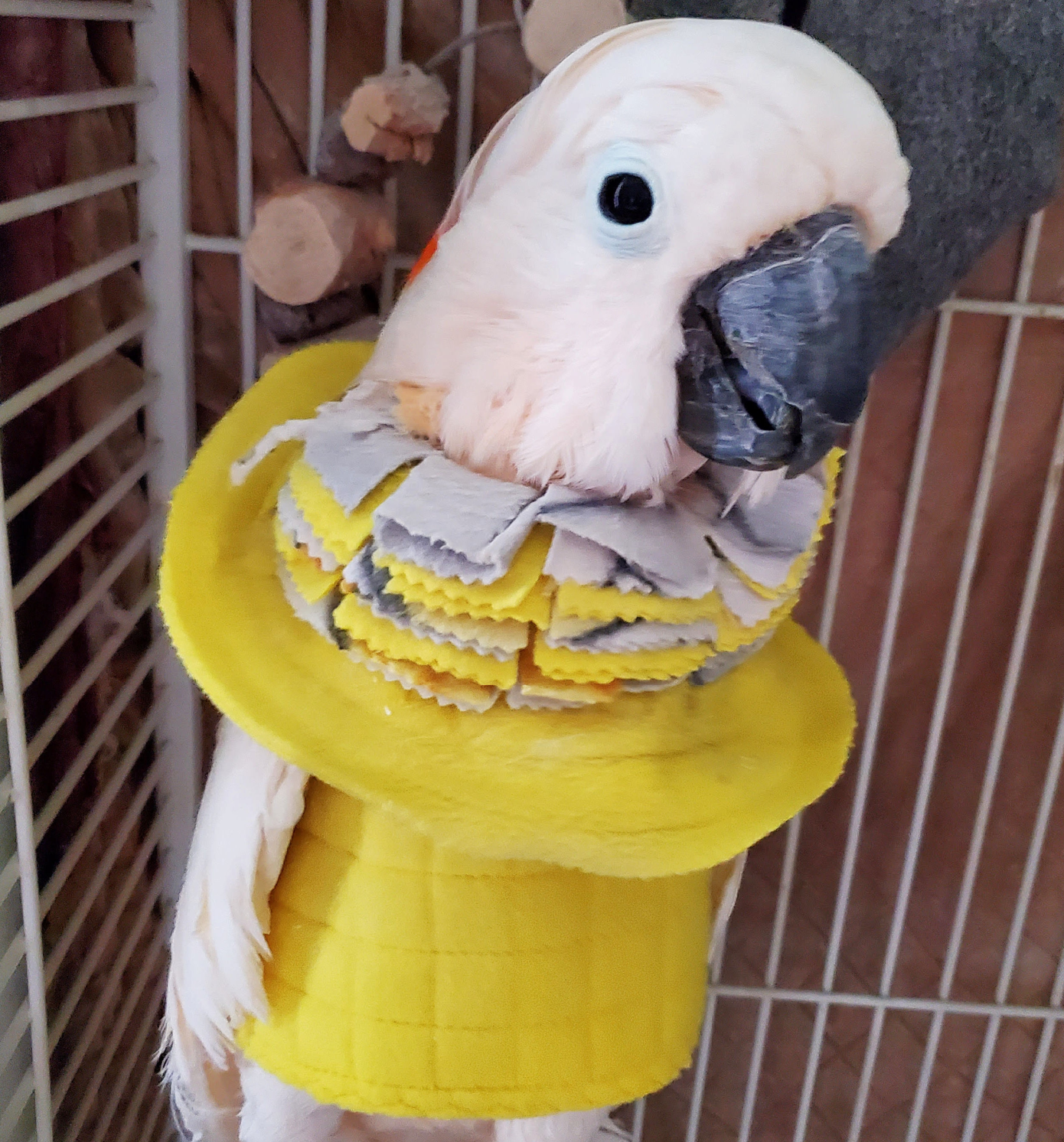
The result is our exclusive Fringy Cone — a structured fleece cone with a reinforced insert that holds its shape under persistent pressure, lined with soft fleece so your bird can wear it comfortably for as long as management takes. Many birds wear it for months — some for years.
Is This the Right Collar for Your Bird?
A good fit if your bird:
- Is self-mutilating — driven to wound itself regardless of distraction or intervention
- Will rip off collars if necessary to reach and wound itself
- Needs consistent protection it simply cannot get around
- Has an owner willing to use moleskin if needed to keep the collar in place
May not be the right fit if:
- Your bird is just starting to pluck or focused on one small area — the Velcro Cone is a gentler starting point
- Your bird is sickly, immunocompromised, or a senior — consult your avian vet before use
This collar isn't for every bird. But for the birds it fits, it becomes an essential part of long-term care.
Pairs Well With
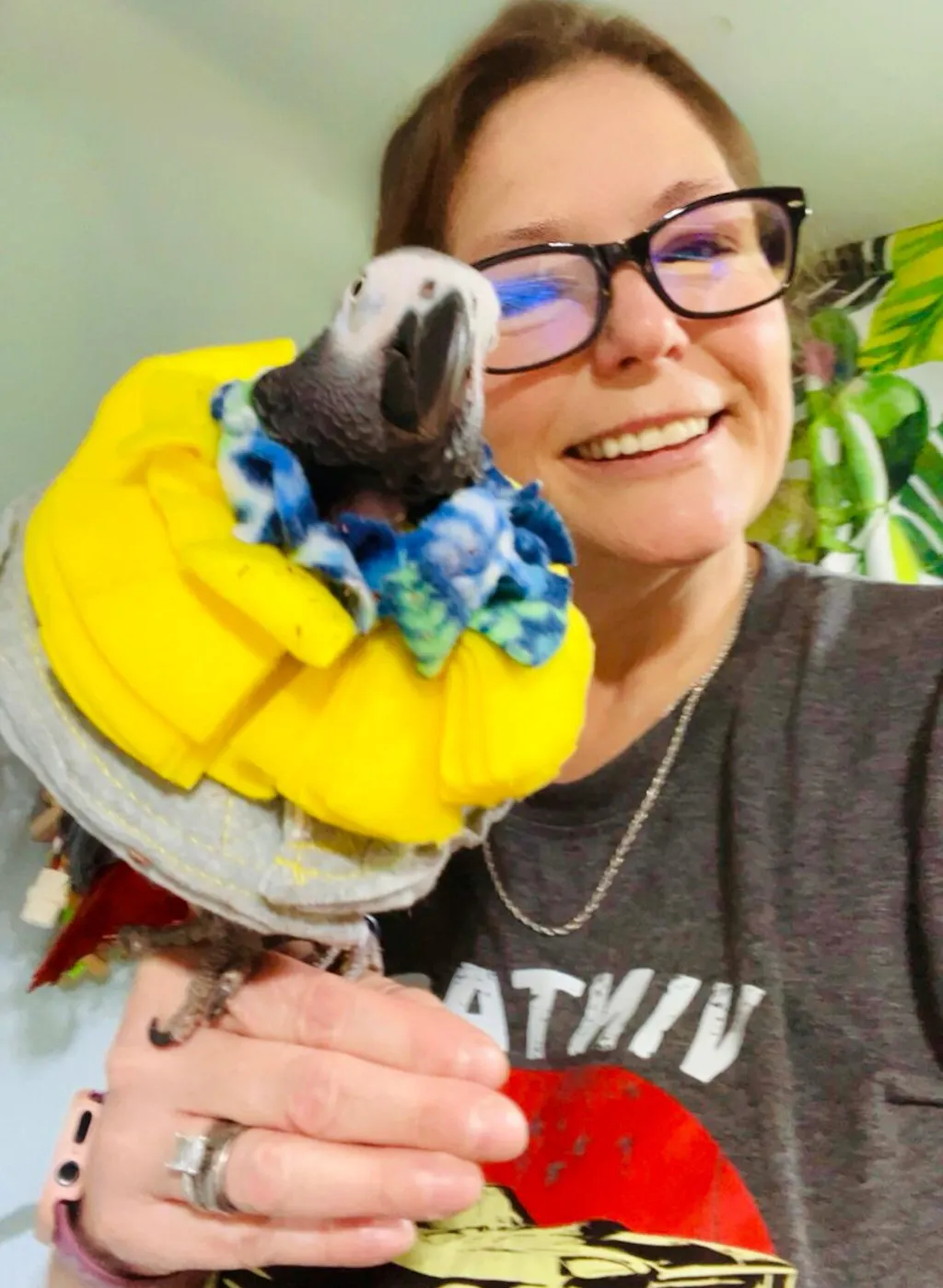
For birds actively self-mutilating the chest or body, the Fringy Cone is frequently paired with the BeakGuard Vest. The collar protects the neck and upper body; the vest protects the chest and torso. Together they give your bird's skin the uninterrupted healing time it needs.
Many owners also add Moleskin Comfort Patches to reinforce the hook-and-loop closure — especially important for determined birds that will work at the collar until they find a way out.
The Fringe Does More Than You'd Expect
The thick fleece fringe isn't just padding. It gives your bird something safe to chew and preen — redirecting the compulsive behavior while the body heals underneath. That redirection matters as much as the physical barrier.
Helping Your Bird Adjust
Some birds take to the collar quickly. Others need more time and patience. If your bird is struggling to adjust, one approach that has worked well: use a large deep Sterilite container adapted as a recovery space — it gives your bird a contained, calm environment to acclimate without the stress of navigating a full cage while getting used to the collar. Go slowly. Your bird will get there.
The Collar Is Just the Beginning
The birds that do best aren't just wearing a collar — their owners have built a system around them.
Start by helping your bird get used to the collar gradually. Calm energy. No drama around putting it on or taking it off. Your bird reads you — if you're anxious, they're anxious.
From there, the system that works looks something like this:
-
Make health and lifestyle changes — diet, sleep schedule, foraging opportunities, reduced hormonal triggers. The collar buys you time; these changes address the why.
-
Partner with a trusted avian vet — not every vet understands self-mutilation. Find one who does and make them part of your team.
-
Check wound size daily — track what's improving. Progress is often slow and easy to miss without a consistent monitoring routine.
-
Reward calm behavior — when your bird plays, forages, interacts with you, or engages in normal parrot behaviors, acknowledge it. Positive reinforcement matters.
-
Ignore the collar fussing — this is hard, but important. If your bird is working at the collar, they are not wounding themselves. The collar is doing its job. That's a win.
Here's the reframe that helps a lot of owners: the collar is significantly cheaper than an emergency vet visit. Every day it stays on is a day of healing.
We're here to help you build this system that helps you manage this problem and stop feeling stressed out about your baby — not just sell you a collar.