
- Why Is My Bird Suddenly Acting Different?
- Signs Your Bird May Be Stressed or Unsettled
- What Changed? Start Here
- How to Help Your Bird Feel Safe Again
- What NOT to Do With a Nervous Bird
- Building Confidence and Independence
- When It May Be More Than a Behavior Problem
- When to Get Professional Help
- Frequently Asked Questions (FAQs)
Why Is My Bird Suddenly Acting Different?
“My Bird Was Fine — Now They’re Clingy, Screaming or Nippy”
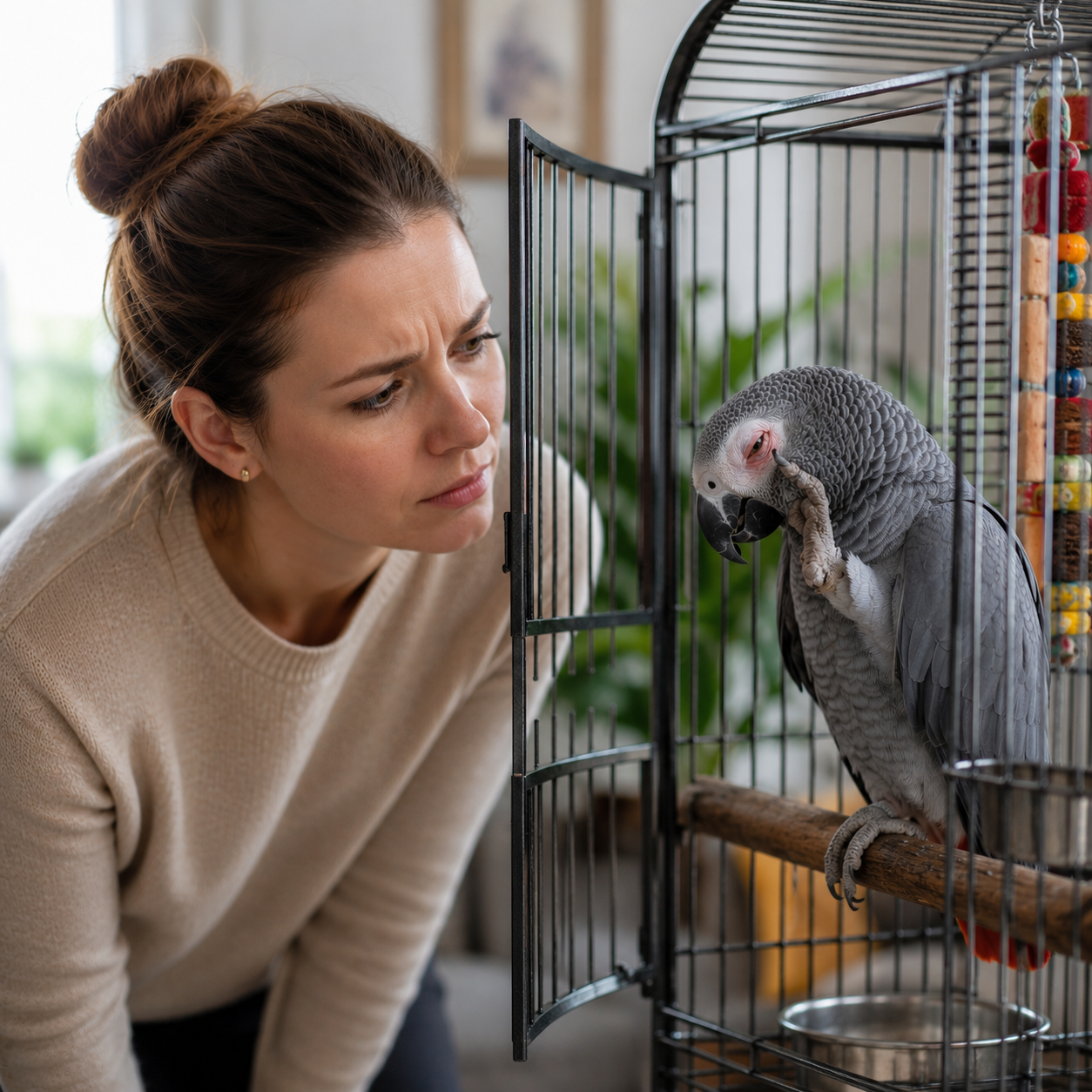
Maybe your bird suddenly wants to be on you all the time. They scream when you leave the room, call for you constantly, follow you from place to place, or act like they just can’t settle unless you’re right there.
Or maybe they’ve become nippy, restless, extra needy, or much louder than usual. A normally confident bird may suddenly seem nervous. A bird who usually plays independently may suddenly want your attention 24/7.
Sometimes you can’t even put your finger on it. You just know: something is different.
That’s often the first thing bird owners notice. Not “my bird has anxiety,” but “Why is my bird suddenly acting like this?”
Behavior Changes Are Your Bird’s Way of Telling You Something
When your bird suddenly becomes clingy, loud, nippy, nervous, or unsettled, it’s easy to focus on the behavior itself. You want the screaming to stop. You want them to relax. You want your sweet, happy bird back.
But before you try to stop the behavior, ask yourself one simple question:
What changed?
Think back over the last few days or weeks. Has your work schedule changed? Have you been home more — or less? Is bedtime different? Did someone go on vacation or move out? Have there been visitors, construction, storms, a new pet, new furniture, or a cage moved to a different spot?
Sometimes the change seems tiny to you, but your bird definitely noticed it.
Parrots like knowing what happens next. When their normal routine gets thrown off, some birds get clingy. Some scream more. Some get nippy or restless. Others become unusually quiet or seem like they just aren’t themselves.
So instead of asking only, “How do I make this behavior stop?” start with: “What might my bird be reacting to?”
Once you have a better idea of what changed, it becomes much easier to help your bird feel safe, settled, and more like themselves again.
Signs Your Bird May Be Stressed or Unsettled
Clinginess, Screaming and Constant Contact Calling
One of the biggest clues is that your bird suddenly wants more of you.
They may want to sit on you constantly, follow you from room to room, or start screaming the second you walk away. Some birds call over and over until you answer. Others seem perfectly content as long as you’re right there — but become upset the minute you leave.
If your bird has always been social, a little calling or wanting attention is normal. What matters is the change. If your normally independent bird suddenly wants to be on you 24/7, or the screaming and calling has gotten much more intense, pay attention.
That extra clinginess may be your bird’s way of saying, “Something feels different, and I’m not sure I like it.”
Nipping, Pacing and Acting “Not Like Themselves”
Stress doesn’t always look like screaming or clinginess. Sometimes it shows up as a bird who is suddenly more irritable, harder to handle, or just seems uncomfortable in their own feathers.
You might notice more nipping or biting, pacing back and forth, climbing around the cage without settling, or startling at things that never bothered them before.
Other birds go in the opposite direction. They may become unusually quiet, freeze when something worries them, pull away from interaction, or spend more time sitting off by themselves.
Again, the biggest clue is often that little voice in your head saying, “This just isn’t like my bird.”
Changes That Deserve a Closer Look
Not every behavior change is caused by stress. Birds are very good at hiding illness, so a sudden change in personality or behavior deserves a closer look — especially if you’re seeing physical changes too.
Watch for things like:
- Eating less or suddenly refusing favorite foods
- Fewer droppings or droppings that look noticeably different
- Sleeping much more than usual
- Lower energy or less interest in normal activities
- Unexplained weight loss
- Changes in feather condition or grooming
- Sitting fluffed up or looking unusually tired
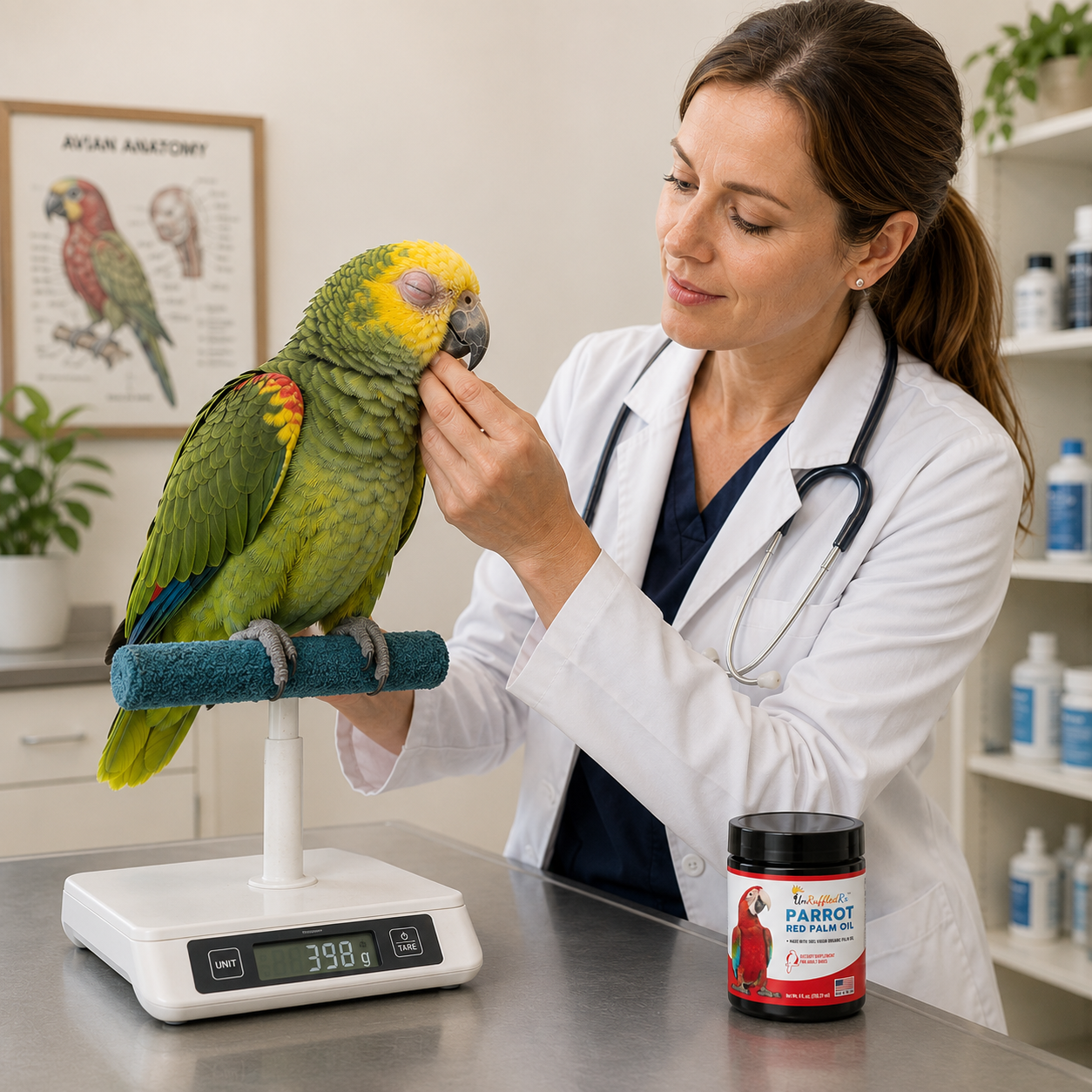
If your bird is suddenly acting very different and you’re noticing changes in appetite, droppings, weight, energy, or appearance, don’t assume they’re simply anxious. That’s a good reason to check in with your avian veterinarian.
What Changed? Start Here
If your bird suddenly seems clingier, louder, nippier, or just not quite like themselves, this is where to start looking. Think about what has changed in their world recently — even if it seems small to you.
Changes in Your Bird’s Daily Routine
Parrots notice routines. They know when breakfast usually happens, when you leave the house, when they get out-of-cage time, and when the household normally settles down for the night.
So if your schedule changes, your bird may notice before you realize it matters.
Maybe you’re leaving for work earlier. Maybe you’ve been home more than usual and then suddenly went back to your normal schedule. Feeding time changed. Bedtime got later. The kids went back to school. You went on vacation. Or your bird is simply getting less one-on-one time than they were used to.
Even positive changes can throw a bird off for a while. The important question is: Is their day different from what they were expecting?
Changes Around the House
Sometimes the change isn’t your schedule at all. It’s something happening around your bird.
A new dog, houseguests, remodeling, construction noise, storms, a different appliance, new furniture, or moving the cage can all change how familiar the house feels.
And parrots can react to things we barely notice. A new object near the cage, a different shadow in the room, louder activity outside, or people coming and going more often may be enough to make a sensitive bird feel unsettled.
If the behavior seemed to start suddenly, think back to what was happening in the house around the same time.
Changes in Your Bird’s Social World
Parrots are social animals, so changes involving the people and animals around them can have a big impact too.
Maybe a favorite person started working longer hours, went away, moved out, or simply isn’t spending as much time with the bird. Maybe another bird or pet joined the household. Or maybe your bird has become so attached to one person that even short separations now feel like a big deal.
You may also notice changes in flock dynamics if you have more than one bird. A new bird, a change in cage placement, or tension between birds can make one of them seem more needy, noisy, withdrawn, or on edge.
The point isn’t to find someone or something to blame. It’s to look for patterns. Once you can connect the behavior to a change in routine, environment, or social life, you have a much better place to start helping your bird feel
How to Help Your Bird Feel Safe Again
Once you have a better idea of what may have changed, the next step is helping your bird feel secure again. You don’t need to overhaul everything at once. In fact, too many changes can make an already unsettled bird feel even more confused.
Start with the basics: make their day more predictable, give them a place to settle when things feel like too much, and notice the moments when they’re doing well.
Bring Back Predictability
If your bird’s world has felt a little unpredictable lately, getting back to a familiar routine can help.
Try to keep feeding times, out-of-cage time, interaction, and bedtime fairly consistent from day to day. Your schedule doesn’t have to run like a clock, but your bird should have a general idea of what happens next.
If your own routine has changed permanently, that’s okay. You don’t necessarily need to go back to the old schedule. Instead, create a new routine your bird can count on.
For example, if you’re no longer home during the day, you might build in a predictable morning routine before you leave, something interesting for your bird to do while you’re gone, and regular attention when you get home.
The more familiar the day starts to feel, the less your bird has to wonder, “Where did everyone go?” or “What’s happening next?”
Reduce Overwhelm Without Isolating Your Bird
If your bird seems nervous or overstimulated, give them a chance to settle without completely removing them from family life.
That might mean lowering the noise level for a while, moving an unfamiliar object farther away, asking visitors to give your bird some space, or letting them relax on a familiar perch instead of expecting them to interact.
A quieter spot can be helpful, but you don’t want your bird to learn that every time they get nervous, they disappear into another room away from everyone.
The goal is to help your bird feel safe while still being part of normal life.
If something specific is frightening them, take it slowly. Give your bird enough distance that they can notice the person, object, or sound without panicking. As they become more comfortable, you can gradually let them experience a little more.
You’re not trying to force them to “get used to it.” You’re giving them time to figure out that the situation is safe.
Reward the Calm Behavior You Want to See
It’s easy to give your bird the most attention when they’re screaming, clinging, or demanding you. But don’t forget to notice the quiet moments too.
If your bird is sitting calmly on a perch, playing with a toy, exploring something new, or entertaining themselves for a few minutes, that’s a great time to offer a little praise, attention, or a favorite treat.
You’re helping your bird learn, “Good things happen when I’m calm and confident too.”
Keep it simple. You don’t need a complicated training session every time. Sometimes walking over and saying, “Good bird,” offering a tiny treat, or giving a quick head scratch is enough to reinforce what you want to see more often.
Over time, those small moments add up. Your bird starts learning that they can feel safe without being attached to you every second — and that calm, independent behavior gets noticed too.
What NOT to Do With a Nervous or Clingy Bird
When your bird is screaming, glued to you, or acting nervous, it’s easy to react in the moment. You pick them up. You rush back into the room. You try to make the scary thing go away.
That makes sense. But some of those reactions can accidentally make the problem bigger.
The goal isn’t to ignore your bird or make them “tough it out.” It’s to help them feel safe without teaching them that screaming, clinging, or panicking is the only way to get what they need.
Don’t Accidentally Reward Every Scream
If your bird screams every time you leave the room and you immediately come running back, they can quickly learn one very simple lesson:
“When I scream, my person comes back.”
That doesn’t mean your bird is being manipulative. They’re simply repeating something that worked.
Instead of rushing back during the loudest part of the screaming, look for even a brief pause. It might only be a second or two at first. That’s your chance to come back, talk to your bird, or give them attention.
Over time, you’re helping them learn that being calm gets a response too.
And if the screaming is new, intense, or totally out of character, don’t automatically treat it as a training problem. Go back to the bigger question: What changed? Your bird may be reacting to something that genuinely has them unsettled.
Don’t Suddenly Withdraw Attention
If your bird has gotten used to being with you most of the day, suddenly deciding, “Okay, you need to be more independent now,” can backfire.
Imagine going from hours of attention every day to being expected to sit alone and entertain yourself. For a bird who is already clingy or unsure, that can make the screaming and following even worse.
Build independence gradually instead.
Start with short, easy wins. Let your bird play on a nearby stand while you do something else. Give them a favorite shredding toy or foraging activity while you stay in the room. Then slowly increase the distance or the amount of time they spend happily doing their own thing.
You’re not pushing your bird away. You’re teaching them, “You’re okay even when I’m not right beside you.”
Don’t Force a Frightened Bird to “Get Over It”
If your bird is afraid of something, forcing them closer usually doesn’t make them braver. It can make them even more afraid.
Don’t hold your bird near the scary object, force them to interact with someone they’re avoiding, or keep exposing them to something frightening until they finally stop reacting.
And yelling, punishing, spraying with water, or forcing handling can damage trust and make an already nervous bird feel even less secure.
Instead, give your bird some distance. Let them look at the scary thing from a place where they can stay relatively calm. Reward curiosity. Reward calm body language. Then move a little closer only when your bird is ready.
Think small steps, not “get over it.”
A nervous bird doesn’t need more pressure. They need enough safety and predictability to start feeling confident again.
Build Confidence — Not Dependence
A clingy bird doesn’t need less love. They need more chances to learn that they’re okay even when they’re not sitting on you.
That confidence usually builds in small steps. You’re not trying to turn your bird into a loner. You’re helping them feel comfortable playing, exploring, and relaxing on their own for a little while.
Teach Your Bird That Being Alone Is Safe
If your bird panics the second you walk away, don’t start by leaving them alone for a long stretch. Start much smaller.
Set your bird up on a play stand or favorite perch with something they enjoy while you stay nearby. Maybe you’re folding laundry, answering email, or making dinner. Your bird can still see you, but they’re not physically attached to you.
Once they’re comfortable with that, begin stepping away for very short periods. Walk across the room. Leave for a few seconds. Come back before your bird gets completely worked up.
Then slowly build from there.
The lesson you want your bird to learn is simple: “My person leaves sometimes, and they always come back. I’m okay while they’re gone.”
Give Them Something Better to Do
It’s much easier for a bird to practice being independent when they actually have something interesting to do.
Think about the things parrots naturally enjoy: shredding, chewing, climbing, searching for food, opening things, tearing things apart, and figuring out simple puzzles.
A few sunflower seeds hidden in a foraging toy may hold your bird’s attention longer than a toy that just hangs there. A cardboard box, paper cup, safe piece of wood, or shreddable toy can sometimes be more exciting than something expensive.
Pay attention to what your bird actually uses. If they ignore a toy for three weeks, it may simply not be their thing.
The goal is to give your bird activities that are interesting enough that, for a few minutes, they choose the activity instead of choosing you.
Keep Their World Interesting and Predictable
Birds need variety, but that doesn’t mean changing everything all the time.
If your bird is already nervous, constantly moving toys, changing cage setups, introducing new objects, and rearranging the room can be too much.
A better approach is to keep the basic routine familiar while adding small bits of variety.
Rotate one or two toys instead of replacing everything at once. Introduce a new foraging activity while keeping favorite perches and familiar toys in place. Let your bird investigate new things at their own pace.
Think of it as giving your bird interesting things to do inside a world that still feels familiar.
That balance matters. Predictability helps your bird feel safe. Enrichment helps them stay busy, curious, and confident. Together, those two things can make it much easier for a clingy or nervous bird to become more comfortable on their own.
Support the Whole Bird
Behavior doesn’t happen in a vacuum. A bird who is tired, bored, eating poorly, or simply not feeling their best may have a harder time coping with everyday changes.
That’s why calming a nervous or clingy bird isn’t just about training. Sleep, nutrition, enrichment, routine, and overall health all work together.

Sleep Matters More Than Many Owners Realize
A tired bird can be a cranky bird.
If your bird is staying up late with the television, waking up when people walk through the room, or getting uncovered at a different time every morning, they may not be getting the quiet, uninterrupted sleep they need.
Try to give your bird a fairly consistent bedtime and wake-up time, along with a dark, quiet place where they can actually rest.
If the main cage is in the middle of a busy family room, some birds do better with a separate sleep cage in a quieter room. Others are perfectly comfortable sleeping in their regular cage once the house settles down.
The setup matters less than the result: your bird needs a predictable stretch of peaceful, uninterrupted sleep.
If your bird suddenly seems extra nippy, loud, restless, or clingy, take a look at their sleep routine too. Sometimes the problem isn’t complicated — they’re simply tired.
Nutrition Provides the Foundation
Good nutrition won’t magically fix screaming or clinginess, but it gives your bird’s body the foundation it needs to function normally.
For most parrots, that means a balanced pellet as the main part of the diet, along with appropriate fresh vegetables, greens, and other healthy foods.
If your bird is still eating mostly seed, don’t feel like you have to change everything overnight. Diet conversion is something you can work on gradually and safely.
Our step-by-step pellet conversion guide walks you through three practical methods for helping a bird learn to accept pellets, so you can choose the approach that fits your bird best.
The important thing is to look at the whole picture. A good diet supports your bird’s overall health, but it works alongside sleep, enrichment, exercise, routine, and social interaction — not instead of them.
Calming Support Can Be One Piece of the Plan
Sometimes a little extra calming support can be helpful, especially during changes in routine, travel, a move, noisy construction, a new pet, or another situation that has your bird feeling unsettled.
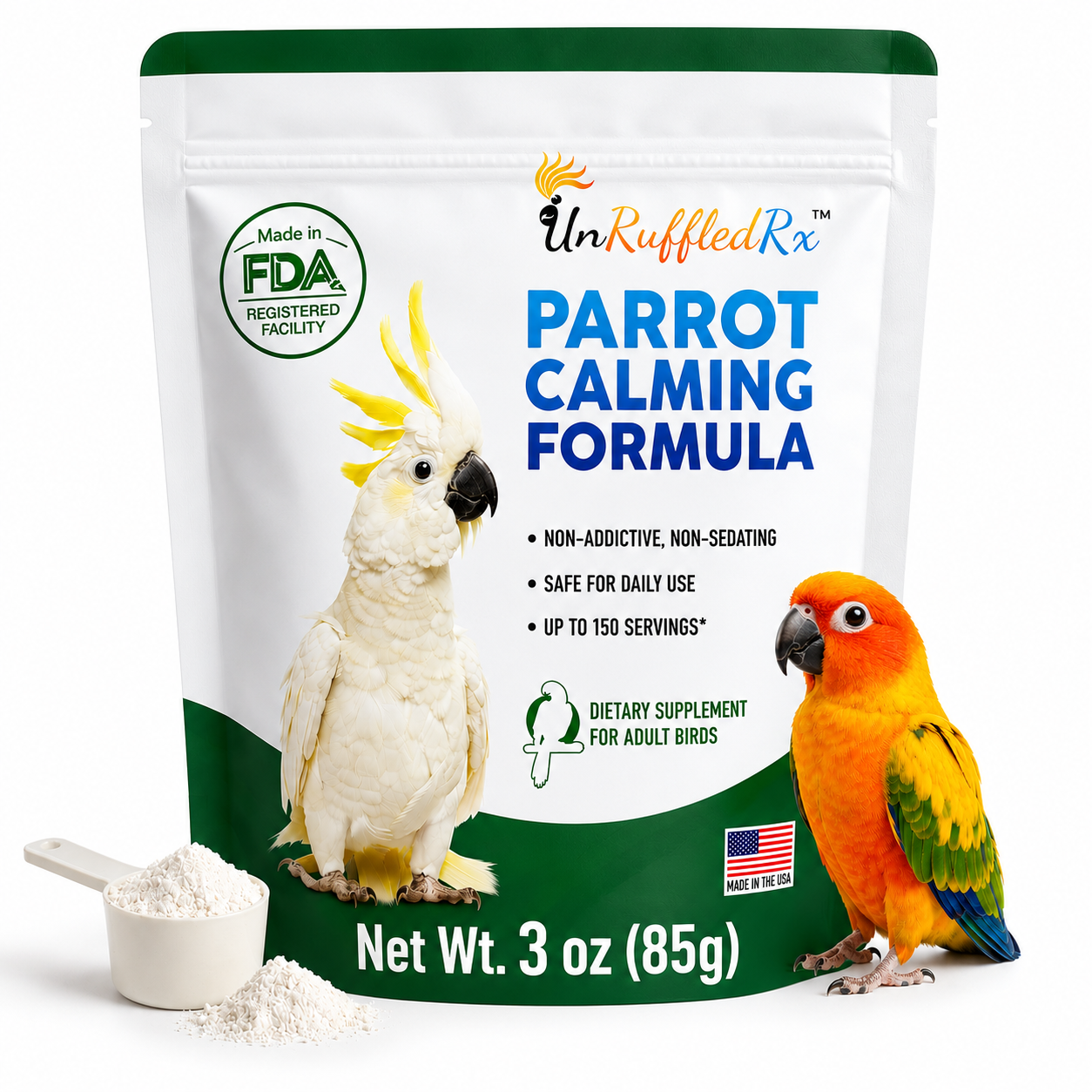
Some bird owners use calming herbs or bird-specific nutraceuticals as part of that support. These aren’t meant to knock your bird out or change their personality. The goal is simply to support a more relaxed, balanced state while you work on the things that are actually causing the stress.
Think of calming support as one piece of the puzzle — not the whole solution.
Your bird still needs predictable routines, enough sleep, things to do, good nutrition, positive interaction, and opportunities to build confidence on their own.
If you’d like to explore gentle options, our bird calming collection includes products designed to support normal calm behavior as part of a well-rounded care plan.
When It May Be More Than Stress
Sometimes a bird really is reacting to a change in routine, a new person, a scary sound, or too much time alone. But sometimes behavior is the first clue that something physical is going on.
That’s why a sudden change deserves attention, especially when you can’t connect it to anything obvious in your bird’s environment.
Sudden Behavior Changes Can Have a Medical Cause
If your normally social bird suddenly becomes withdrawn, unusually clingy, irritable, aggressive, sleepy, or just seems “off,” don’t automatically assume they’re anxious.
Birds can be very good at hiding illness. Sometimes the first thing you notice isn’t a dramatic physical symptom — it’s simply that your bird is behaving differently.
Look at the whole picture. Is your bird eating normally? Are the droppings about the same as usual? Are they maintaining their normal weight? Do they still have their usual energy and interest in what’s going on around them?
If the behavior change comes along with physical changes too, it’s worth taking seriously.
When to Call Your Avian Veterinarian
You know what “normal” looks like for your bird. If something feels noticeably different, trust that observation.
Call your avian veterinarian if you notice a sudden behavior change along with things like:
- Eating less or refusing food
- Fewer droppings or droppings that look very different
- Unexplained weight loss
- Sleeping much more than usual
- Low energy or weakness
- Sitting fluffed up for long periods
- Breathing changes or increased effort to breathe
- A major change in activity, balance, or coordination
You don’t have to wait until your bird looks obviously sick. If the change is sudden, significant, or simply doesn’t make sense, getting your avian vet involved can help rule out a medical problem before you treat it as a behavior issue.
When a Bird Behavior Professional Can Help
If your bird has been checked medically and the screaming, biting, fear, clinginess, or other behavior is still making daily life difficult, a qualified bird behavior professional may be the next step.
This can be especially helpful when you feel like you’ve tried everything and keep ending up in the same cycle.
A good behavior professional can help you look at what happens before the behavior, what your bird gets from it, and what you can change in the routine or environment to make a calmer response easier.
They can also help when the problem has been going on for a long time, when your bird is extremely fearful, or when biting and screaming have become difficult to manage safely.
Getting help doesn’t mean you’ve failed your bird. Sometimes another set of experienced eyes can spot a pattern that’s hard to see when you’re living with it every day.
Once you’ve ruled out a medical problem and looked at routine, sleep, enrichment, nutrition, and behavior, the next questions are usually the practical ones bird owners ask every day. Let’s tackle those next.
Frequently Asked Questions
Why is my bird suddenly so clingy?
A bird who suddenly wants to be on you all the time may be reacting to a change in routine, feeling unsure about something in their environment, or simply getting used to having more attention from you. Think about what has changed recently, especially if the clinginess is new or much more intense than usual.
Why does my bird scream when I leave the room?
Your bird may be contact calling because they want to know where you are or have learned that screaming brings you back. Try building independence in very small steps and give attention during quiet moments so your bird learns that they don’t have to scream to get you to return.
Why is my bird suddenly nippy or aggressive?
Sudden nipping can happen when a bird is tired, frightened, overstimulated, hormonal, or unsettled by a change in their routine. If the behavior is completely out of character, look at the bigger picture and make sure there aren’t any changes in appetite, droppings, weight, or energy that could point to a health problem.
Can a change in routine make my bird anxious?
Yes. Parrots notice changes in feeding times, bedtime, work schedules, vacations, visitors, and even when you’re simply home more or less than usual. A predictable daily routine can help an unsettled bird start feeling secure again.
How do I teach my bird to be less dependent on me?
Start small by letting your bird play on a nearby stand or perch while you stay in the room, then gradually increase the time and distance. Give them something worth doing, such as a favorite shredding toy, foraging activity, or treat, so being away from you becomes a positive experience.
How can I calm a nervous bird naturally?
Start with the basics: a predictable routine, enough quiet sleep, plenty of enrichment, gentle interaction, and a place where your bird can settle when things feel overwhelming. Some owners also use bird-safe herbs or calming supplements as extra support, but they work best as one part of the bigger plan rather than the only solution.
Can lack of sleep affect my bird’s behavior?
It can. A bird who isn’t getting enough uninterrupted sleep may become crankier, louder, more nippy, restless, or harder to settle. A consistent bedtime and a dark, quiet sleeping area can make a noticeable difference for some birds.
Can diet affect my bird’s behavior?
Diet is one piece of your bird’s overall health, so poor nutrition can make it harder for them to feel and function at their best. A balanced pellet-based diet with appropriate fresh foods supports general wellness, but diet alone usually won’t explain or fix sudden screaming, clinginess, or fear.
How do I know whether my bird is stressed or sick?
Stress can change behavior, but illness can too, and birds often hide physical symptoms until they’re not feeling well. If the behavior change comes with eating less, weight loss, unusual droppings, low energy, sleeping more, breathing changes, or simply looking “off,” contact your avian veterinarian.
When should I talk to an avian vet or bird behaviorist?
Start with your avian veterinarian when a behavior change is sudden, severe, or comes with any physical changes so a medical cause can be ruled out. If your bird is healthy but screaming, biting, fear, or extreme clinginess continues despite changes to routine, sleep, enrichment, and training, a qualified bird behavior professional can help you figure out what’s keeping the pattern going.

In conclusion...
If your bird has suddenly become clingy, loud, nippy, nervous, or just seems a little “off,” start by looking at the whole picture. Think about what may have changed in their routine, environment, sleep, social life, or health, and then work from there.
You don’t have to fix everything at once. Small, steady changes — a more predictable routine, enough sleep, better enrichment, positive reinforcement, and gentle support when your bird feels unsure — can go a long way.
And if something still doesn’t feel right, trust what you’re noticing. Your avian veterinarian or a qualified bird behavior professional can help you sort out whether you’re dealing with stress, a health issue, or a behavior pattern that needs a little more support.
Related Posts:
How a Bird Behaviorist Can Help You Use Positive Reinforcement Correctly
6 Tips For Using Calming Bird Medicine
Understanding Parrot Stress and What To Do About It
References:
Matson, K., & Koutsos, E. (2006). Captive parrot nutrition: Interactions with anatomy, physiology, and behavior. In A. Luescher (Ed.), Manual of Parrot Behavior (pp. 49–58). Blackwell Publishing.
LoveToKnow Pets. (n.d.). Why your pet bird is stressed. Retrieved January 19, 2025, from https://www.lovetoknowpets.com/birds/why-your-pet-bird-is-stressed
Pet Remedy. (n.d.). Managing stress for pet birds naturally. Retrieved January 19, 2025, from https://petremedy.co.uk/managing-stress-for-pet-birds-naturally/
Wilson, L., & Luescher, A. U. (2006). Parrots and fear. In A. Luescher (Ed.), Manual of Parrot Behavior (pp. 225–232). Blackwell Publishing.
Diane Burroughs, LCSW is a licensed psychotherapist trained in ABA therapy techniques. She specializes in avian anxiety disorders and is certified in Nutrition For Mental Health. Diane has written a number of bird behavior books and she offers behavior consultations. She's developed a range of UnRuffledRx Science-backed Parrot Wellness Supplies.
Diane's products have been featured in the Journal of Avian Medicine and Surgery and at Exoticscon, a conference for exotic pet veterinarians. Her bird collars & supplements are stocked in avian vet clinics and bird stores throughout the US. With over 30 years in the field of behavior, Diane has created thousands of successful individualized behavior plans that help pets thrive.
TAGS: #BirdStress #Anxious Bird #BirdCalmingSupplements #UnRuffledRx
SHARING IS CARING! PLEASE SHARE ON YOUR FAVORITE SOCIAL MEDIA NOW!