Keeping Your Bird Safe and Comfortable
Protecting your bird's skin matters, but so does quality of life. The goal is to prevent further injury while helping your parrot continue eating, playing, and enjoying everyday activities.
1. Can My Bird Eat, Climb, and Play While Wearing Both?
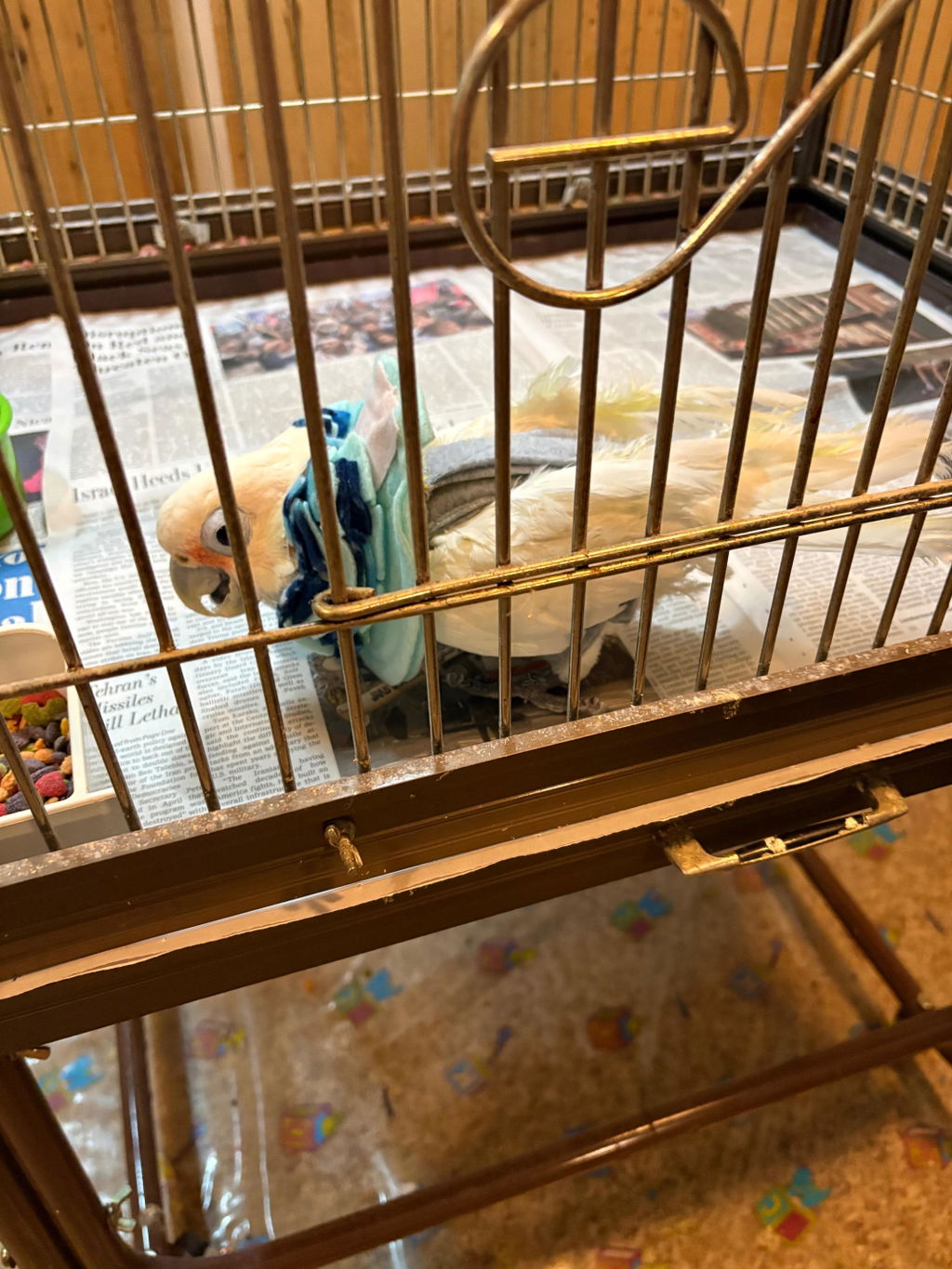
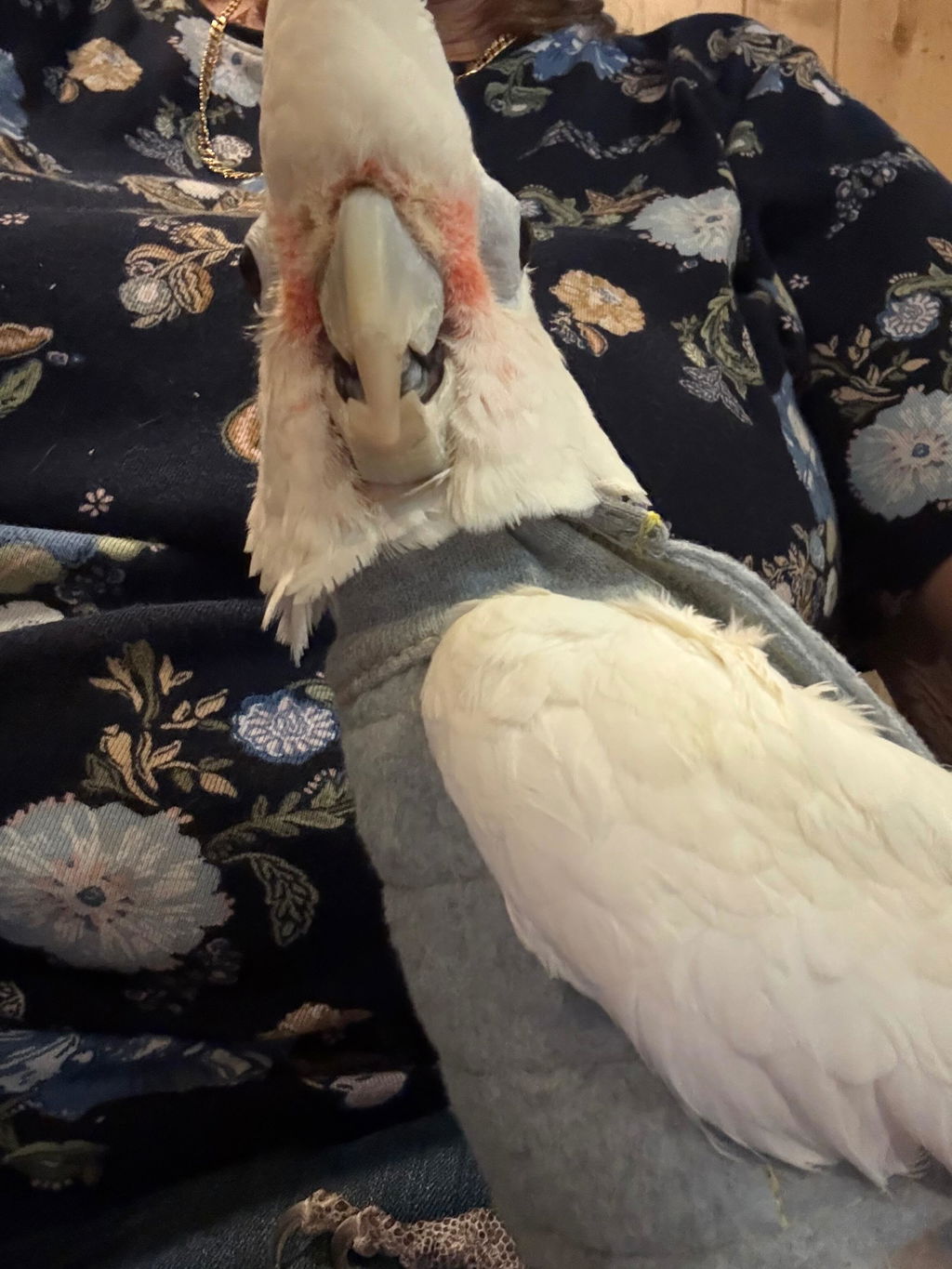
Yes, many parrots adjust to wearing both protective pieces and continue their normal activities. The Fringy Cone limits how far your bird can reach, while the BeakGuard Vest shields the chest and abdomen.
Watch the cockatoo in our product video eating, perching, and going about everyday life while wearing protection.
Keep food and water within easy reach and make sure your bird can perch and move comfortably. Older or weaker birds may need lower perches and additional veterinary guidance, especially if balance is a concern.
2. What if My Bird Fights the Collar?
Don't be surprised if your bird initially protests. Birds that have been repeatedly picking or chewing their skin may resist equipment that prevents them from reaching those areas.
Don't reward every little protest with extra attention. If your bird is safe and briefly tugging at the collar, avoid making a big fuss. Instead, reward the behaviors you want to encourage.
Offer favorite treats or attention when your bird is eating, playing, foraging, exploring, or resting calmly. These are the normal parrot behaviors we want to see more often.
Positive reinforcement helps your bird associate wearing protection with familiar, rewarding activities instead of focusing entirely on the collar.
Protesting or genuinely distressed? Brief collar fussing is one thing. Frantic struggling, falling, difficulty breathing, or refusing food is another. Never ignore signs of distress or an unsafe fit. Reassess the equipment and contact your avian veterinarian when needed.
3. How Do I Know the Combo Fits Comfortably?
Watch your bird, not just the equipment. Both pieces should stay in place while allowing comfortable breathing, normal crop expansion, eating, and movement. Check regularly for rubbing, shifting, or chewing damage.
Follow our size chart when ordering. If you're unsure, call or text 719-650-0812. Photos of your bird and the area needing protection help us recommend the right fit.
4. Will My Bird Need Both Pieces Forever?
Not necessarily. Our goal is to use the least restrictive protection that still prevents injury.
Some birds need both pieces initially. As wounds heal and the urge to pick becomes less frequent, it may be possible to use just the Fringy Cone or BeakGuard Vest under veterinary guidance.
Be proactive about setbacks. If your bird tends to pick more during hormonal periods, changes in routine, or stressful events, plan ahead with your avian veterinarian. Temporarily returning to both protective pieces may help prevent another injury.
The decision to reduce protection should depend on healing, behavior, and whether your bird can still reach vulnerable skin—not simply how long the equipment has been worn.
5. What Helps During Longer Recovery Periods?
Keep the equipment clean, check the skin regularly, and continue rewarding normal behavior. Some parrots need protection for weeks or longer while medical and behavioral treatment progresses.
If the combination makes navigating a full-size cage difficult, a temporary recovery setup with low perches, stable footing, and easy access to food and water may help. See our guide on how to make a bird hospital cage and discuss the setup with your vet.
Remember: Protective equipment helps prevent additional injury, but self-mutilation often requires ongoing veterinary care and behavioral management. Open wounds or bleeding require prompt avian veterinary attention.
Want to Better Understand the Behavior?
Physical protection is only one part of managing repetitive self-injury. Understanding possible triggers, improving enrichment, and reinforcing healthy behavior are important, too.
Our The Feather Plucking Remedies for Birds Workook explores feather-destructive behavior and practical behavior-change strategies. It's a useful companion to a broader care plan, not a replacement for veterinary treatment of skin injuries.